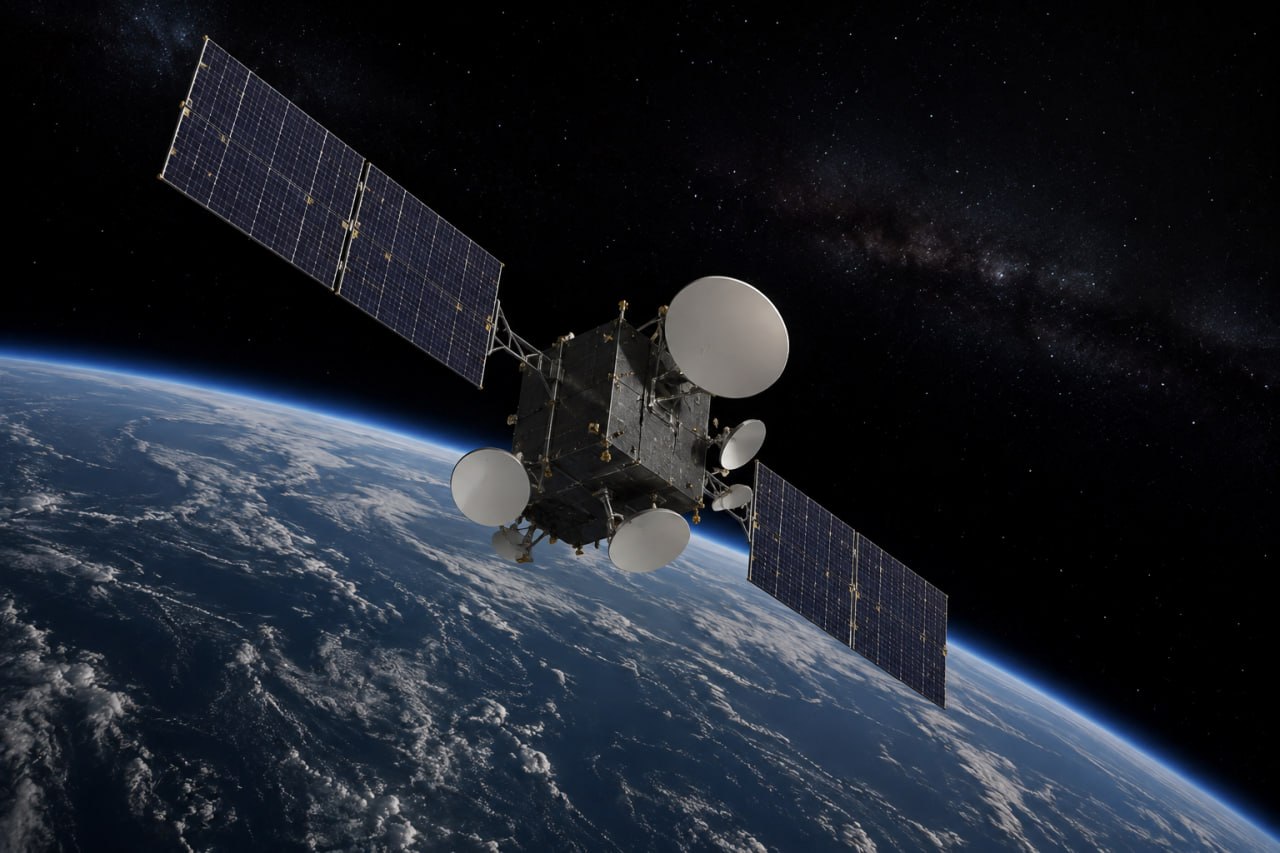
Viasat Taps Rocket Lab to Build Anti-Jam GEO Satellite for Space Force Tactical Comms Program
Viasat has selected Rocket Lab to build a geosynchronous satellite bus for the U.S. Space Force's Protected Tactical SATCOM-Global program, the two companies announced on August 17, 2026. The maneuverable, anti-jam spacecraft is intended to deliver secure communications for national security missions in contested environments. The selection follows a prime contract Viasat won on May 22, 2026 to deliver one of the first small, maneuverable geosynchronous Earth orbit satellites for the PTS-G cons
OST Staff · August 17, 2026
Viasat has selected Rocket Lab to build a geosynchronous satellite bus for the U.S. Space Force's Protected Tactical SATCOM-Global program, the two companies announced on August 17, 2026. The maneuverable, anti-jam spacecraft is intended to deliver secure communications for national security missions in contested environments.
The selection follows a prime contract Viasat won on May 22, 2026 to deliver one of the first small, maneuverable geosynchronous Earth orbit satellites for the PTS-G constellation. That initial production award, known as Swarm 1, covers manufacturing, integration and test, launch, and on-orbit checkout of the mini-GEO satellite system. Viasat's government space team, within its Defense and Advanced Technologies segment, will lead the work to advance the program's initial operating capability.
PTS-G is part of the Space Force's strategy to deliver global, resilient, and scalable satellite communications to warfighters by using commercial designs and technology to support smaller, faster-to-produce satellites with enhanced anti-jam capabilities. Under the partnership, Rocket Lab will deliver a GEO configuration of its Lightning spacecraft platform to host Viasat's dual-band X/Ka-band payload. The Lightning-GEO platform features a high-power architecture built with Rocket Lab's own vertically integrated components and subsystems, including tracking, telemetry, and command radios, solar power, star trackers, reaction wheels, and flight and ground software.
The mini-GEO satellite is designed to provide next-generation, anti-jam, resilient communications to ensure secure connectivity for U.S. and allied forces operating in contested environments. Viasat's award is one of two delivery orders issued under a competitive Fair Opportunity acquisition, reflecting the Space Force's strategy of building a diversified, resilient PTS-G architecture. In addition to the spacecraft and payload, the award includes five years of operations and sustainment services, covering tracking, telemetry, and command, satellite and network operations, and cybersecurity requirements. No contract dollar value was disclosed.
Craig Miller, President of Viasat Government, said the production award represents an important step forward in delivering the next generation of protected satellite communications capabilities for the Space Force. He said the effort combines Viasat's communications payload technology with Rocket Lab's spacecraft platform to advance a more agile and resilient GEO architecture for mission-critical communications in contested environments. Rocket Lab Founder and CEO Sir Peter Beck said moving from design into production marks an important milestone for the program and for Rocket Lab's growing role in national security space, pairing the company's vertically integrated spacecraft with Viasat's protected communications payload.
Both companies frame the partnership as demonstrating how commercial solutions can support the Space Force's push toward a more resilient architecture based on scaled commercial capability. Viasat says it brings technical and operational expertise in dual-use satellite solutions and a deep understanding of Space Force and U.S. Department of War mission requirements.
Next steps center on the Swarm 1 delivery order, which will carry the program through manufacturing, integration and test, launch, and on-orbit checkout, followed by five years of operations and sustainment services for the satellite.