US and Japan Elevate AST SpaceMobile, Rakuten Satellite Network to Sovereign Infrastructure Status
The United States and Japan have formally designated the low Earth orbit satellite network built by AST SpaceMobile and Rakuten Group as strategic infrastructure under the U.S.–Japan Technology Prosperity Deal. The joint promotion, confirmed on October 7, 2026, frames the companies' direct-to-device cellular constellation as a sovereign asset for resilient non-terrestrial telecommunications across the Indo-Pacific. The designation follows bilateral discussions in Kyoto on October 4, 2026, betwe
OST Staff · October 7, 2026
The United States and Japan have formally designated the low Earth orbit satellite network built by AST SpaceMobile and Rakuten Group as strategic infrastructure under the U.S.–Japan Technology Prosperity Deal. The joint promotion, confirmed on October 7, 2026, frames the companies' direct-to-device cellular constellation as a sovereign asset for resilient non-terrestrial telecommunications across the Indo-Pacific.
The designation follows bilateral discussions in Kyoto on October 4, 2026, between Michael Kratsios, Director of the White House Office of Science and Technology Policy, and Toshiharu Furukawa, Japan's Minister of State for Science and Technology Policy. The U.S. Department of State issued a joint protocol on October 5 formalizing the inclusion of the AST SpaceMobile and Rakuten project within the broader U.S.–Japan science and technology framework.
The policy move builds on AST SpaceMobile's commercial service activation in Japan with Rakuten earlier in the year, which established direct LEO-to-cell connectivity across Japan's main islands and mountainous remote prefectures. Both governments positioned the direct-to-cell infrastructure as a core pillar of national defense, emergency disaster response, and regional connectivity, aligning with Washington's goal to deploy trusted U.S.-developed space hardware across allied markets and Tokyo's objective to build sovereign non-terrestrial network resilience across the Japanese archipelago.
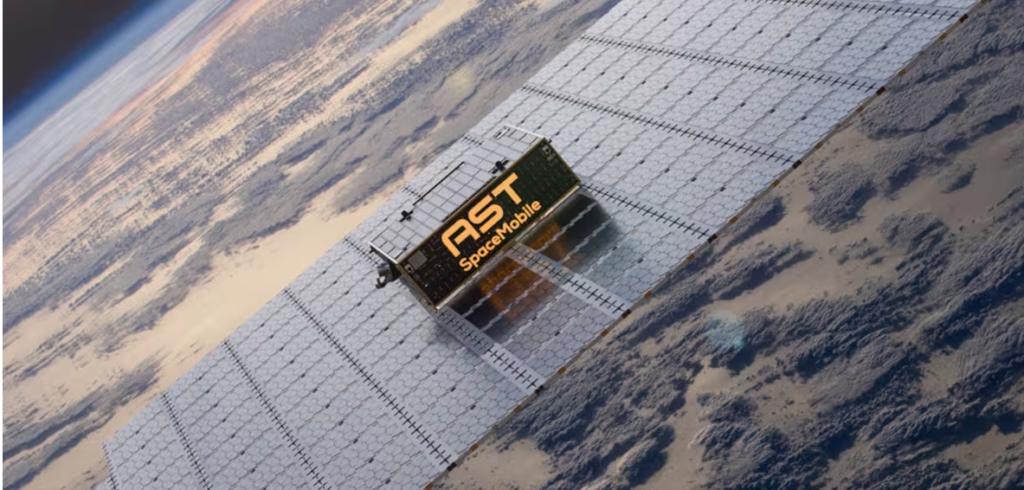
The initiative leverages AST SpaceMobile's low Earth orbit phased-array satellite architecture, which communicates directly with standard, unmodified 4G and 5G mobile devices using commercial cellular spectrum. The system operates without specialized chipsets or external antenna attachments, routing voice, messaging, and broadband data directly into Rakuten Mobile's terrestrial wireless core network.
The policy alignment facilitates potential access to non-dilutive government-backed capital to support constellation scaling. The Japanese government previously authorized a $926 million strategic funding allocation dedicated to strengthening national telecommunications resilience, reinforcing emergency communications during seismic events, and supporting international satellite infrastructure partnerships. Rakuten maintains a strategic equity position in AST SpaceMobile, holding approximately 15.51 million shares, representing roughly a 5.3 percent stake.
In the joint statement issued by the U.S. Department of State following the Kyoto meeting, both governments emphasized the strategic necessity of accelerating joint innovation across critical and emerging technology domains. "Recognising that technological innovation continues to advance at an unprecedented pace worldwide, the United States and Japan reaffirmed the importance of further strengthening US-Japan collaboration in strategic science and technology capabilities and standards to usher in the next Golden Age of Innovation to fortify freedom and prosperity for generations to come," the protocol stated. "Both sides welcomed Japan's Rakuten Group and the US-based AST SpaceMobile cooperation for the development and deployment of Low Earth Orbit (LEO) satellite infrastructure."
The endorsement positions Rakuten Mobile and AST SpaceMobile against rival regional carriers aligned with alternative satellite constellations. Japanese operators KDDI Corporation, SoftBank Corp., and NTT Docomo have pursued partnerships with SpaceX's Starlink network for direct-to-cell supplemental coverage. By embedding the AST SpaceMobile and Rakuten architecture within the bilateral deal, the partnership secures high-level policy backing and a structured pathway for deploying dual-use direct-to-device communications across commercial telecom markets, defense architectures, and emergency management agencies across the Indo-Pacific.
The combined framework advances as AST SpaceMobile expands its BlueBird satellite constellation deployment, with the policy alignment providing a route to government-backed capital for scaling the network.