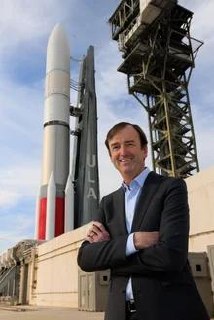
ULA Promotes Mark Peller to CEO as Vulcan Grounding Weighs on Finances
United Launch Alliance named Mark Peller, a 35-year veteran of the company and its predecessors, as its new president and chief executive, effective August 17. He steps into the top job as ULA contends with a grounded Vulcan rocket and mounting financial pressure that has prompted both parent companies to guarantee loans. Peller succeeds John Elbon, who had served as interim chief executive since December. Elbon had planned to retire after eight years as chief operating officer, with Peller lin
OST Staff · August 17, 2026
United Launch Alliance named Mark Peller, a 35-year veteran of the company and its predecessors, as its new president and chief executive, effective August 17. He steps into the top job as ULA contends with a grounded Vulcan rocket and mounting financial pressure that has prompted both parent companies to guarantee loans.
Peller succeeds John Elbon, who had served as interim chief executive since December. Elbon had planned to retire after eight years as chief operating officer, with Peller lined up to replace him in that role, but stayed on as interim CEO when longtime chief executive Tory Bruno abruptly left the company. Several days after Bruno's departure, Blue Origin announced it had hired him as its new president of national security. Elbon will now retire at the end of the year, concluding a 45-year career.
ULA selected Peller after a months-long process that considered both internal and external candidates, said Kay Sears, a Boeing executive on the ULA board. "Mark's background, coupled with his extensive knowledge of both ULA's business and technical offerings, makes him the best candidate to fill the CEO position," she said. Peller had been chief operating officer since December, and before that served as senior vice president for Vulcan and advanced programs. He joined Rockwell International in 1990 as a propulsion engineer on the space shuttle program, moved to Boeing's Delta launch vehicle programs in 1997, and became chief engineer for the Delta 2 and Delta 4 vehicles when ULA formed in 2006.
"I am honored to take on this role leading a truly amazing team of people," Peller said. "ULA has a tremendous history of launching some of the nation's most important national security and exploration missions, and the future is limitless with the new capabilities and performance of our Vulcan rocket."
Vulcan, however, is a major challenge. Peller said in February that ULA planned 16 to 18 Vulcan launches in 2026. The first of those, a Space Force mission, suffered a performance anomaly in one of its four solid rocket boosters. The rocket completed the mission but has not flown since. ULA has performed three Atlas 5 launches this year, most recently July 2 for Amazon Leo, but its remaining Atlas 5 vehicles are reserved for Boeing's CST-100 Starliner.
Northrop Grumman, which produces Vulcan's solid rocket boosters, said on a July 21 earnings call it had taken corrective actions but that redesigned motors may not begin deliveries until the end of the year. Lockheed Martin said in a July 23 filing that the grounding was negatively affecting ULA's financial condition and agreed to guarantee $500 million in loans. Boeing made a similar guarantee in a July 28 filing. ULA said its financial position had been impacted by the anomaly with the solid rocket booster nozzle seen on two Vulcan launches, the February flight and a similar issue in October 2024. Separately, Blue Origin said August 5 it had linked a May 28 explosion that destroyed a New Glenn rocket to a liquid oxygen valve in the BE-4 engine, which also powers Vulcan's first stage.
Robert Lightfoot, president of Lockheed Martin Space and chair of ULA's board, credited Elbon with postponing his retirement to provide a smooth transition and time to conduct a thorough search.
Attention now turns to Northrop Grumman's redesigned solid rocket motor deliveries, expected at the end of the year, and Blue Origin's modifications to the BE-4 valve.