Tumbleweed Raises €6.9M to Build Its Own Reentry Vehicle
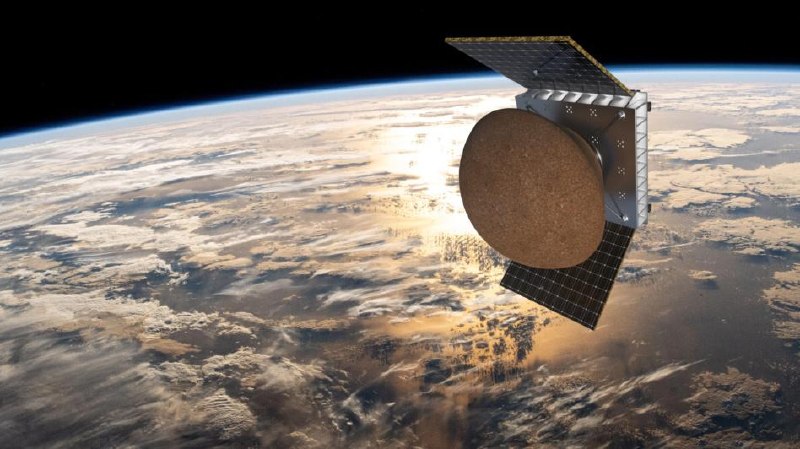
Vienna-based startup Tumbleweed has closed a €6.9M ($7.7M) seed round to fund development of Oasis Beta, an in-orbit research vehicle capable of reentering Earth's atmosphere. Missions for the new vehicle are set to begin in 2028, while the round will also finance at least three flights of the company's Pod payload in 2027. The raise follows Tumbleweed's first in-space mission. The company sent its first satellite, Oasis Alpha, to orbit on SpaceX's Transporter-17 rideshare in July, where it dem
OST Staff · November 3, 2026
Vienna-based startup Tumbleweed has closed a €6.9M ($7.7M) seed round to fund development of Oasis Beta, an in-orbit research vehicle capable of reentering Earth's atmosphere. Missions for the new vehicle are set to begin in 2028, while the round will also finance at least three flights of the company's Pod payload in 2027.
The raise follows Tumbleweed's first in-space mission. The company sent its first satellite, Oasis Alpha, to orbit on SpaceX's Transporter-17 rideshare in July, where it demonstrated the ability to host microgravity research payloads from four different customers. Since then, Tumbleweed has seen an influx of demand from customers seeking access to microgravity without building a satellite of their own. The company specializes in giving space newcomers their first ride to orbit.
Pact VC led the round, with additional participation from Vanagon Ventures, Prototype Capital, EWOR, and a group of angel investors that includes SES cofounder Candace Johnson. Company officials said the decision to build an in-house reentry vehicle was driven not by a bid to create a best-in-class capability, but by an effort to smooth the path to space and back for future customers.
"It is very consistent with our ethos of space being as much in the background as possible," CEO Julian Rothenbuchner said. "No one gives a shit about space for us, [so] we're optimizing for maximum credibility outside of the space industry." Rothenbuchner said Tumbleweed is evaluating partnerships with other reentry vehicle providers while building Oasis Beta in tandem to own more of the value chain.
Tumbleweed is not waiting to finish Beta before flying again. The company has three flights booked in 2027, including both suborbital and orbital missions. On at least one of them, Tumbleweed will attempt to demonstrate its ability to integrate payloads late in the launch process. By bringing this late-addition capability to market, the company hopes to open the door for new types of in-orbit research missions that depend on live samples, or payloads that cannot sit on the shelf for weeks ahead of a launch.
Tumbleweed frames the effort as a way to make itself the most accessible provider in the market. "It's a technical feat for sure. It's also very much a procedural feat," Rothenbuchner said. "What we are basically pushing super-hard for in this market is to be the most actionable ones. To be the ones where, with minimal effort and minimal cost, you can launch something tomorrow."
Next up are Tumbleweed's three booked 2027 flights, covering both suborbital and orbital missions and including the planned late-integration demonstration, ahead of Oasis Beta missions beginning in 2028.