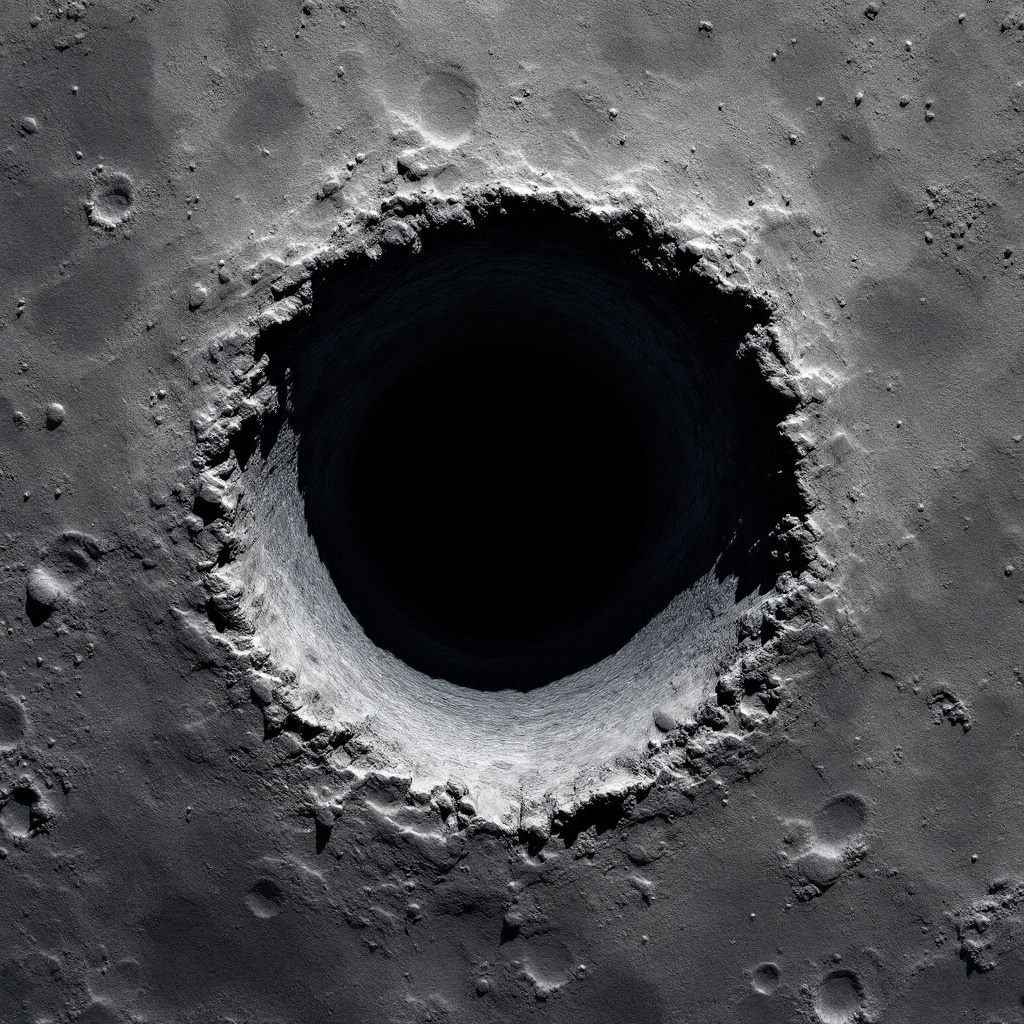
NASA Funds Study to Probe Whether a Lunar Pit Hides a Larger Cave
NASA has selected a Planetary Science Institute-led proposal to investigate whether a potentially large underground cave extends beyond the opening of a known lunar pit. The study will examine whether the void could one day shelter astronauts from radiation and extreme temperature swings at the lunar surface, tying the work directly to the agency's goals for a sustained human presence on the Moon. The selection is part of NASA's broader lunar exploration planning. Rather than treating subsurfac
OST Staff · October 3, 2026
NASA has selected a Planetary Science Institute-led proposal to investigate whether a potentially large underground cave extends beyond the opening of a known lunar pit. The study will examine whether the void could one day shelter astronauts from radiation and extreme temperature swings at the lunar surface, tying the work directly to the agency's goals for a sustained human presence on the Moon.
The selection is part of NASA's broader lunar exploration planning. Rather than treating subsurface habitation as an abstract possibility, the agency is committing study money to a specific pit, a step that moves the concept from speculation toward mission planning.
The research will be led by the Planetary Science Institute. Its central objective is to determine whether a cave extends beyond the known pit opening, and if so, whether that space could serve as a natural shelter for astronauts. Such a void could provide protection against radiation and the extreme thermal swings found at the lunar surface.
Lunar lava tubes and caves rank among the most credible natural habitats for a sustained human presence. Using an existing underground void as shelter would cut the mass and cost of radiation shielding that would otherwise have to be delivered to the Moon, a factor that weighs heavily in any plan to keep astronauts on the surface for extended periods.
The study underscores how subsurface features are being folded into NASA's sustained lunar presence goals. By examining a single, identified pit in detail, the agency gains a concrete target for assessing whether natural caves can realistically support future crews.
The next step is the study itself, which will seek to establish whether the cave extends beyond the pit opening and whether it could function as a radiation and thermal shelter. The first lunar base may not be built on the Moon so much as inside it.