Stratolaunch Passes 10 Successful Talon-A Hypersonic Flights
Stratolaunch has now completed more than 10 successful flights with its reusable, autonomous Talon-A hypersonic aircraft, the California-based company announced late last month. The milestone marks a maturity marker for a test platform designed to make hypersonic flight data a routine service rather than a rare event. Talon-A flies through Earth's atmosphere at more than five times the speed of sound, the threshold that defines hypersonic flight. Stratolaunch operates two of the vehicles, each
OST Staff · August 2, 2026
Stratolaunch has now completed more than 10 successful flights with its reusable, autonomous Talon-A hypersonic aircraft, the California-based company announced late last month. The milestone marks a maturity marker for a test platform designed to make hypersonic flight data a routine service rather than a rare event.
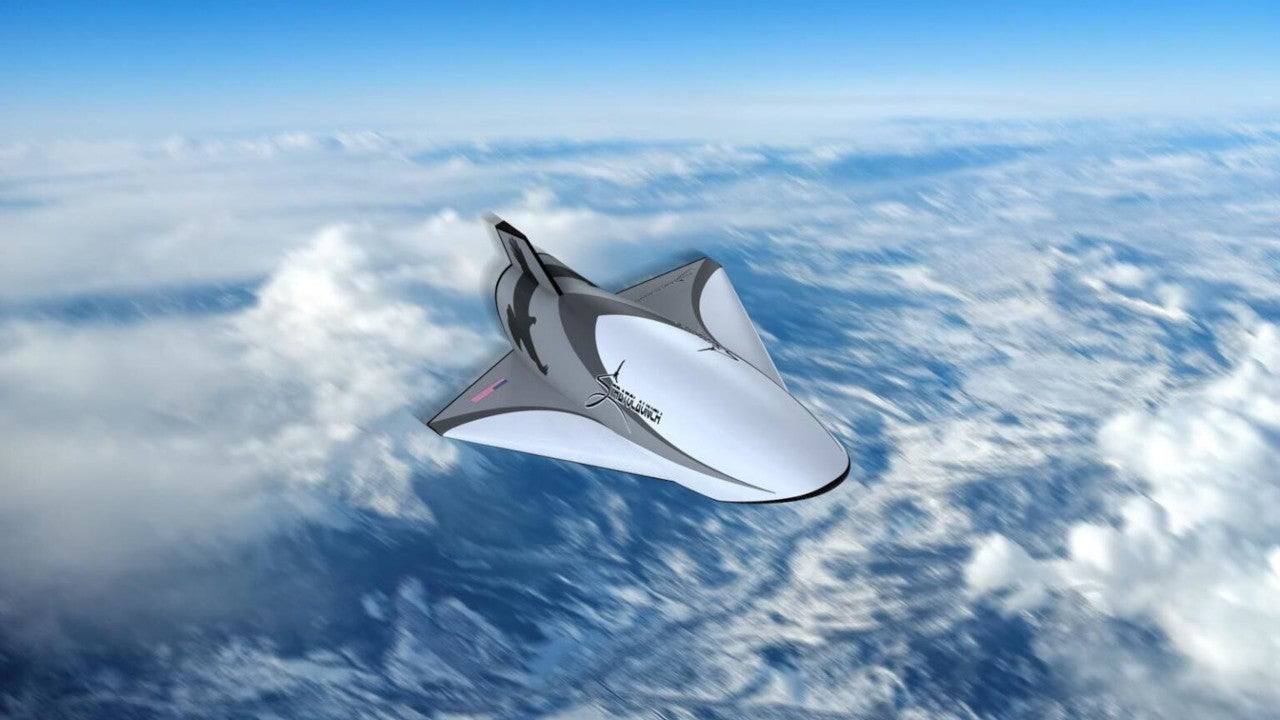
Talon-A flies through Earth's atmosphere at more than five times the speed of sound, the threshold that defines hypersonic flight. Stratolaunch operates two of the vehicles, each about 28 feet long with an 11.3 foot wingspan, and drops them from carrier aircraft to test sensors and advanced materials in the hypersonic flight environment.
"Reaching more than 10 successful hypersonic flights with Talon-A is a testament to our team's dedication and the robustness of our technology," Stratolaunch President and CEO Zachary Krevor said in a July 22 statement. "We are transforming hypersonic testing from a rare event into a routine service, empowering our customers to innovate at unprecedented speed."
Talon-A missions begin beneath the belly of a carrier plane, which hauls the robotic vehicle into the sky and releases it. Stratolaunch uses two such carriers, a modified Boeing 747 named Spirit of Mojave and Roc, a custom-built aircraft with a 385 foot wingspan, the largest in aviation history. Both lift off from Mojave Air and Space Port in southeastern California and tend to drop Talon-A over the Pacific Ocean. After completing its hypersonic flight, the vehicle returns for a runway landing in California, generally at Vandenberg Space Force Base on the state's central coast.
Details about Talon-A's payloads tend to be sparse, in part because many Stratolaunch customers, such as the U.S. Missile Defense Agency, are tight-lipped by nature. Military agencies around the world are increasingly interested in hypersonic technology because superfast, maneuverable vehicles like Talon-A are tougher to track and intercept than ballistic missiles, which follow predictable trajectories. Stratolaunch has stressed that Talon-A itself is not a weapon or weapon-delivery system, but a technology testbed.
Reaching double-digit flights is a meaningful maturity marker for a hypersonic test platform. The United States has struggled to match the pace of hypersonic development elsewhere, and reusable, air-launched test vehicles like Talon-A represent one of the faster paths to generating flight data. More than 10 flights means Stratolaunch is accumulating operational experience at a moment when hypersonic testing capacity is a national security priority.
Stratolaunch is not the only operator offering customer payloads hypersonic rides. Rocket Lab provides the service with HASTE, a suborbital version of its Electron rocket. HASTE debuted in June 2023 and now has nine flights. In March, Rocket Lab signed a $190 million contract to conduct 20 HASTE missions for the U.S. military, a deal expected to increase the vehicle's cadence.
The open question now is whether Talon-A's growing flight data is accelerating any of the hypersonic weapons programs that have struggled to reach operational status.