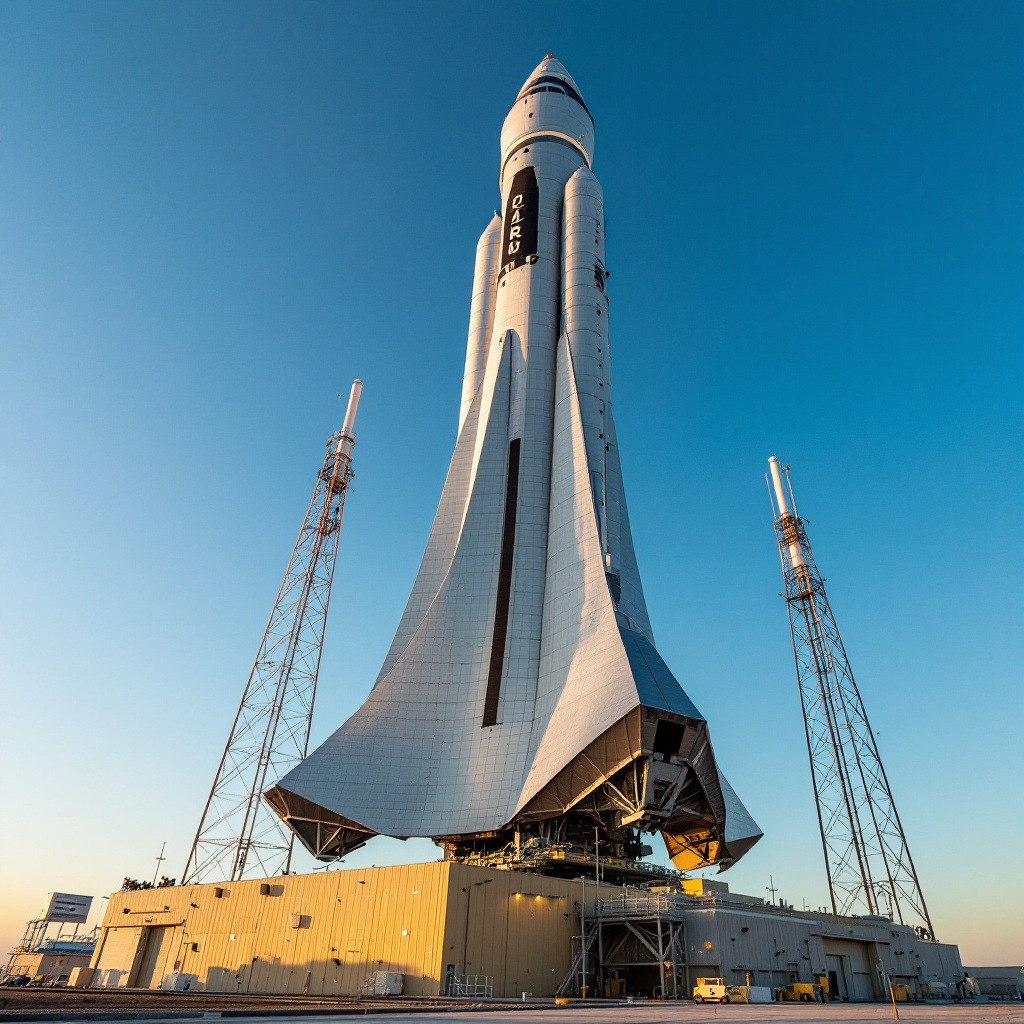
SpaceX Targets September 28 for Starship's First Orbital Flight as Florida Pad Nears Operational
SpaceX is targeting Starship Flight 14 no earlier than Monday, September 28, pending regulatory approval, in what would be the vehicle's first orbital mission. The flight follows 13 suborbital tests and coincides with the buildout of Launch Complex 39A at Kennedy Space Center, positioning the program for a two-coast operation. Flight 14 marks a shift from the Texas test campaign toward sustained orbital missions. If the flight succeeds, Flight 15 becomes the first realistic opening for a ship c
OST Staff · September 18, 2026
SpaceX is targeting Starship Flight 14 no earlier than Monday, September 28, pending regulatory approval, in what would be the vehicle's first orbital mission. The flight follows 13 suborbital tests and coincides with the buildout of Launch Complex 39A at Kennedy Space Center, positioning the program for a two-coast operation.
Flight 14 marks a shift from the Texas test campaign toward sustained orbital missions. If the flight succeeds, Flight 15 becomes the first realistic opening for a ship catch, and in the best case a double catch. Flight 16 remains the best-case first launch from LC-39A, a mission KSC workers now internally cite as launching from that pad.
On Flight 14, SpaceX intends to place Ship 41 into a sustained orbit at about 275 kilometers, complete roughly six revolutions over nearly 10 hours, deploy 26 Starlink V3 satellites, and then deorbit for a splashdown in the Pacific west of Chile. Super Heavy Booster 21 is not scheduled for a tower catch. Its job is boostback, a landing burn, and a controlled splashdown in the Gulf, with hardware and software changes meant to improve engine filtering and relight reliability after Flight 13.
On the East Coast, pad work at LC-39A is aligned with that sequence, and major construction now appears complete. The tank farm was active on three days this week, and on September 8 every major vent was in use as the farm stored, subcooled, and pumped LN2, LOX, and methane to the pad for testing and launch operations. On the tower, the left chopstick actuator was removed September 1 and reinstalled September 10. SpaceX's newer chopsticks use electromechanical actuators rather than the hydraulic pistons on Pad 1, a change expected to improve response time and control.
The ship quick-disconnect arm completed load testing later in the week, confirming it can hold the mass of propellant in the lines and take heavy side forces. On September 12, SpaceX opened 39A's tower vent for the first time, a sign that chilldown of the ground support equipment feeding the ship is underway. The vent also purges residual air and vapor from the lines after construction. Separately, cameras recorded a Gigabay work stand and a ship horizontal-transport aft frame on a barge bound for Starbase, likely intended for the first Starship shipped from Texas to the Cape aboard the transport barge You'll Thank Me Later.
LC-39A carries a long history. Originally built in the 1960s for Saturn V, it sent Apollo 4 off the pad in November 1967 and launched Apollo 11 on July 16, 1969. Twelve of the 13 Saturn V missions that flew used the LC-39 complex, and the pad later supported 82 of 135 Space Shuttle flights before Atlantis closed the era in 2011. NASA leased the site to SpaceX in 2014 through a deal brokered by Space Florida. Starship is the next vehicle assigned there.
Orbit, payload deployment, and a controlled reentry are the immediate gates, and later flights will be judged against those results. Flight 14 still needs a license and a clean countdown, Flight 15 must justify a catch attempt, and a first launch from LC-39A by the end of 2026 remains a best-case path. SpaceX will likely want to send Booster 22, caught on Flight 15, to KSC. If recovery of Flight 15's vehicle runs into problems and Flight 16 is still intended as Starship's debut from Pad 39A, a new booster could be sent to the East Coast instead.