Starship Reaches Orbit for First Time, Deploys 26 Starlink V3 Satellites
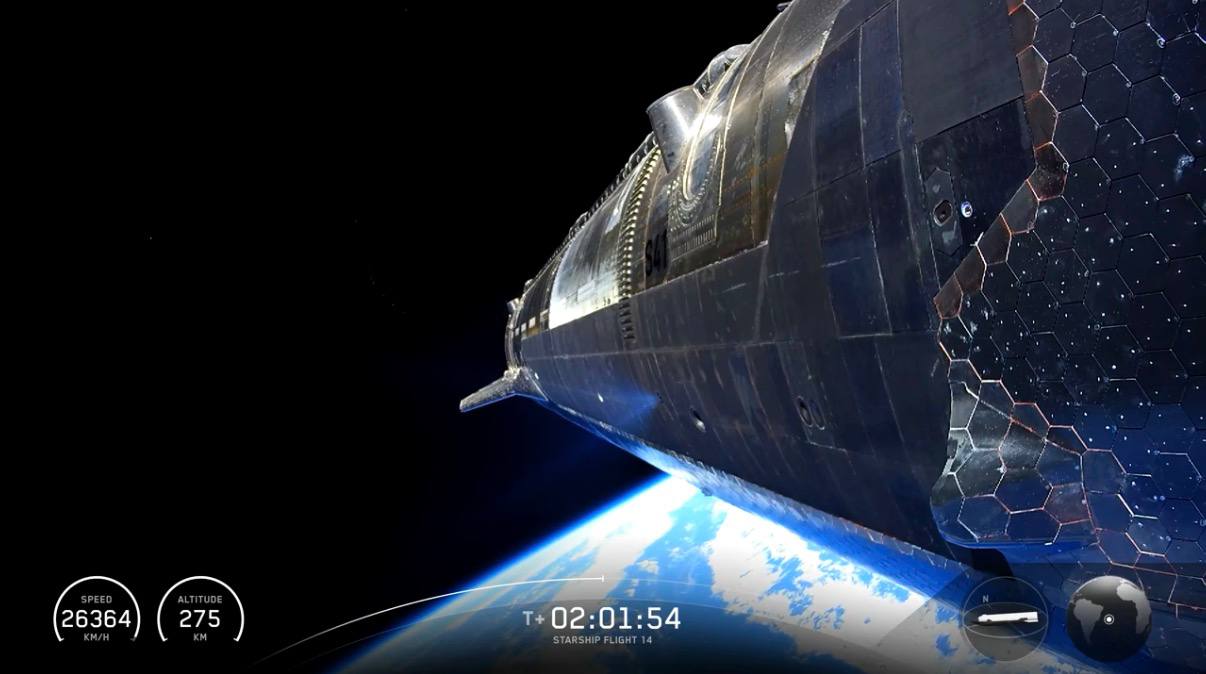
SpaceX's Starship Flight 14 reached Earth orbit on Monday, September 28, the vehicle's first orbital mission. After ascent, Starship fired a single Raptor engine to enter an orbit roughly 275 kilometres above Earth and deployed 26 Starlink V3 satellites, with SpaceX confirming contact with all 26. Earlier Starship missions reached space and demonstrated satellite deployment, but Flight 14 placed a working payload into Earth orbit. The flight showed how SpaceX intends to use Starship to expand S
OST Staff · September 28, 2026
SpaceX's Starship Flight 14 reached Earth orbit on Monday, September 28, the vehicle's first orbital mission. After ascent, Starship fired a single Raptor engine to enter an orbit roughly 275 kilometres above Earth and deployed 26 Starlink V3 satellites, with SpaceX confirming contact with all 26.
Earlier Starship missions reached space and demonstrated satellite deployment, but Flight 14 placed a working payload into Earth orbit. The flight showed how SpaceX intends to use Starship to expand Starlink far faster than it can with Falcon 9.
The Super Heavy booster splashed down in the Gulf following stage separation. Starship remained in orbit, with flight teams planning to deorbit it after approximately three hours into a pre-cleared area of the Pacific Ocean.
Each V3 satellite is designed to provide 1 terabit per second of downlink capacity and 160 gigabits per second of uplink capacity, roughly 10 times the downlink and 22 times the uplink capacity of a V2 satellite. On the downlink measure, the 26 V3 satellites deployed Monday carry the designed capacity of approximately 260 V2 satellites, for a combined designed downlink capacity of 26 Tbps. Against a constellation of roughly 11,100 satellites, each V3 represents about 0.11 percent of the existing network's estimated downlink capacity per satellite. That figure describes theoretical capacity. How much service the new satellites deliver will depend on their positions, ground infrastructure and demands placed on the network.
The V3 upgrade goes beyond raw bandwidth. Each satellite's phased array antennas support 2,048 downlink beams and 2,048 uplink beams, compared with 192 and 144 on V2. Six high-capacity space lasers allow traffic to move between satellites through Starlink's orbital network. SpaceX says a future Starship launch carrying V3 satellites could add about 20 times as much capacity to the constellation as a Falcon 9 launch of V2 satellites.
SpaceX says developments from V3 will support its upcoming Starlink Mobile Gen 2 satellites, intended to deliver LTE-level speeds directly to unmodified cellphones. Its advances in solar arrays are also expected to help power Starmind, SpaceX's planned constellation of satellites built to perform AI computing in orbit. The company is building a Gigasat Factory in Bastrop, Texas, to manufacture those AI satellites at scale. Early prototype testing has been reported as a goal for 2027, while SpaceX says the factory could support rapid production and deployment starting as soon as late 2027. Those plans remain ahead of Flight 14's demonstrated achievements, but they show how much SpaceX expects to build on the launch and satellite technology tested Monday.
Flight 14 brought Starship into orbit and put 26 next-generation Starlink satellites there with it, all of which SpaceX has contacted. The next test is whether Starship can deliver larger batches of V3 satellites regularly enough to make its promised increase in network capacity a reality.