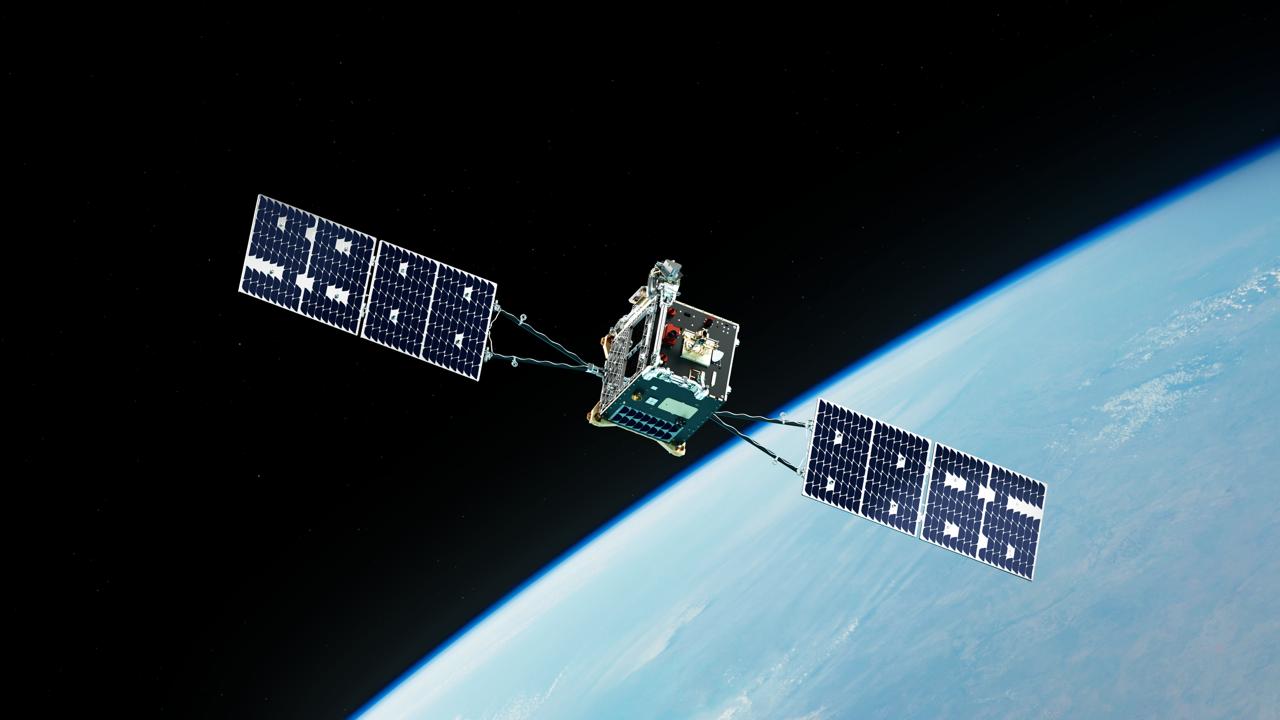
Starfish Loses Otter 24C as Fault Protection Error Ends $15M NASA Inspection Mission
Starfish Space has lost contact with Otter 24C, ending the company's $15 million SSPICY inspection mission one month after launch. The failure cuts short NASA's first effort to fund a commercial debris inspection mission. Otter 24C launched on SpaceX's Transporter-18 rideshare on October 1 and established contact with the ground shortly after deployment. The mission, formally the Small Spacecraft Propulsion and Inspection Capability mission, was designed to approach and inspect multiple defunct
OST Staff · November 4, 2026
Starfish Space has lost contact with Otter 24C, ending the company's $15 million SSPICY inspection mission one month after launch. The failure cuts short NASA's first effort to fund a commercial debris inspection mission.
Otter 24C launched on SpaceX's Transporter-18 rideshare on October 1 and established contact with the ground shortly after deployment. The mission, formally the Small Spacecraft Propulsion and Inspection Capability mission, was designed to approach and inspect multiple defunct US satellites to gather data for potential future deorbit missions. The spacecraft was headed to a graveyard orbit when contact was lost.
During commissioning, the fault protection on Otter's bus, provided by Astro Digital, experienced an error that turned off the on-board radio. The resulting blackout left Starfish unable to reestablish communications, ending the mission. NASA and Starfish are exploring whether they can complete the remaining objectives with other Starfish missions, but Otter 24C itself is lost.
The failure is the second on-orbit mishap for Starfish, both tied to faulty third-party hardware. In 2023, the company's first spacecraft, Otter Pup 1, was deployed into a tumble spinning at 330 degrees per second after an anomaly on its ride to orbit, provided by Launcher, which was acquired by Vast Space. Starfish engineers reversed that spin after the spacecraft spent six weeks in the condition, but the company could not recover this time.
Starfish said it is implementing fixes to the Astro Digital bus to avoid similar failure modes on future missions. The company's Otter Pup 2 spacecraft, launched in 2025, has demonstrated it can get close to other satellites. Starfish shared imagery last week from an Otter Pup 2 maneuver that brought the spacecraft within 33 meters of Gilmour Space's ElaraSat. Starfish could complete some SSPICY objectives for NASA using other missions.
The premature end of SSPICY marks a setback for NASA's first foray into funding commercial debris inspection. It follows the agency's mission with Katalyst Space, which failed to boost the Neil Gehrels Swift Observatory, set to burn up in the atmosphere today. Satellite servicing and inspection remains a hotly pursued capability for both commercial and defense customers, and the loss underscores how difficult autonomous rendezvous and proximity operations remain.
Starfish's planned fixes to the Astro Digital bus will shape future missions, including work tied to the $52.5 million SDA contract the company received in January to deorbit satellites as part of the Proliferated Warfighter Space Architecture. Whether NASA pursues remaining SSPICY objectives through other Starfish missions is still being evaluated.