Starbase Buildout Presses Ahead as Flight 14 Hardware Nears the Pad
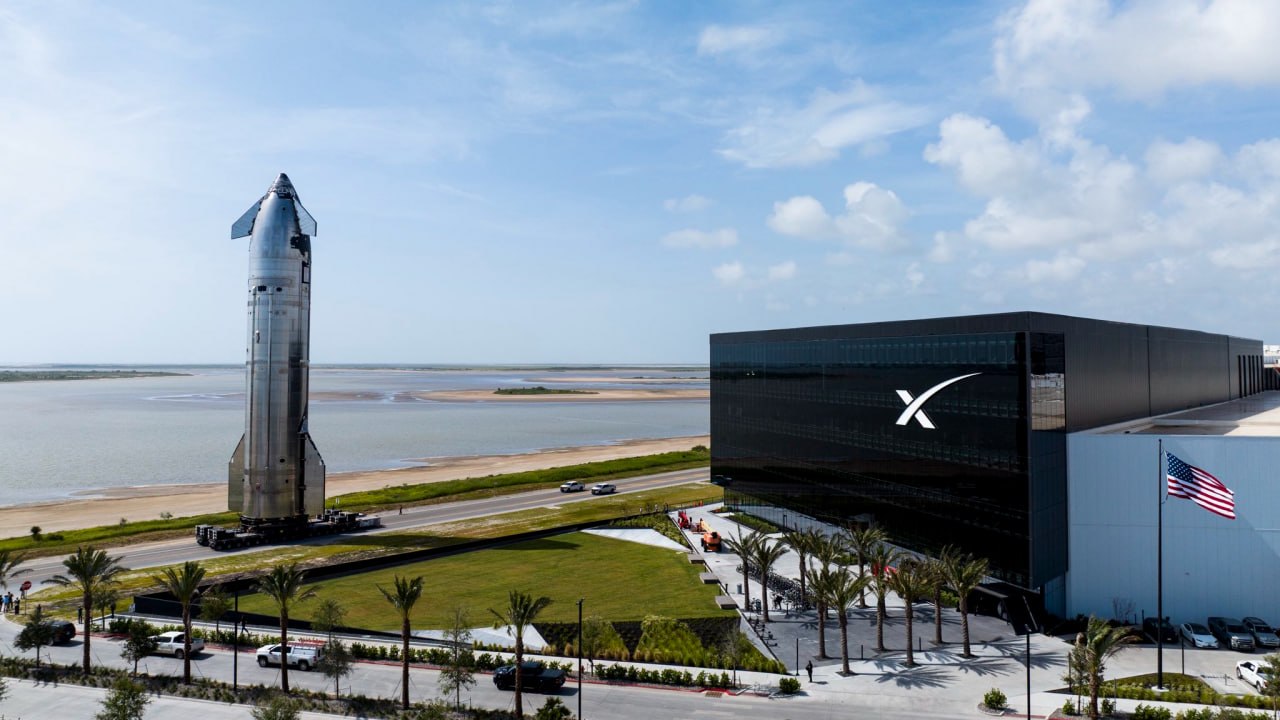
SpaceX is continuing to expand assembly, test, and launch infrastructure at Starbase in Texas while Flight 14 hardware moves toward the pad. New flyover imagery shows construction underway at Massey's test site, the Gigabay assembly building, and both launch pads, alongside structural test articles for this flight and future vehicles. The work spans the full range of facilities that support the next Starship test campaign. Ship 41 and Booster 21 have completed their required single-vehicle test
OST Staff · September 7, 2026
SpaceX is continuing to expand assembly, test, and launch infrastructure at Starbase in Texas while Flight 14 hardware moves toward the pad. New flyover imagery shows construction underway at Massey's test site, the Gigabay assembly building, and both launch pads, alongside structural test articles for this flight and future vehicles.
The work spans the full range of facilities that support the next Starship test campaign. Ship 41 and Booster 21 have completed their required single-vehicle tests and now sit in Mega Bay 2 and Mega Bay 1 for final checkout, with Pad 2 appearing ready for the next flight.
Ship 42 rolled out to Massey's this past week and completed both cryo-proof tests late on September 3. It should now return to Mega Bay 2 for remaining work and engine installation, with a static fire within about six weeks matching the timelines of recent ships. A second ship article, S43.1, is in the supercrusher test structure and has completed two cryo-proof tests, with catch-point and flap-hinge tests next. A booster LOX landing-tank article has gone through six tests since Flight 13, and SpaceX may be checking issues from that flight, though that is not confirmed. SpaceX is also replacing seven smaller LN2 tanks with three 1,000-cubic-meter tanks and rebuilding the LN2 vaporizer system.
At Gigabay, the last major piece of structural steel is in place, leaving only the roof joists. Roof installation and side cladding are underway, and crews are assembling one of the transfer aisle bridge cranes, each girder arriving in three pieces. SpaceX has built at least five ship stands, three of which wait by the rocket garden to move into the bay.
Pad 1's reconfiguration has advanced. First- and second-level pieces of the launch mount are being installed at Sanchez, each requiring multiple welding passes. The four main sections of the top-deck deluge plate are at Starbase but are unlikely to be installed for a few months. Crews are building flame-diverter buckets, a ridge cap, and a new Ship Quick Disconnect arm after SpaceX scrapped the original SQD, judging that modifying it would cost more time than starting over. On the pad, crews are placing rebar for the trench floor, which must carry the launch mount, trench walls, diverter and supports, a fully fueled Starship stack, and engine pressure at liftoff.
On Pad 2, the tower has gained cladding on the launch-mount face up to SQD-arm height, likely to shield the tower interior during a ship landing, plus a new LOX return line and vent. Flight Termination System placards are visible on both Mega Bays, indicating both Flight 14 vehicles now have FTS installed.
Once Pad 1's floor and ramps are poured, the site should save months versus Pad 2, because most Pad 1 hardware is already preassembled and staged beside the pad, and trench walls will be placed in large sections rather than the small lifts used on Pad 2 and LC-39A.
Next for Flight 14 is a Starlink Version 3 payload load on Ship 41, followed by booster and ship rollout. SpaceX may conduct a short propellant load with both vehicles before the attempt or go straight to a launch attempt. The current no-earlier-than date is September 15, drawn from CADENA/COMPASS Space Operations planning slides rather than an official SpaceX target.