Star Catcher Readies Protostar for First Spacecraft-to-Spacecraft Power Beam
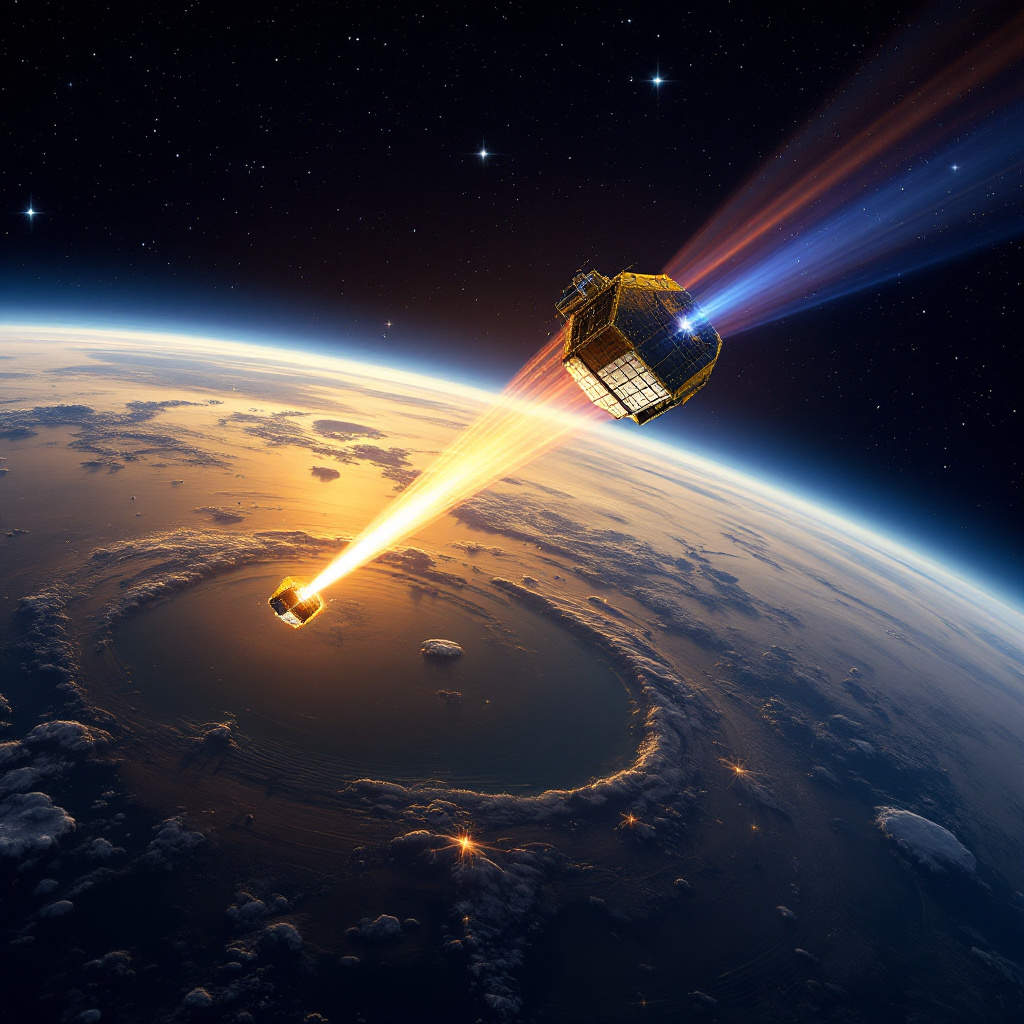
Star Catcher will attempt to beam power between two untethered spacecraft for the first time when its Protostar prototype launches no earlier than October 1 aboard SpaceX's Transporter-18 mission. Success would validate the company's core technology stack on orbit and mark a critical step toward its goal of an operational orbital energy grid by the end of the decade. Last fall, Star Catcher demonstrated power beaming down a runway in Florida. Now the company wants to try the same thing between
OST Staff · September 28, 2026
Star Catcher will attempt to beam power between two untethered spacecraft for the first time when its Protostar prototype launches no earlier than October 1 aboard SpaceX's Transporter-18 mission. Success would validate the company's core technology stack on orbit and mark a critical step toward its goal of an operational orbital energy grid by the end of the decade.
Last fall, Star Catcher demonstrated power beaming down a runway in Florida. Now the company wants to try the same thing between two spacecraft moving at roughly 27,000 km/h. Protostar came together on an accelerated timeline thanks to data from earlier tests, including a November delivery of more than 1.1 kW to terrestrial commercial solar panels at Kennedy Space Center, which reportedly beat a DARPA record for optical power-beaming. In late 2025, the company's Sextant Alpha mission successfully demonstrated its spacecraft acquisition and tracking software on orbit.
Protostar is the first end-to-end in-space demonstration of the company's core technology stack, covering energy harvesting, satellite acquisition and tracking, and power transmission. During the mission, Protostar will deploy and track a cubesat, beaming measurable power to its off-the-shelf solar panels. The company claims customer satellites can generate two to ten times more power with no hardware retrofit. If the test succeeds, it will validate commercial power-beaming operations. The team has already begun development on Protostar's successor, which includes a pilot power plant to beam operational levels of orbital power.
"This is our first time sending a prototype of our full core tech stack into space, testing this on orbit is success in and of itself," Star Catcher cofounder and CEO Andrew Rush said. The company has lined up financing and commercial commitments alongside its technical work, including a $60M Space Force STRATFI award and $88M in venture capital, with a $65M Series A closing in May. Star Catcher has also announced 10 power-purchase agreements with commercial space players including Starcloud, Loft Orbital, Astro Digital, and Aethero. Rush described the agreements as modeled after terrestrial grids, requiring a deposit to lock in a rate for a predetermined period.
The Pentagon has shown interest in power beaming as well. DIU issued a call in July for power-beaming prototypes, targeting an operational space-to-space and space-to-ground capability by FY30, and the DoD's Operational Energy Capability Improvement Fund tapped Katalyst last week for its own on-orbit demonstration.
According to Rush, getting Protostar into space and testing it on orbit counts as success on its own terms, given it is the company's first flight of the full technology stack. A working power beam would let satellites shed a constraint they have carried since the dawn of the space age.
Star Catcher's Protostar is set to fly no earlier than October 1 aboard Transporter-18. The company is already developing Protostar's successor, which is intended to include a pilot power plant capable of beaming operational levels of orbital power. Star Catcher aims to have an operational grid in orbit by the end of the decade.