Spaceium Opens OpenPort Refueling Hardware to Industry for $1
Spaceium has opened licensing for its OpenPort in-orbit refueling technology, allowing any company to build and license the hardware for $1. The low price reflects the company's business model, which centers on selling fuel to spacecraft rather than profiting from the refueling interface itself. When a satellite runs out of fuel in orbit, its useful life ends, a model some compare to throwing out a car every time the gas light comes on. Spaceium aims to change that by enabling satellites to ope
OST Staff · November 12, 2026
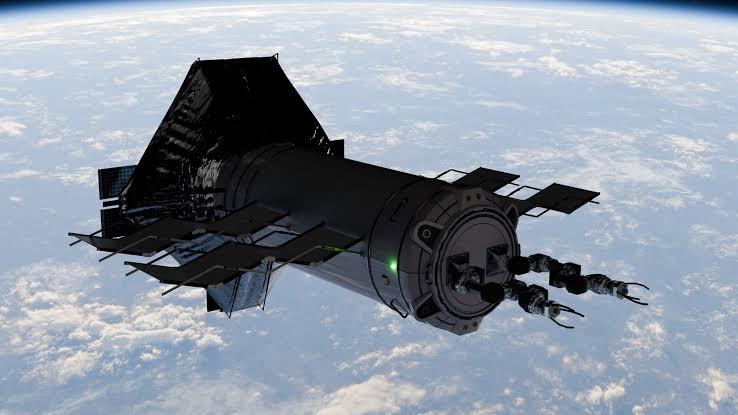
Spaceium has opened licensing for its OpenPort in-orbit refueling technology, allowing any company to build and license the hardware for $1. The low price reflects the company's business model, which centers on selling fuel to spacecraft rather than profiting from the refueling interface itself.
When a satellite runs out of fuel in orbit, its useful life ends, a model some compare to throwing out a car every time the gas light comes on. Spaceium aims to change that by enabling satellites to operate as long as their electronics and other systems function, to maneuver without conserving fuel, and to travel farther into deep space without carrying all of their fuel at launch.
"We are not a port business," Spaceium cofounder and CEO Ashi Dissanayake said. "We are not here to sell a refueling interface and make money. We want to develop this whole space economy so that any spacecraft can get filled."
Fuel can flow both ways through the androgynous OpenPort, meaning it can act as both fuel pump and refueling port rather than using separate parts for each function. That capability is central to building a network of refuelers, since traveling fuel depots can fuel up with Spaceium and then refuel spacecraft themselves. "It was a request from a customer," cofounder and CTO Reza Fetanat said. "We got all of the requirements from customers, and that was something they wanted." The port is fuel-agnostic and does not add a new piece to spacecraft. Instead, it replaces the port traditionally used to fuel a spacecraft on the ground, giving longer-term purpose to a part that typically becomes useless weight after launch.
Orbit Fab, which is also seeking to become the gas station of choice in orbit, made its own RAFTI refueling port available to industry via an open license in October 2021.
By making the hardware broadly available at minimal cost, Spaceium is positioning the fuel itself, rather than the interface, as the source of its revenue, with the aim of allowing any spacecraft to refuel across a network of depots.
Spaceium already has flight heritage, launching a mission in November aboard SpaceX's Transporter-15 that tested the company's robotic arm, which will assist in the refueling process on its future depots. Next, Spaceium will send OpenPort to the ISS in the first half of 2027, where the hardware will demonstrate xenon transfer on a spacecraft docked outside the station.