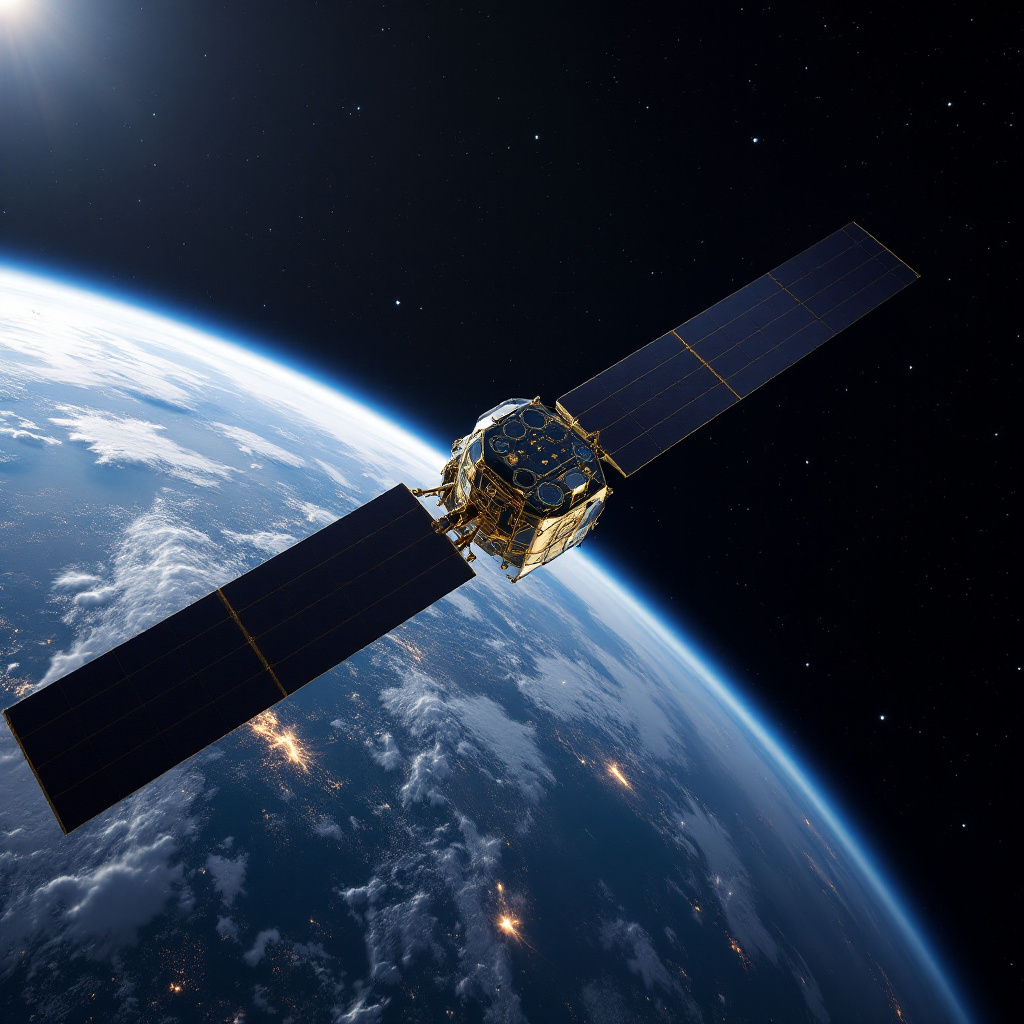
Space Force Taps Northrop Grumman and True Anomaly for GEO-Watching Reconnaissance Satellites
The Space Force and the Pentagon have commissioned two companies to build new reconnaissance satellites capable of delivering high-resolution space-to-space imagery of objects more than 22,000 miles above Earth. Space Systems Command awarded the prototype contracts on September 18 under the Geosynchronous High-Resolution Optical Space-Based Tactical Reconnaissance program, known as GHOST-R. The deal pairs Northrop Grumman, a veteran American defense prime, with True Anomaly, a four-year-old spa
OST Staff · October 1, 2026
The Space Force and the Pentagon have commissioned two companies to build new reconnaissance satellites capable of delivering high-resolution space-to-space imagery of objects more than 22,000 miles above Earth. Space Systems Command awarded the prototype contracts on September 18 under the Geosynchronous High-Resolution Optical Space-Based Tactical Reconnaissance program, known as GHOST-R.
The deal pairs Northrop Grumman, a veteran American defense prime, with True Anomaly, a four-year-old space tech company. Both are already under contract with the Space Force to develop space-based interceptors for the Pentagon's Golden Dome missile defense initiative. GHOST-R is the latest development in the RG-XX program, the Space Force's next-generation orbital tracking initiative aiming to field a fleet of agile, low-cost reconnaissance satellites in geosynchronous orbit to help build out U.S. defense capacity in space by the end of the decade.
GHOST-R is meant to use commercially developed space vehicles, buses, and electro-optical payloads to deliver high-resolution, space-to-space imagery for characterizing resident space objects in geostationary Earth orbit. Northrop will deliver a prototype the size of a small suitcase built on its ESPASat-L spacecraft, using a commercial optical sensor, and produced on an accelerated 24-month timeline. True Anomaly will deliver its Jackal autonomous orbital vehicle and Mosaic command-and-control system, a dynamic operations sensor suite.
Speaking September 16 at the AMOS Conference in Maui, Hawaii, days before the announcement, Gen. Stephen Whiting, head of U.S. Space Command, framed the need. "To be able to negate threats in space, we must be able to find, fix, track, and target those threats," he said. "Targeting in the space domain is maturing, but it still has a long way to go." Col. Bryon McClain, acting Portfolio Acquisition Executive for Space Combat Power, said in the release, "Collaborating with DIU on GHOST-R is a true force multiplier. We are leveraging rapid prototyping to push the envelope of what commercial tech can deliver to the RG-XX program."
Neither the Pentagon nor the companies have disclosed the value of the contracts or the source of their funding, though an SSC spokesperson said the money did not come from Andromeda, the Space Force's up to 6.2 billion dollar contract pool for RG-XX. Ryan Tintner, Northrop's vice president, said, "Space is becoming more congested and contested every day, and our joint forces depend on clear, timely insight into what's happening on orbit." True Anomaly CEO and co-founder Even Rogers said, "As agile, maneuverable adversary platforms become more capable, the reconnaissance architecture can no longer rely on a handful of exquisite assets."
The officials and companies cast the effort as a response to the growing difficulty of finding, fixing, tracking, and targeting threats in the space domain, with the prototypes intended to help characterize resident space objects in geostationary orbit and support U.S. defense capacity in space by the end of the decade.
The new GHOST-R prototypes are set to launch directly to geosynchronous orbit by 2028 and fly government-owned and operated missions by 2029, officials said.