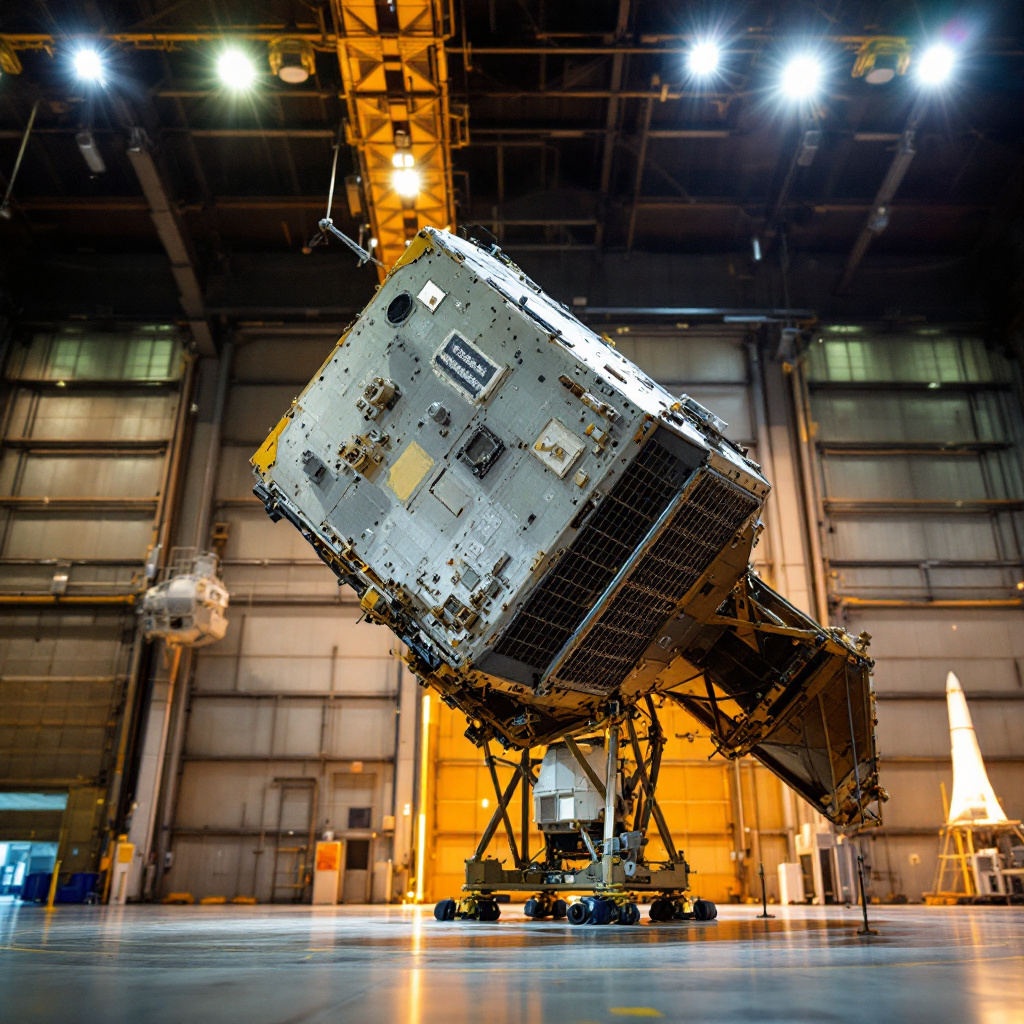
Space Force Retires Decades-Old Missile Warning Satellites After 50 Years
The Space Force has officially decommissioned the Defense Support Program missile-warning satellite constellation, closing out one of the longest-running U.S. military space programs more than 50 years after the first DSP satellite reached orbit. The retirement arrives as the service prepares to field a next-generation missile-warning architecture. DSP served as a backbone of U.S. early warning for strategic and tactical missile launches for decades. Its decommissioning comes at a moment of ris
OST Staff · October 2, 2026
The Space Force has officially decommissioned the Defense Support Program missile-warning satellite constellation, closing out one of the longest-running U.S. military space programs more than 50 years after the first DSP satellite reached orbit. The retirement arrives as the service prepares to field a next-generation missile-warning architecture.
DSP served as a backbone of U.S. early warning for strategic and tactical missile launches for decades. Its decommissioning comes at a moment of rising concern over hypersonic and counterspace threats, and the Space Force is moving toward a proliferated, more survivable system to replace it.
The first DSP satellite launched over five decades ago, and the constellation remained in service through a long operational life in geosynchronous orbit. Its retirement marks a generational shift in U.S. early warning, moving away from legacy satellites toward new designs. The Space Force is transitioning to a next-generation missile-warning and missile-tracking architecture built around proliferated spacecraft rather than a small number of large platforms.
The decommissioning formally ends the program after more than 50 years of continuous early-warning coverage for strategic and tactical missile launches.
The transition represents a generational change in how the United States detects missile launches from space, replacing the geosynchronous legacy design with a proliferated, more survivable architecture intended to address hypersonic and counterspace threats.
The harder test ahead will be proving that the next-generation constellation can match the 50-year track record DSP established. The Space Force is now focused on fielding that new architecture as it closes the book on the legacy system.