Russian Military Satellite Parks Within 5 Kilometers of ICEYE Radar Spacecraft
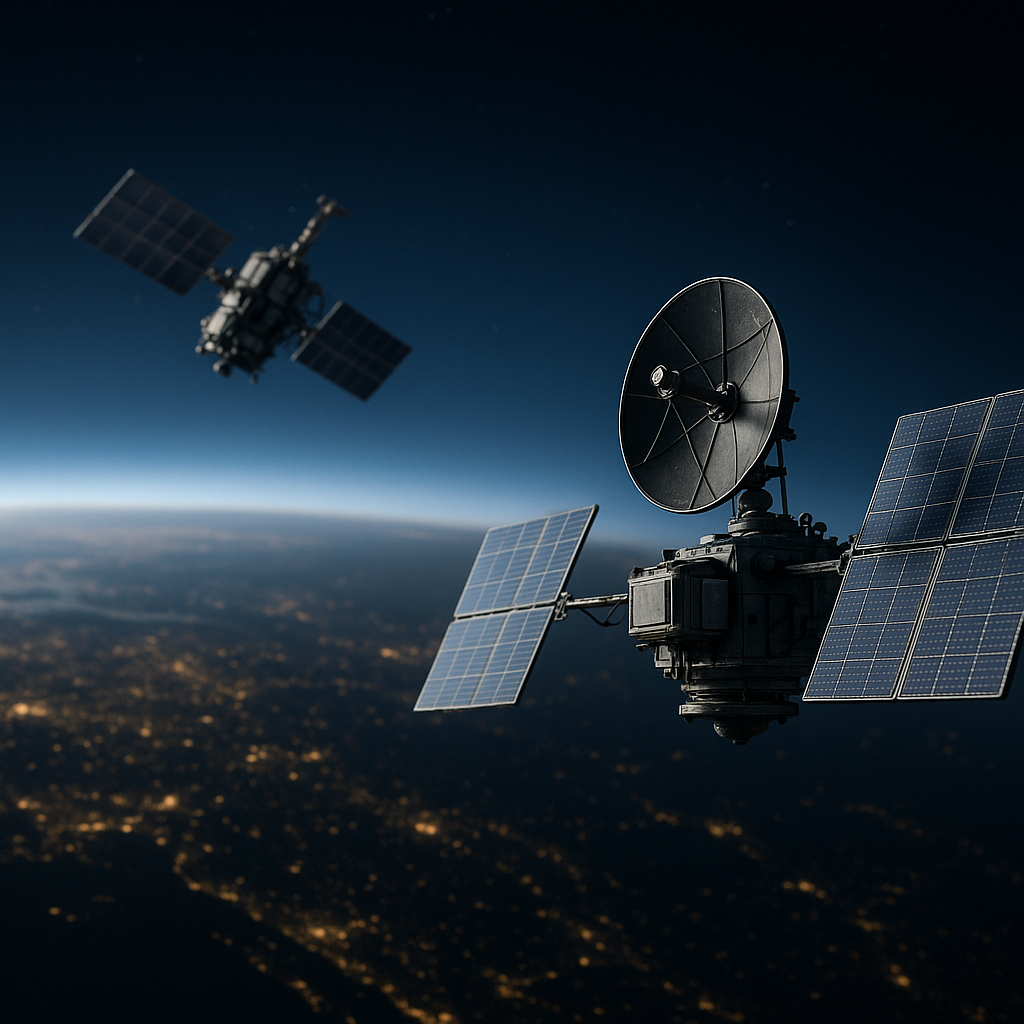
A Russian military satellite has maneuvered to within roughly 5 kilometers of ICEYE-X36, a commercial synthetic aperture radar satellite whose operator provides imagery used by Ukraine's military. Tracking data indicates the Russian spacecraft is holding its position nearby, a close approach that observers describe as potentially unprecedented for two active satellites in low Earth orbit. Defence Blog reported on October 18 that Russian satellite Kosmos 2612 adjusted its orbit on October 16 to
OST Staff · October 18, 2026
A Russian military satellite has maneuvered to within roughly 5 kilometers of ICEYE-X36, a commercial synthetic aperture radar satellite whose operator provides imagery used by Ukraine's military. Tracking data indicates the Russian spacecraft is holding its position nearby, a close approach that observers describe as potentially unprecedented for two active satellites in low Earth orbit.
Defence Blog reported on October 18 that Russian satellite Kosmos 2612 adjusted its orbit on October 16 to close on ICEYE-X36, operated by the US division of the Finnish-founded company. The maneuver follows a pattern of earlier approaches toward the same satellite.
Astrophysicist and independent satellite tracker Jonathan McDowell identified the maneuver using updated orbital data. He said the Russian spacecraft appeared to be maintaining a position within 5 kilometers of ICEYE-X36, though he cautioned that further observations were needed for confirmation. "New TLEs show that K2612 made a manuever on Oct 16 and is now stationkeeping within 5 km or less of ICEYE X36," McDowell wrote on X. "To my knowledge this is the first LEO rendezvous of two active satellites where the owner of one of the sats did not give approval."
Space surveillance company LeoLabs separately told Axios that the Russian satellite's movement appeared deliberate, placing Kosmos 2612 approximately three miles from ICEYE-X36 as of October 17. ICEYE declined to comment. The company operates radar imaging satellites capable of observing Earth's surface regardless of cloud cover or daylight conditions. Ukraine has used ICEYE imagery since 2022, including data from a satellite purchased through crowdfunding. A Ukrainian official confirmed to Axios that the country's military cooperates with ICEYE but could not establish whether ICEYE-X36 specifically supports Ukrainian operations.
Kosmos 2612 launched in April 2026 aboard a Soyuz-2.1b rocket from Russia's Plesetsk Cosmodrome alongside five other military satellites. The Center for Strategic and International Studies reported that five satellites from that launch conducted orbital adjustments in May, bringing them into the same orbital plane as ICEYE-X36. One passed within approximately 2.5 kilometers of the commercial satellite on May 26. ICEYE CEO Rafal Modrzewski later said the company had maneuvered its satellite in response. In March 2026, reports revealed that Russia's Luch-2 military satellite had been shadowing European communications satellites, including Intelsat-39, which is also used by Germany's Bundeswehr. That spacecraft's proximity raised concerns about intercepted communications and potential interference with satellite operations.
By McDowell's account, the current rendezvous would mark the first known instance of two active satellites in low Earth orbit meeting at close range without the consent of one operator. The earlier approaches in May and the reported shadowing of communications satellites in March point to a recurring interest by Russian military spacecraft in commercial and allied assets, with concerns centered on surveillance, interference, and the imagery ICEYE provides to Ukraine.
Further orbital observations are needed to confirm whether Kosmos 2612 continues stationkeeping near ICEYE-X36 and whether ICEYE again maneuvers its satellite in response, as the company did following the May approach.