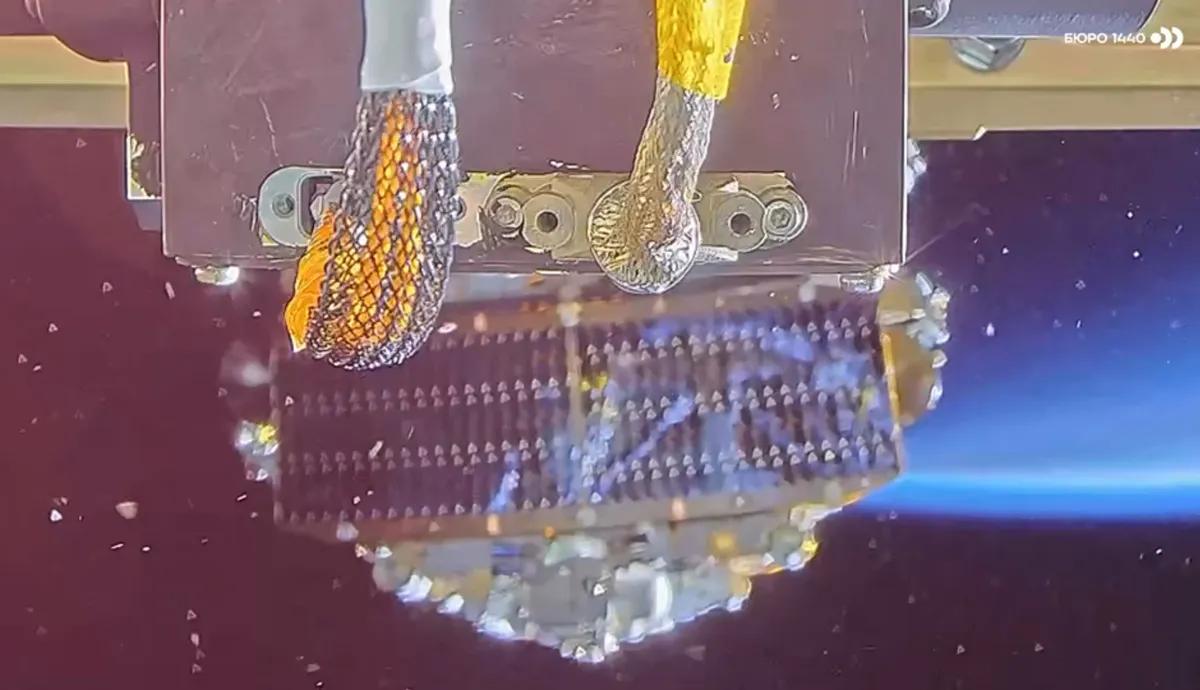
Russia Deploys Rassvet Satellite Network Over Ukraine for Military Communications, Kyiv Says
Russia is already using its new Rassvet satellite network, billed as a homegrown version of Starlink, for military communications over Ukraine, Ukrainian military intelligence told Reuters. Kyiv says the system aims to make Russian strike drones more accurate and harder to jam. The Main Intelligence Directorate of Ukraine's Ministry of Defense, known as GUR, said Russia has launched 32 Rassvet satellites into orbit this year in two batches in March and July. The Russian government said last mon
OST Staff · November 6, 2026
Russia is already using its new Rassvet satellite network, billed as a homegrown version of Starlink, for military communications over Ukraine, Ukrainian military intelligence told Reuters. Kyiv says the system aims to make Russian strike drones more accurate and harder to jam.
The Main Intelligence Directorate of Ukraine's Ministry of Defense, known as GUR, said Russia has launched 32 Rassvet satellites into orbit this year in two batches in March and July. The Russian government said last month it had launched more than 30 satellites. Moscow plans more launches by the end of 2026 to expand the network's geographic coverage, gradually moving it closer to a full low-orbit satellite communications system, according to GUR.
That total remains a tiny fraction of the more than 10,000 satellites in the Starlink network run by SpaceX, whose military version, Starshield, operates in Ukraine but not in Russia. Russian forces had used grey-market Starlink terminals in Ukraine until Kyiv successfully lobbied SpaceX to disable them earlier this year, one of several factors that shifted battlefield momentum in Ukraine's favor. Last month, Ukrainian commanders unexpectedly saw speed limitations imposed on Starshield, hampering their ability to intercept Russian attack drones and forcing the cancellation of some strike operations. Those restrictions have now been lifted, and no explanation was given.
GUR spokesman Andrii Yusov said the constellation is currently insufficient for uninterrupted coverage, with communication available intermittently when satellites pass over relevant areas. Russia's Scientific and Expert Council warned Friday of risks posed by Starlink and urged quicker deployment of Rassvet. President Volodymyr Zelenskyy last week imposed sanctions on 10 companies involved in developing the system, including Bureau 1440, the coordinator of the state-backed project. Bureau 1440 has said it plans a constellation of more than 900 satellites by 2035.
GUR said Rassvet may provide Russia with two-way data exchange with its unmanned aircraft, allowing surveillance drones to transmit data in real time and pilots to adjust the route of attack drones during flight, reducing dependence on a pre-programmed flight path. That could let drones adjust to changes in target location or evade air defenses. Kyiv-based security expert Mykola Zientsev said there were signs Rassvet was already affecting precision strikes by Russian jet-powered drones, noting that Russia already has at least two high-quality satellite communications windows daily, each lasting more than an hour. GUR has published a list of 49 companies from Russia and Belarus it says are involved in the project.
Yusov said that in the longer term, Rassvet could increase the effectiveness of strike and reconnaissance drones and make it more difficult for electronic warfare and electronic intelligence systems to intercept them. Major General Vadym Skibitskyi, deputy head of GUR, said in August that Russia was launching the system much faster than originally planned and that Ukraine was already discussing ways to counter it. Ukraine said in August it carried out a long-range missile attack against the Progress rocket and space center in Russia's Samara region, which produces rockets used to launch Rassvet satellites.
Denys Sienik, Ukraine's chargé d'affaires in Washington, has urged the United States to impose its own sanctions on Rassvet companies and said Russia was developing the system using Chinese components. The U.S. Treasury Department had no comment on Ukraine's push for further sanctions. Russia's defense ministry did not immediately respond to a request for comment, and Bureau 1440 did not immediately answer questions about Rassvet.