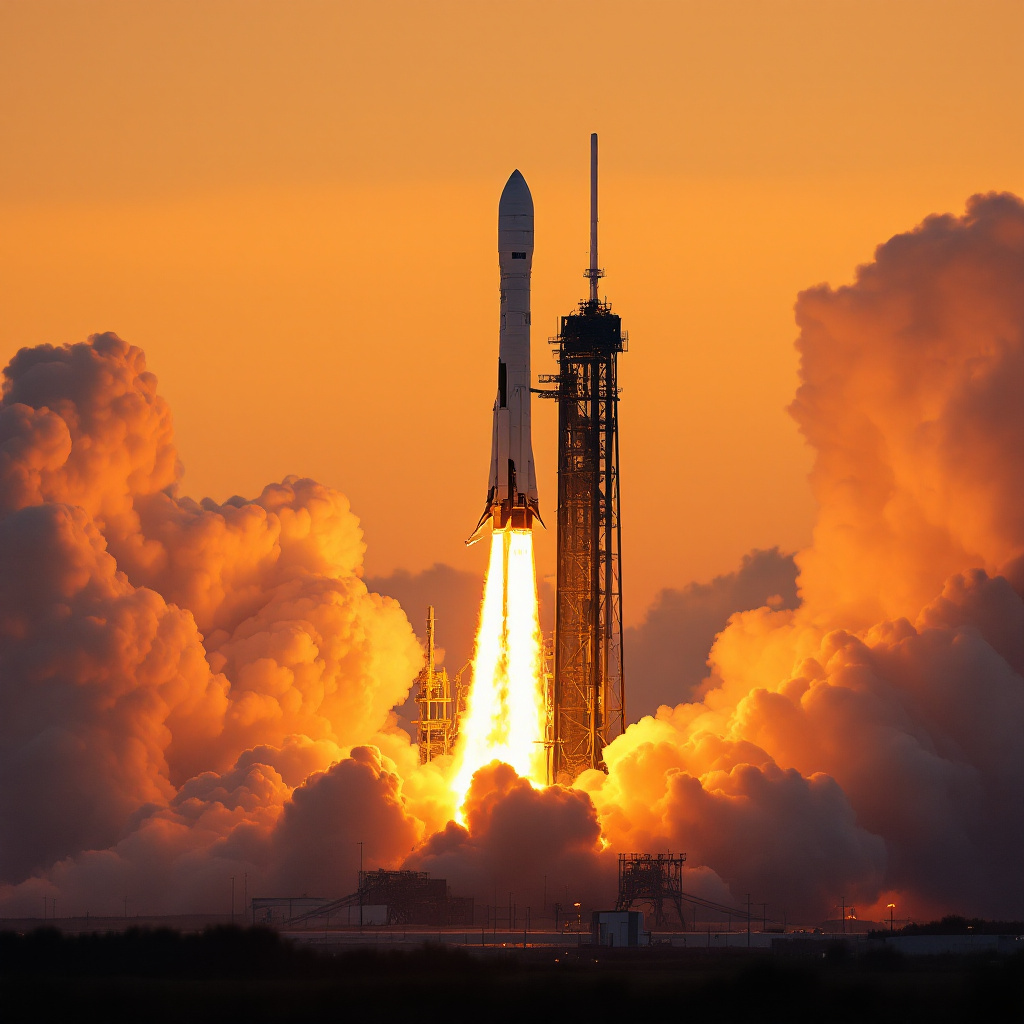
Roman Space Telescope Set for Sunday Falcon Heavy Launch from Kennedy
NASA's Nancy Grace Roman Space Telescope is scheduled to lift off at 7:26 a.m. EDT on Sunday, August 30, aboard a SpaceX Falcon Heavy from Kennedy Space Center in Florida. The observatory pairs spy satellite optical technology with sophisticated infrared detectors, delivering a field of view 100 times wider than Hubble's. When operational early next year, it will become NASA's third major flagship space observatory currently active. Roman is designed to map the sky 1,000 times faster than Hubbl
OST Staff · August 28, 2026
NASA's Nancy Grace Roman Space Telescope is scheduled to lift off at 7:26 a.m. EDT on Sunday, August 30, aboard a SpaceX Falcon Heavy from Kennedy Space Center in Florida. The observatory pairs spy satellite optical technology with sophisticated infrared detectors, delivering a field of view 100 times wider than Hubble's. When operational early next year, it will become NASA's third major flagship space observatory currently active.
Roman is designed to map the sky 1,000 times faster than Hubble at the same resolution. That survey speed is central to its scientific purpose, allowing questions that would take Hubble lifetimes to become tractable within months. The combination of spy-satellite optics and infrared sensitivity in a wide-field instrument is a capability that did not previously exist.
The telescope will launch on a Falcon Heavy rocket from Kennedy Space Center. Its optical technology is derived from spy satellite systems, combined with infrared detectors to produce its wide-field imaging capability. Roman is the first space observatory named for a woman.
Once operational early in 2027, Roman will join the Hubble Space Telescope and the James Webb Space Telescope as NASA's active flagship observatories. Its 100-times-wider field of view and 1,000-times-faster sky mapping distinguish it from those instruments while matching Hubble's resolution.
Roman is described as a generational instrument, the kind of telescope capable of reshaping entire fields of astronomy for decades. Its survey speed changes what science is possible, turning problems that would once have required lifetimes of observing time into tasks achievable in months. Astronomers say that if Roman delivers on its promise, it will produce more new science in its first year than any telescope in history, with the data open to the public.
The launch is scheduled for Sunday, August 30, at 7:26 a.m. EDT. The observatory is expected to become operational early in 2027.