Rocketdyne Returns as Standalone Space Company After $845 Million Sale
Rocketdyne is again an independent company as AE Industrial Partners completed its purchase of L3Harris Technologies' space propulsion, power and electronics units on August 4. The deal separates a 1,300-person space supplier from the missile businesses L3Harris plans to keep, and revives one of the best-known names in American rocket propulsion as a standalone entity. AE Industrial said it now owns 60 percent of Rocketdyne, while L3Harris retains a 40 percent noncontrolling interest and will c
OST Staff · August 4, 2026
Rocketdyne is again an independent company as AE Industrial Partners completed its purchase of L3Harris Technologies' space propulsion, power and electronics units on August 4. The deal separates a 1,300-person space supplier from the missile businesses L3Harris plans to keep, and revives one of the best-known names in American rocket propulsion as a standalone entity.
AE Industrial said it now owns 60 percent of Rocketdyne, while L3Harris retains a 40 percent noncontrolling interest and will continue as a strategic partner. The firms announced the $845 million transaction in January.
The revived Rocketdyne does not resemble the full Aerojet Rocketdyne inherited by L3Harris three years ago, which combined solid rocket motors, launch engines and spacecraft systems under one roof. Rather than keep it as a single propulsion business, L3Harris divided the company along market lines. Missile propulsion, solid rocket motors and hypersonic technologies remain with L3Harris's Missile Solutions business, which the company plans to take public. The RS-25 engine used on NASA's Space Launch System core stage was excluded from the sale and remains wholly owned by L3Harris.
Kristin Houston, who led the businesses while they were part of L3Harris, has been named chief executive. Houston previously ran the company's Space Propulsion and Power Systems unit and its electro-optical business, and spent more than 16 years at Boeing in engineering and program management positions. "As an independent and standalone company, we can move faster, make decisions closer to the customer and pursue opportunities that simply weren't available to us inside a larger organization," Houston told reporters.
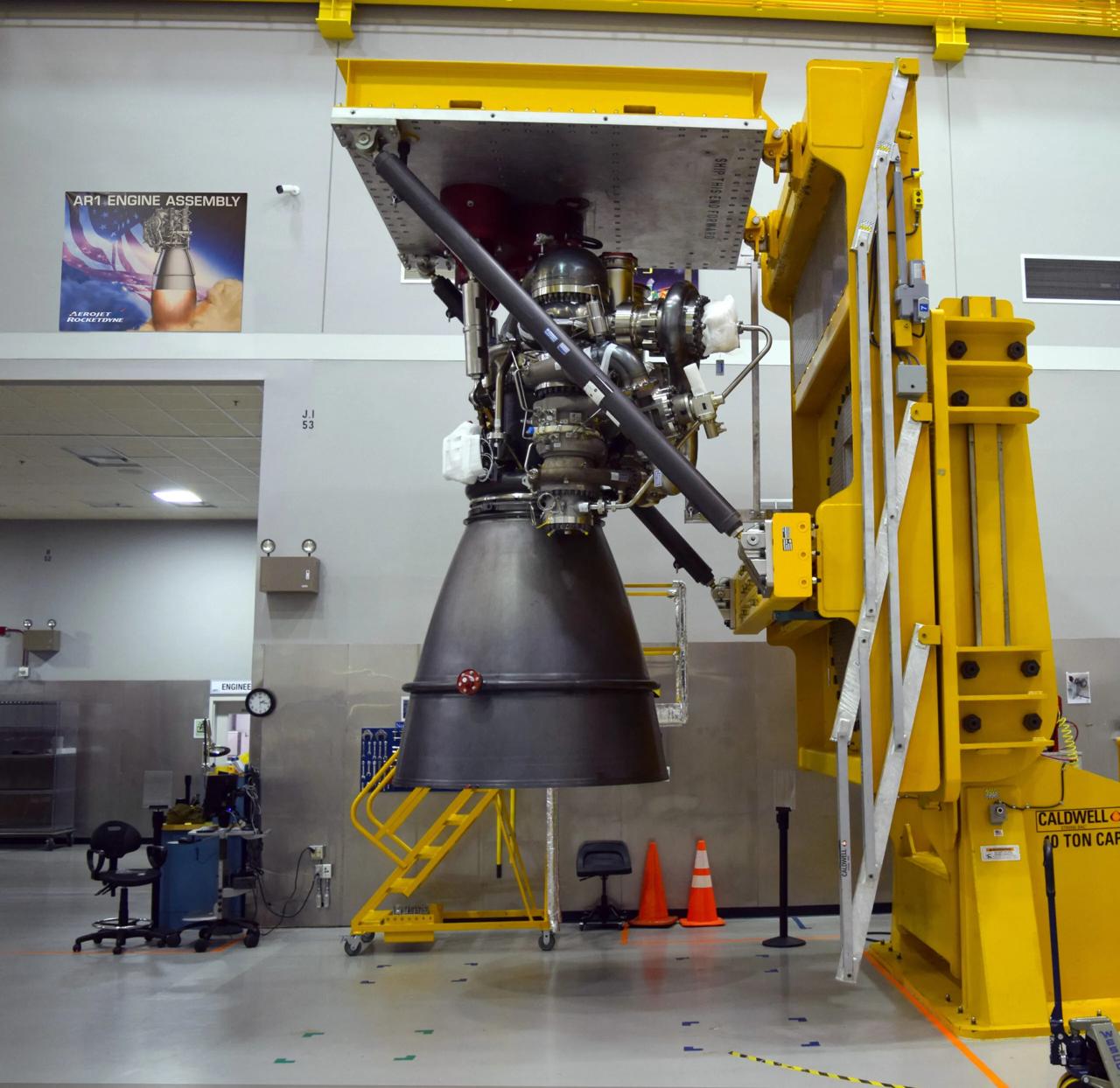
Rocketdyne will concentrate on launch-vehicle engines, spacecraft propulsion, space electronics and nuclear power systems. Its best-known product is the RL10 upper-stage engine, used by United Launch Alliance's Atlas 5 and Vulcan rockets and on Space Launch System missions. The company also makes reaction-control thrusters, chemical and electric spacecraft propulsion, avionics, secure communications equipment and flight-safety systems. It is positioning space electronics and power systems as core businesses, including nuclear energy systems for defense and exploration missions. Rocketdyne does not make nuclear reactors and intends to partner with reactor suppliers. "We do have expertise in power conversion and power management and distribution," Houston said.
Rocketdyne is headquartered in Melbourne, Florida, with operations in Jupiter and Daytona Beach, Florida, Mason, Ohio, Los Angeles, and Redmond, Washington. About 430 of its roughly 1,300 employees are engineers and scientists. The company says it has delivered approximately 22,000 chemical thrusters and flown more than 500 RL10 engines. Its heritage includes propulsion for NASA planetary missions, the Voyager spacecraft and Parker Solar Probe, as well as Hall thrusters used to move the U.S. military's AEHF-1 communications satellite into geosynchronous orbit after its main engine failed. Current programs span propulsion for GPS and Wideband Global Satcom satellites, NASA's Orion spacecraft, the Roman Space Telescope, the NASA-NOAA GeoXO weather-satellite program, datalinks for Maxar's WorldView Legion satellites, and radioisotope power systems for Mars rovers and NASA's Dragonfly mission to Titan.
AE Industrial partner Jon Lusczakoski said separating the business will give Rocketdyne greater freedom to invest in and expand its propulsion, power and electronics operations.
L3Harris plans to take its Missile Solutions business public, and Rocketdyne intends to partner with reactor suppliers as it develops nuclear power systems for defense and exploration missions.