Rocket Lab's Walking Robotic Arm to Debut on NASA Orbital Demo in 2027
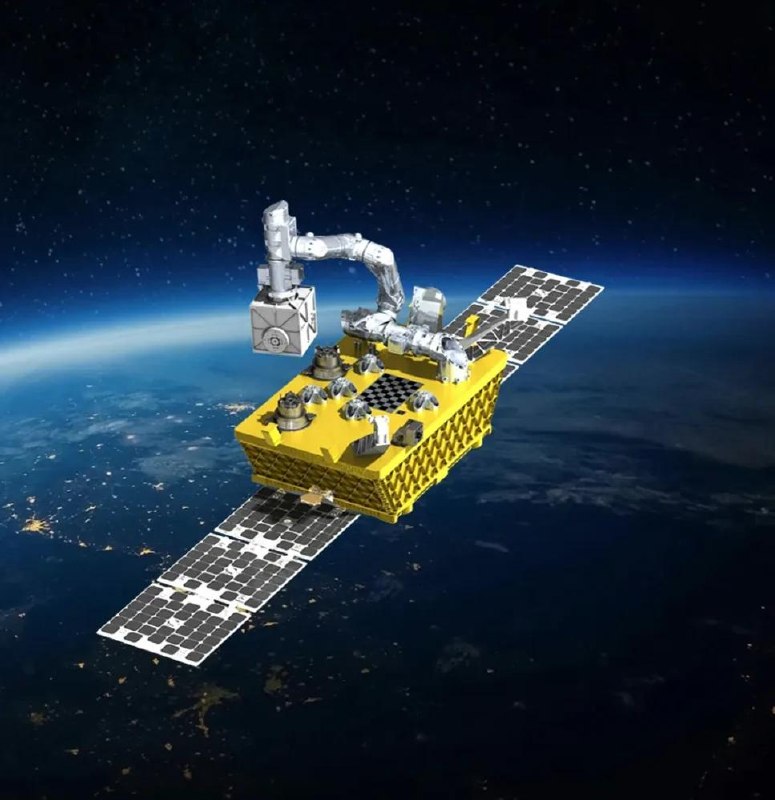
Rocket Lab has developed a robotic arm that can move autonomously across the surface of a spacecraft, performing repairs, upgrades, and assembly in zero or partial gravity. Built with NASA, the arm will make its debut on the Fly Foundational Robots mission, a technology demonstration set to launch in low Earth orbit in late 2027. Unlike traditional robotic arms that remain fixed in place, this version is designed to relocate itself and operate across a spacecraft. Rocket Lab Robotics, formerly
OST Staff · October 30, 2026
Rocket Lab has developed a robotic arm that can move autonomously across the surface of a spacecraft, performing repairs, upgrades, and assembly in zero or partial gravity. Built with NASA, the arm will make its debut on the Fly Foundational Robots mission, a technology demonstration set to launch in low Earth orbit in late 2027.
Unlike traditional robotic arms that remain fixed in place, this version is designed to relocate itself and operate across a spacecraft. Rocket Lab Robotics, formerly Motiv Space Systems, developed the arm with versatility as a priority, enabling it to manipulate objects, use tools, and carry out complex tasks such as servicing space systems. The project was funded through NASA's Small Business Innovation Research program.
NASA's FFR mission will test the arm's capabilities aboard a spacecraft in low Earth orbit, where it will serve as a platform for robotic demonstrations. One of the mission's primary goals is to validate the arm's ability to repair or upgrade a space system by installing a modular component known as an Orbital Replacement Unit while in orbit. NASA states that success would mark a key step toward enabling autonomous in-space servicing, assembly, and manufacturing.
NASA will also take a hands-on role as the inaugural Guest Roboticist, with its engineers using specialized software to control the arm and perform additional tasks. The agency plans to invite partners from industry, academia, and government agencies to take on this role in the future, expanding the mission's scope. To begin that effort, NASA launched a Space Roboticist challenge inviting academic partners to register to operate the robotic arm in space.
The FFR spacecraft will also carry docking mechanisms to support rendezvous operations with future spacecraft carrying additional payloads. Rocket Lab says the capability opens the door to follow-on missions ranging from building orbital infrastructure to supporting deep-space exploration. Rocket Lab acquired California-based Motiv in May 2026, bolstering its interplanetary robotics capabilities and expanding its suite of end-to-end space solutions, including the arm debuting in the FFR mission.
According to Rocket Lab and NASA, validating the arm's ability to install an Orbital Replacement Unit in orbit would represent a key milestone toward autonomous in-space servicing, assembly, and manufacturing. The addition of docking mechanisms and the Guest Roboticist model is positioned to broaden the range of applications the platform can support over time.
The mission is scheduled to launch in late 2027. NASA's Space Roboticist challenge is open for academic partners to register, and the agency plans to extend the Guest Roboticist role to additional industry, academic, and government participants in the future.