Pentagon Names Musk, Luckey and Gingrich to Lead 120-Day Study on Space Warfare
The United States has launched a new effort to map the future of warfare with space at its center. Secretary Pete Hegseth announced Project Meridian on September 30, naming Elon Musk, Anduril founder Palmer Luckey and former House Speaker Newt Gingrich as co-leaders under Pentagon Chief Technology Officer Emil Michael. The team has 120 days to deliver its findings. The initiative will examine how America maintains its advantage in the final frontier, alongside the capabilities required for conf
OST Staff · September 30, 2026
The United States has launched a new effort to map the future of warfare with space at its center. Secretary Pete Hegseth announced Project Meridian on September 30, naming Elon Musk, Anduril founder Palmer Luckey and former House Speaker Newt Gingrich as co-leaders under Pentagon Chief Technology Officer Emil Michael. The team has 120 days to deliver its findings.
The initiative will examine how America maintains its advantage in the final frontier, alongside the capabilities required for conflicts underground, at sea and across other military domains. Its scope extends to cislunar space, the region between Earth and the Moon. The study is expected to produce a public report with a classified annex and consider technologies including artificial intelligence, autonomous systems, directed energy, robotics and biotechnology.
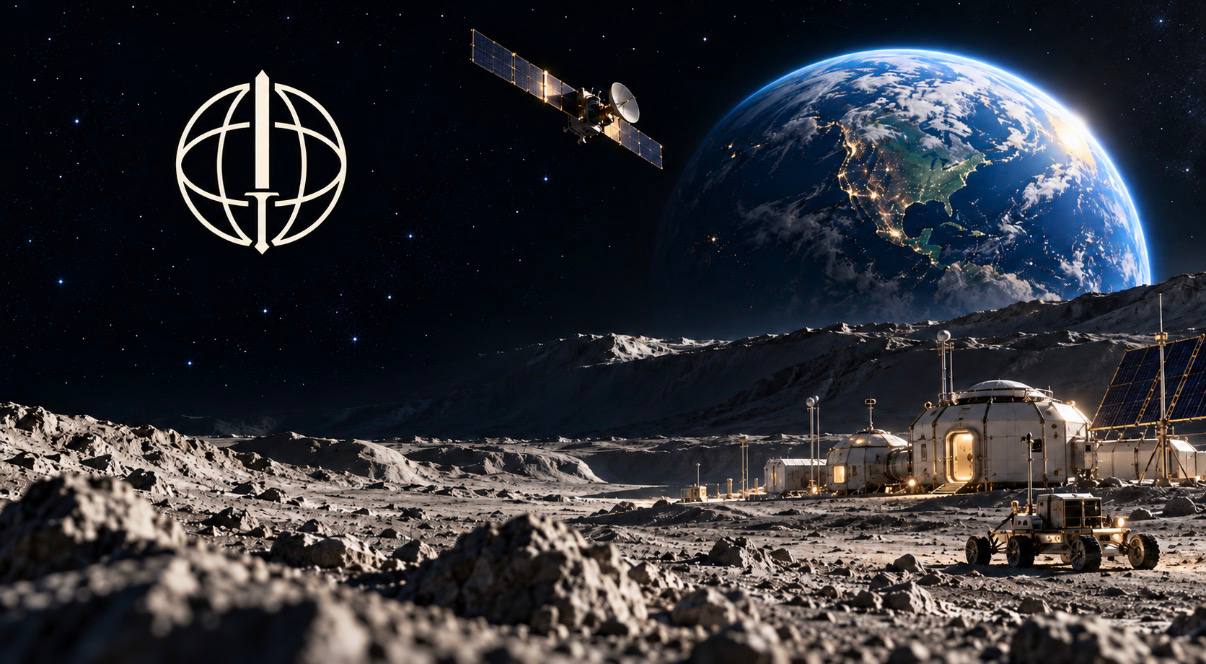
The announcement comes as NASA advances plans for a sustained presence on the Moon and China pursues its own crewed landing and lunar research station. Those efforts will place more infrastructure, commercial activity and national interests beyond Earth orbit, giving the question of security in cislunar space greater practical importance. Space already underpins military operations on Earth, providing communications, navigation, missile warning and other services. The Space Force has warned that adversaries are developing capabilities intended to disrupt those systems.
Meridian broadens that discussion to the final frontier. Maintaining an advantage could require the ability to replace damaged satellites quickly, sustain communications under attack and operate across greater distances. These are potential questions for the study, rather than capabilities announced as part of a funded Meridian program.
The three co-leaders bring different experience to the challenge. Musk's most direct contribution is SpaceX's experience delivering launch and satellite infrastructure for government customers. The company already participates in the National Security Space Launch program. In July, the Space Force awarded it approximately $1.6 billion in orders for 18 Falcon 9 missions carrying Pentagon satellites. Those orders followed major satellite awards earlier in 2026, further expanding the company's role in national security space operations.
SpaceX's Starshield business also targets government missions involving Earth observation, secure communications and hosted payloads, building on capabilities developed for the company's commercial satellite network. That experience suggests Musk could bring a practical perspective on the relationship between launch capacity, satellite production and military resilience. A space system's usefulness depends partly on how quickly it can be built, deployed, upgraded and replaced.
Luckey brings experience connecting advanced hardware with software that helps operators interpret information and control systems. Before co-founding Anduril, he founded Oculus. At Anduril, the company's Lattice platform supports applications including surveillance, force protection and counter-drone operations. The company has also worked with Microsoft to bring Lattice into the Army's Integrated Visual Augmentation System program. His potential contribution is especially relevant where space infrastructure connects with activity closer to Earth, turning information collected from orbit into something useful for a human operator, aircraft or autonomous system.
The initiative frames space security as central to America's ability to maintain its military advantage, extending the question beyond Earth orbit into cislunar space and connecting it to conflicts across every domain. The study is expected to consider how commercial infrastructure can become a foundation for defense applications and how longer-term defense requirements intersect with the industrial process of building and replacing space systems.
The team is due to deliver its findings within 120 days, producing a public report accompanied by a classified annex.