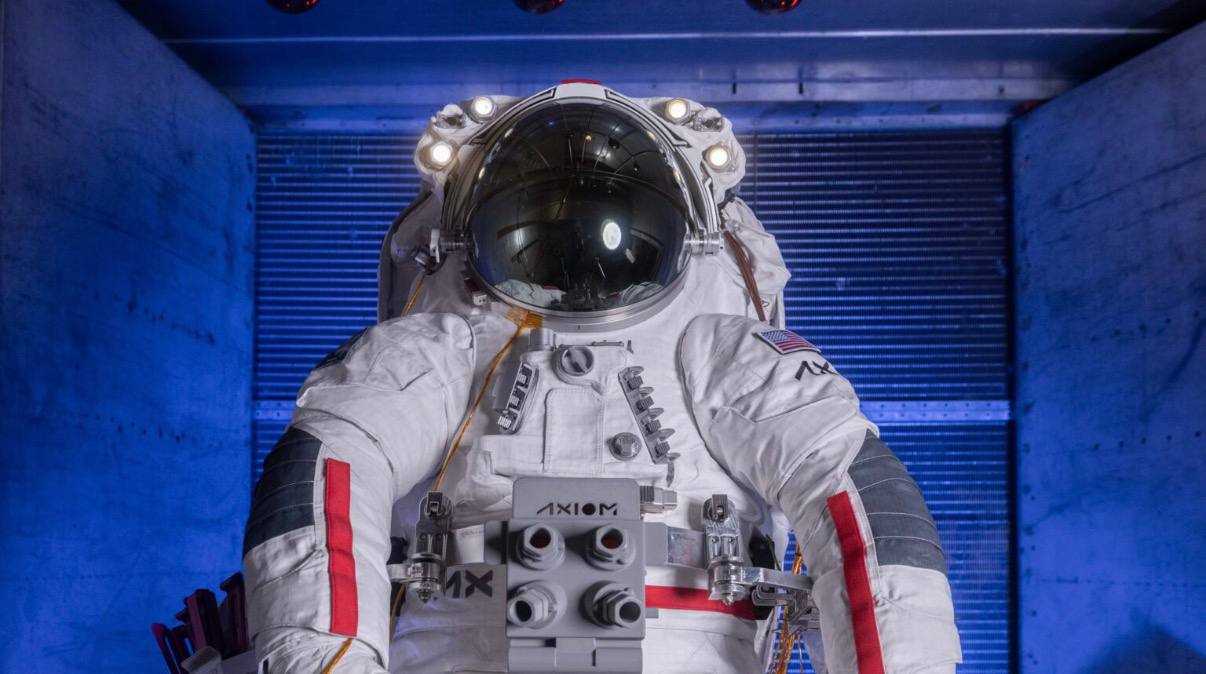
NASA Opts for Simpler "Sortie Suit" to Speed Lunar Return
NASA has decided to field a stripped-down spacesuit for its first crewed missions to the lunar surface, moving to accelerate a program aimed at landing astronauts at the Moon's south pole as early as 2028. The agency announced the decision during an internal meeting this week, directing Axiom Space to develop a "Sortie Suit" variant of its planned lunar surface suit. The move follows an extended review of the Artemis Program by Administrator Jared Isaacman and his team, who arrived at NASA in D
OST Staff · September 3, 2026
NASA has decided to field a stripped-down spacesuit for its first crewed missions to the lunar surface, moving to accelerate a program aimed at landing astronauts at the Moon's south pole as early as 2028. The agency announced the decision during an internal meeting this week, directing Axiom Space to develop a "Sortie Suit" variant of its planned lunar surface suit.
The move follows an extended review of the Artemis Program by Administrator Jared Isaacman and his team, who arrived at NASA in December 2025 to find the effort significantly behind schedule. At that point it appeared unlikely NASA would return to the Moon before at least 2030, raising the prospect that China could reach the lunar surface first. Isaacman has already streamlined production of the Space Launch System rocket, canceled the Lunar Gateway, and pressed both SpaceX and Blue Origin on how NASA can support their lander work.
Under the direction of Artemis Program Manager Jeremy Parsons, the Sortie Suit will be used on the initial landing missions flown on landers from SpaceX and Blue Origin. Goals of the initiative include lowering the mass of the spacesuit, reducing its complexity, and simplifying interfaces between the suits and the landers. Axiom, operating under a spacesuit-as-a-service contract, is currently NASA's only provider of suits for astronauts to venture onto the lunar surface, after Collins Aerospace dropped out of the program in 2024.
The pace of that work drew attention this week at the Aerospace Safety Advisory Panel. Panel member and former astronaut Charlie Precourt said NASA leadership is meeting with Axiom six days a week, often in person, to address schedule and performance concerns. "Requirements are being adjusted to reflect near-term mission needs, including shortening the spacesuit certification duration requirements," Precourt said. He did not name the Sortie Suit, but the reference clearly points to a slimmed-down version of Axiom's AxEMU suit.
Industry rumors have repeatedly held that Axiom's current design is significantly over its mass budget. One cause traces to requirements NASA initially established, which the agency's inspector general characterized in a 2024 report as "over-burdensome." Among them, NASA mandated that the suits support six spacewalks over a 6.5-day mission, remain capable of further spacewalks after 210 days in a dormant condition, and carry a thermal system able to operate nominally for at least two hours in an exceptionally cold, permanently shadowed region. Those demands drove Axiom toward a complicated design with many protective layers, higher mass, a stiffer build that reduced mobility, and rising costs.
With the Sortie Suit, NASA is seeking to pare back requirements so Axiom can build a suit that is good enough for initial Artemis missions and becomes more capable over time as the agency and Axiom gain operational experience on the surface and fold it into upgrades.
Attention now turns to the continued daily meetings between NASA leadership and Axiom, where the certification duration requirements and other specifications are being adjusted, and to how quickly Axiom can deliver a Sortie Suit ready for the initial landing missions targeted for as early as 2028.