NASA Administrator Pushes Moon Base Urgency After 90-Day Hardware Sprint
NASA Administrator Jared Isaacman sent a memo to the agency's workforce on July 28 outlining results from a 90-day sprint aimed at accelerating hardware development for the agency's permanent Moon Base program. Isaacman framed building a lasting American presence on the Moon as a "near-impossible task that only NASA is capable of achieving," and credited engineering teams with delivering flight-capable systems under budget. The memo described a sprint launched earlier this year at Kennedy Space
OST Staff · July 29, 2026
NASA Administrator Jared Isaacman sent a memo to the agency's workforce on July 28 outlining results from a 90-day sprint aimed at accelerating hardware development for the agency's permanent Moon Base program. Isaacman framed building a lasting American presence on the Moon as a "near-impossible task that only NASA is capable of achieving," and credited engineering teams with delivering flight-capable systems under budget.
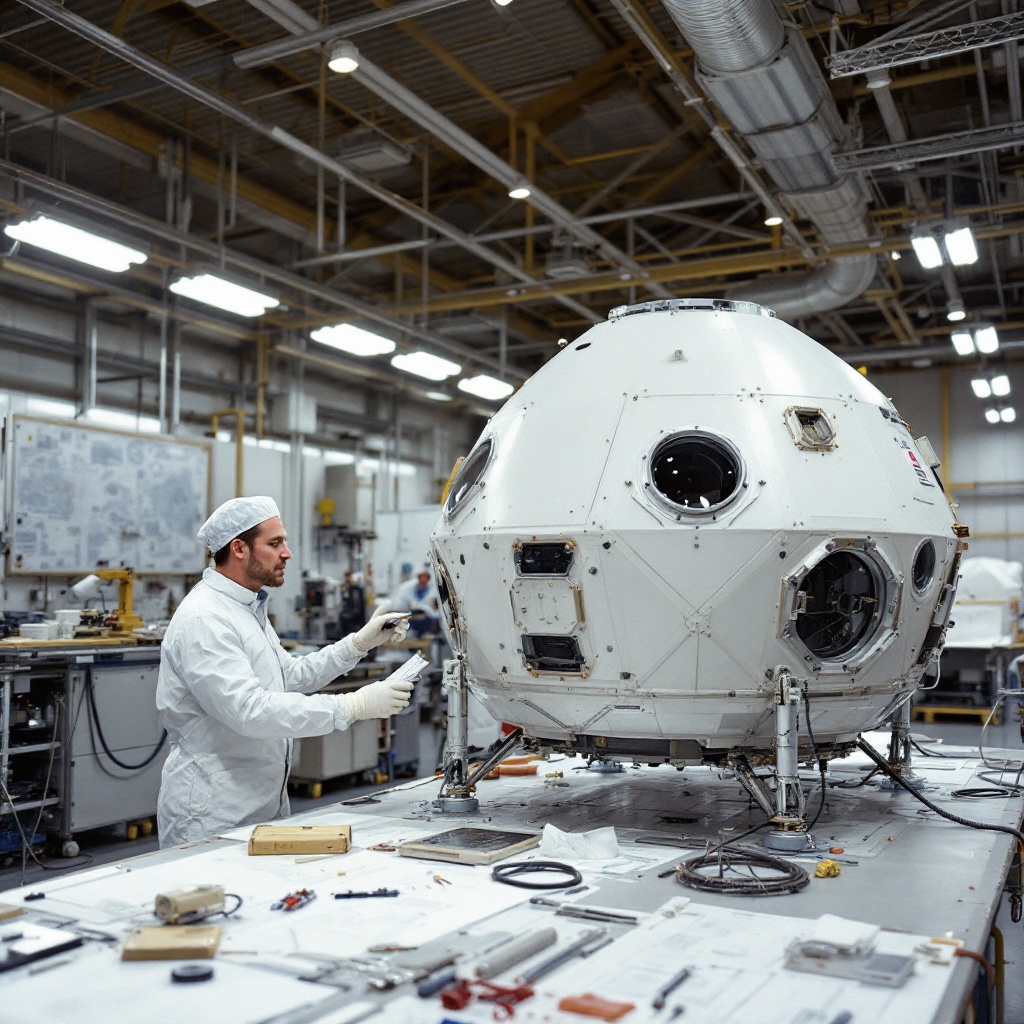
The memo described a sprint launched earlier this year at Kennedy Space Center, where engineering teams were challenged to evaluate what Moon Base hardware could be produced on an accelerated schedule. The stated goal was to challenge legacy processes, clear obstacles, and rapidly deliver flight-ready lunar hardware. The exercise emphasized a production-first approach built around scalability and speed.
The teams focused on two capabilities. The Dust Tolerant Automated Umbilical, or DTAU, is a dust-resistant connection system designed to transfer propellants and other fluids in the harsh lunar environment. The Mini Lunar Electrostatic Dust Mitigation system, or LEDM, is a compact unit that removes lunar dust from critical surfaces using a stream of ionized gaseous nitrogen.
Isaacman said that in just 90 days the teams delivered flight-capable solutions, came in under budget, and established a foundation for further production. He described the result as a repeatable production approach that now enables the teams to build four DTAUs and 10 LEDMs on a further reduced timeline. He congratulated the Kennedy Space Center Engineering Directorate and Procurement Office and thanked the broader workforce, saying their sense of urgency was helping turn Ignition priorities into world-changing outcomes.
The workforce memo coincided with an international partnership push. The same week, NASA's Moon Base program chief, Carlos Garcia-Galan, was in Seoul outlining Artemis lunar base timelines and telling Korean officials that Korea's partner roles in the program would be defined within three months. Korea was identified as a key partner in communications, landers, and robotics.
Isaacman said the lessons from the sprint have broad applicability beyond the Moon Base program and Kennedy Space Center engineering. His characterization of the effort as near-impossible is an unusually candid framing for a NASA administrator, and it signals an attempt to build urgency inside the agency following what NASA Watch described as a difficult 2025 marked by DOGE and a lack of real leadership. The pairing of an internal workforce memo with an international partnership effort in the same week points to an active acceleration phase for the Moon Base program.
The next milestone is the definition of Korea's partner roles, which Garcia-Galan said would be established within three months. With a permanent base targeted for 2032, the coming period will indicate whether the sprint approach translates into sustained program momentum.