Chandra Data Reveals a New Class of Cosmic Objects Hiding in Six Galaxies
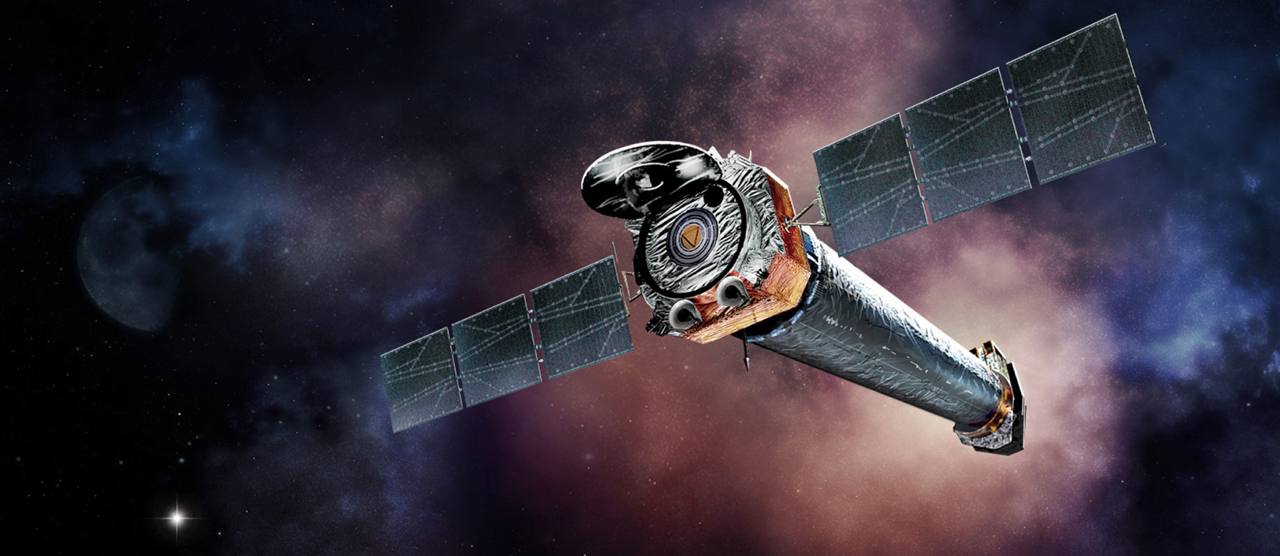
Astronomers using NASA's Chandra X-ray Observatory have discovered a previously unseen class of objects that emit unusually low-energy X-rays alongside intense ultraviolet radiation. The finding, published Wednesday in Nature Astronomy, identifies 84 of these objects across six galaxies and could help resolve two long-standing questions in astrophysics. The team, led by Mustafa Muhibullah of the University of Alabama, spotted the objects by combing through publicly available data in the Chandra
OST Staff · September 10, 2026
Astronomers using NASA's Chandra X-ray Observatory have discovered a previously unseen class of objects that emit unusually low-energy X-rays alongside intense ultraviolet radiation. The finding, published Wednesday in Nature Astronomy, identifies 84 of these objects across six galaxies and could help resolve two long-standing questions in astrophysics.
The team, led by Mustafa Muhibullah of the University of Alabama, spotted the objects by combing through publicly available data in the Chandra archive. The sources appeared in images taken at the lowest X-ray energies but vanished in higher-energy images, meaning they produce far more low-energy X-rays than high-energy ones. Because low-energy X-rays border energetic ultraviolet radiation on the electromagnetic spectrum, the researchers determined the sources also emit large amounts of energetic ultraviolet radiation.
The team named the objects hypersoft X-ray sources for their low-energy output. They found them in six galaxies, including two spirals, M31, the Andromeda galaxy, and M101, the Pinwheel galaxy, along with four ellipticals. The sources turned up both in regions of active star formation and in areas of older stars. What produces them remains unclear, though the team thinks they most likely involve a black hole, neutron star, or white dwarf pulling material from a companion star. Material stripped from the companion heats up and produces X-rays before falling onto the compact object. Such binary systems have been seen before, but not with such bright ultraviolet radiation and low-energy X-rays.
"We've never encountered a group of objects that act like this," Muhibullah said. "These clandestine X-ray sources are actually among the most energetic objects in galaxies, and they could be solving two cosmic mysteries at once." The discovery suggests there may be large populations of binary systems with energetic ultraviolet radiation that have gone undetected until now.
The researchers say the objects may address two open problems. Some white dwarf systems pulling material from companion stars may eventually explode as a Type Ia supernova, critical for measuring the expansion of the universe and central to the discovery that this expansion is accelerating. Astronomers have long searched for the stars that turn into these supernovae without success. "If we could find a way to spot these Type Ia supernova explosions before they go off, that would be really important," said co-author Jimmy Irwin, also of the University of Alabama. "Right now, we study them after they've exploded, and astronomers have struggled to understand what is actually ignited." The intense ultraviolet radiation may also help explain what strips electrons from gas between stars in some galaxies, a process that affects how quickly stars form and influences the life cycles of galaxies.
The objects went undetected until now for two reasons. Their low-energy X-ray output is very difficult for X-ray telescopes to detect, and their high-energy ultraviolet radiation is readily absorbed by helium and hydrogen gas between the stars, creating a nearly impenetrable barrier. "By combing through the Chandra archive, we were able to eliminate what used to be a blind spot for telescopes," said co-author Rosanne Di Stefano of the Center for Astrophysics, Harvard and Smithsonian. "That's how we found what appears to be a new class of cosmic objects with remarkable qualities."
Confirming exactly what these objects are will require further observations across the electromagnetic spectrum. NASA's Marshall Space Flight Center in Huntsville, Alabama, manages the Chandra program, while the Smithsonian Astrophysical Observatory's Chandra X-ray Center controls science operations from Cambridge, Massachusetts.