NASA Weighs Leasing Ames Research Center Land for Hyperscale Data Center
NASA is exploring the possibility of leasing land at Moffett Field for a large-scale data center development, seeking a contractor to evaluate the opportunity at its Ames Research Center. The move, which remains in an early advisory stage, has drawn concern from Mountain View community members over potential environmental impacts. Last month NASA issued a request for a real estate and investment firm with hyperscale data center experience to evaluate potential data center development opportunit
OST Staff · November 22, 2026
NASA is exploring the possibility of leasing land at Moffett Field for a large-scale data center development, seeking a contractor to evaluate the opportunity at its Ames Research Center. The move, which remains in an early advisory stage, has drawn concern from Mountain View community members over potential environmental impacts.
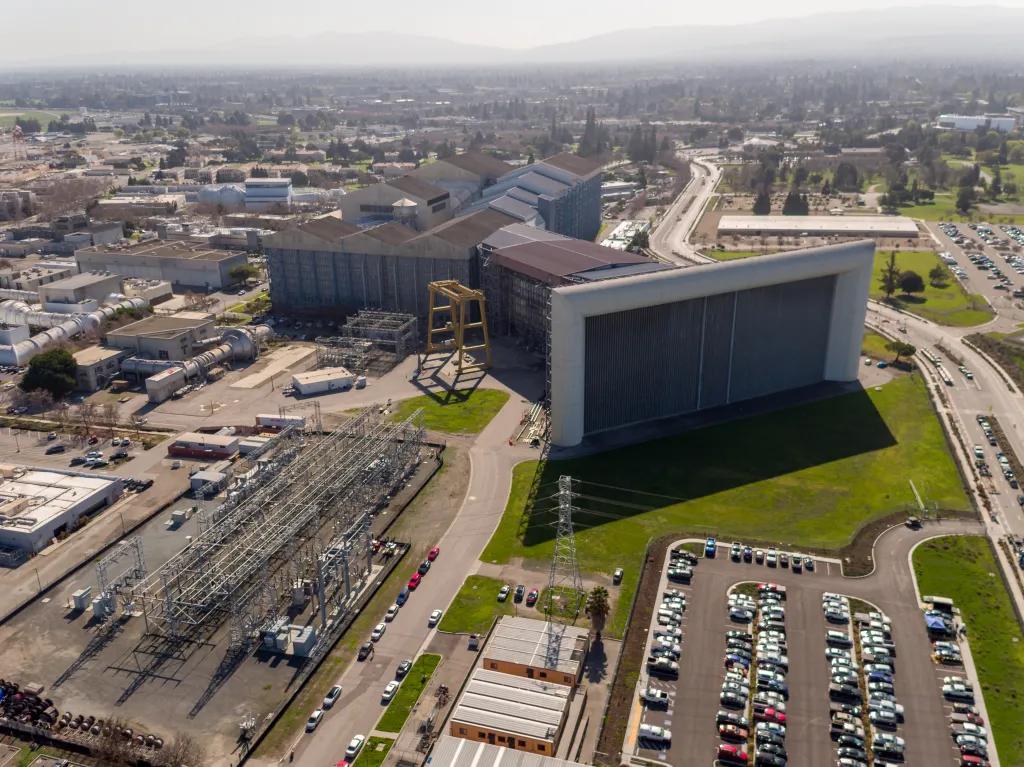
Last month NASA issued a request for a real estate and investment firm with hyperscale data center experience to evaluate potential data center development opportunities at Ames Research Center, a roughly 2,000-acre federal site at Moffett Field. The site largely sits in unincorporated Santa Clara County, north of Mountain View and U.S. Highway 101. The news was first reported by Data Center Dynamics.
NASA's proposal states that the agency has identified sites at Ames that it could potentially lease for a data center but does not disclose any specific locations. The request seeks a firm to provide decision-ready analysis and recommendations concerning site feasibility and development readiness.
NASA spokesperson Jeanne Neal said the agency is studying various possible uses of the Moffett Field federal property, including expanding supercomputing data centers to support national needs. "This is one of multiple studies to explore the best use of federal property," Neal said in an emailed statement, adding that NASA routinely conducts such studies to understand the benefits and risks. She said the contractor's study would be advisory and does not commit NASA to any course of action.
Addressing the pushback on data centers, Neal said Ames is already home to NASA's fastest supercomputers and that the agency has pioneered efficient modular data centers that save over 90 percent of the water and power over conventional data centers to cool supercomputing systems. She added that the existing electrical infrastructure at Ames could be leveraged to support additional supercomputing.
Lenny Siegel, a former Mountain View mayor who has long been involved in efforts to clean up toxic sites including at Moffett Field, raised concerns about heavy water and electricity use. "The problems with hyperscale data centers is cooling them, and that's either done by using a lot of electricity or a lot of water, or using PFAS 'forever chemicals' to do liquid cooling," Siegel said. "Any of those are an environmental problem." He also noted that because the facility would sit on federal land, Mountain View would likely have no regulatory control over it despite its close proximity.
The possibility has raised alarm among some Mountain View residents, who cite water and electricity use, noise, and air pollution. Large-scale data centers have sparked significant public opposition across the U.S., and dozens of California municipalities have proposed moratoriums and bans in recent months, including San Jose earlier this week. Santa Clara County has the largest concentration of data center facilities and projects in California, with 96 operational facilities, 30 planned, and three under construction, most located in San Jose and Santa Clara and only a small share classified as hyperscale.
Siegel said that if NASA moves forward, he expects substantial community opposition. "I expect a lot of community opposition that may be successful even though we don't have direct control over Moffett Field and Ames Research Center," he said, while noting that NASA has a long history of proposing projects that did not ultimately proceed. The contractor's study remains advisory, and NASA has not committed to any development.