NASA and Energy Department Sign Space Nuclear Pact as Isaacman Says Moon Base Runs Ahead of Schedule
NASA Administrator Jared Isaacman and Energy Secretary Chris Wright signed a memorandum of understanding Thursday to accelerate cooperation on space nuclear power and propulsion, part of a government wide science package exceeding $6 billion. Isaacman also told the White House "Science: A New Golden Age Summit" that NASA will beat the national space policy's goal of placing the first Moon Base elements by 2030. The agreement implements President Donald Trump's December 2025 space superiority ex
OST Staff · October 9, 2026
NASA Administrator Jared Isaacman and Energy Secretary Chris Wright signed a memorandum of understanding Thursday to accelerate cooperation on space nuclear power and propulsion, part of a government wide science package exceeding $6 billion. Isaacman also told the White House "Science: A New Golden Age Summit" that NASA will beat the national space policy's goal of placing the first Moon Base elements by 2030.
The agreement implements President Donald Trump's December 2025 space superiority executive order and a White House memo, NSTM-3, which launched a national space nuclear power initiative. The summit followed up on a July report of the same name, hosted by the White House Office of Science and Technology Policy.
The MoU sets a framework for NASA and the Department of Energy to jointly design, build, and deploy space nuclear systems and fuels, spanning research, testing, launch integration, and operations. It supports Space Reactor-1 Freedom, NASA's nuclear-powered spacecraft scheduled to launch to Mars no earlier than 2028 to demonstrate nuclear electric propulsion. It also backs Lunar Reactor-1, a fission-powered reactor intended to keep the lights on at the Moon Base, with a launch-ready system due by 2030. Radioisotope power and heater units supplied by DOE will support the Titan rotorcraft Dragonfly and ESA's Rosalind Franklin Mars rover.
"Adm. Hyman Rickover understood that nuclear power would fundamentally change what was possible at sea," Isaacman said. "NASA and the Department of Energy find ourselves at a similar starting point today. SR-1 Freedom is our Nautilus, and she will launch in 2028. And where we go from here must lead to that nuclear NASA." He framed SR-1 as the first step in an "Apollo-like endeavor," with future missions adding better materials, thrusters, and autonomy toward a vehicle that can carry astronauts to Mars and back.
The agreement formalizes existing plans rather than launching new ones. SR-1 debuted at NASA's Ignition in March, NASA and DOE signed a lunar reactor MoU in January, and Thursday's agreement came with no new funding figures or cost estimates. The package also included support for 10 NASA Genesis Mission Fellows, accelerated PhD students in AI, science, or engineering.
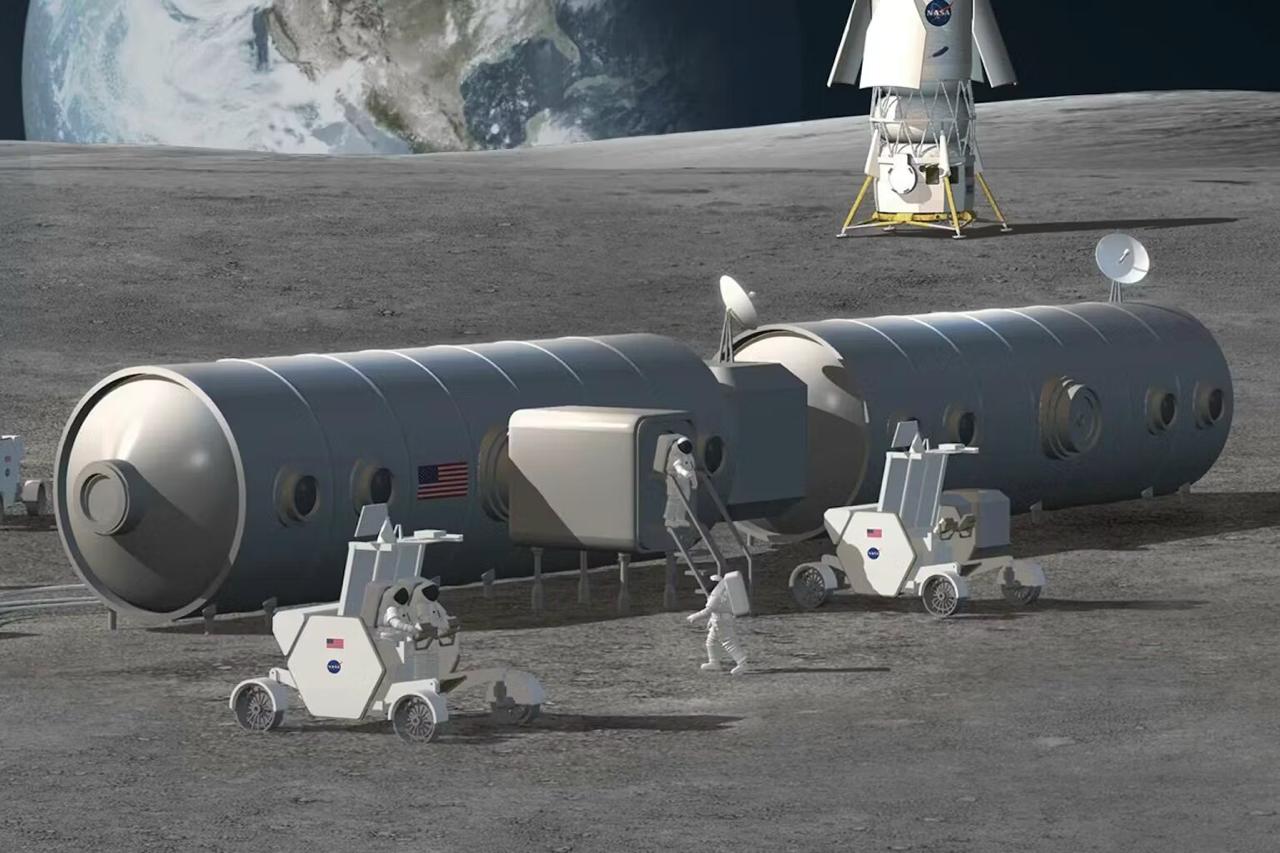
Isaacman told OSTP Director Michael Kratsios that NASA will launch the first element of Moon Base in December, followed by near-monthly uncrewed robotic missions starting in early 2027. NASA is building a website with the National Design Studio so the public can watch the base go up in real time. "We're leaving no doubts this time," Isaacman said. "It's all in HD." When astronauts arrive, he said, rovers and hardware will already be waiting.
Industry treated the MoU as a meaningful step despite its administrative nature. "The MoU covers fuel, test, and launch approval," Antares CEO Jordan Bramble said in an email. "What sounds administrative is the difference between a paper design that never gets built, and an enduring program that delivers space reactors in 2028 and beyond."
The next milestones named are the launch of the first Moon Base element in December, near-monthly uncrewed robotic missions beginning in early 2027, a launch-ready Lunar Reactor-1 by 2030, and the SR-1 Freedom launch to Mars no earlier than 2028.