NASA Chief Says Chang'e 7 Delay May Have Spared US a Race for Shackleton Crater
NASA Administrator Jared Isaacman said the delay of China's Chang'e 7 robotic mission until early next year may have allowed the United States to avoid a direct contest over the most coveted terrain on the Moon. Speaking at the Off World conference in Houston on Wednesday evening, Isaacman warned that China could establish exclusion zones at the lunar south pole that deny access to robotic probes and, eventually, human missions. China delayed the Chang'e 7 launch last month without a detailed e
OST Staff · September 24, 2026
NASA Administrator Jared Isaacman said the delay of China's Chang'e 7 robotic mission until early next year may have allowed the United States to avoid a direct contest over the most coveted terrain on the Moon. Speaking at the Off World conference in Houston on Wednesday evening, Isaacman warned that China could establish exclusion zones at the lunar south pole that deny access to robotic probes and, eventually, human missions.
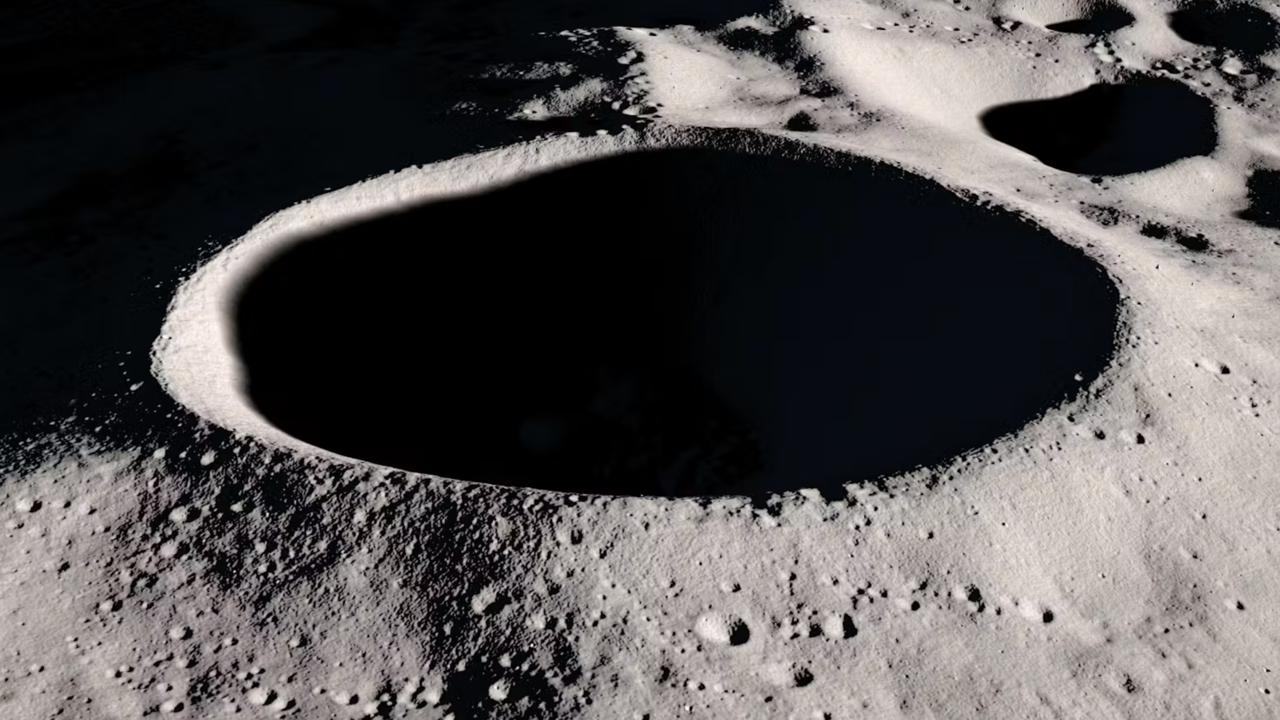
China delayed the Chang'e 7 launch last month without a detailed explanation. The mission targets the lunar south pole, the same region NASA intends to reach. The high rims of Shackleton Crater create permanently shadowed regions known as cold traps, where water ice and other useful materials may have accumulated over billions of years. In both NASA's and China's plans for long-term lunar settlement, relatively few square miles at the south pole matter most.
"We may have dodged a bullet with the Chang'e 7 mission a couple of weeks ago because that would have gone to the Shackleton crater," Isaacman said. He noted the mission's capabilities. "It has rovers, it has hopper drones like we now have in development but didn't eight months ago, and could have potentially denied access to some of the most interesting spots." Isaacman said China wants to interact with the water ice and get good at the skills for where it will go next, which he described as a Neil Armstrong-like moment on Mars rather than the Moon.
No country has softly landed a spacecraft at the lunar poles, which are more difficult to reach than the Moon's equatorial regions. The delay of Chang'e 7 opens the possibility that NASA could reach the terrain first, using the initial launch of Blue Origin's Blue Moon Mark 1 vehicle. That large lander will carry two NASA probes to the south pole, possibly as early as spring 2027. China has set a target of landing its first astronauts on the Moon by or before 2030 and is developing a crewed spacecraft, rocket, and lander to accomplish this.
Isaacman argued that being second to land crew carries consequences beyond the Moon. "That will call into question every other country around the world," he said. "Like, whose security guarantee should I trust? Should I trust the United States and NATO? Should I trust China if they're the emerging technical superpower here? Whose technology should I buy? Whose military hardware should I buy? Whose standards should I adhere to?" He added that questions over which nation the world listens to on AI are also on the table. "If you come up short with who comes down the ladder first, the impact is felt around the world," he said. Isaacman said the situation should never have been a race, citing US space policy failures going back to the Reagan administration and estimating that NASA has spent $100 billion across multiple administrations that led nowhere. He noted China conducted its first human spaceflight in 2003 and has since expanded its capabilities to rival the United States in space.
The initial launch of Blue Origin's Blue Moon Mark 1, carrying two NASA probes to the south pole, could come as early as spring 2027. Chang'e 7 is now targeted for early next year.