Momentus Advances In-Space Robotic Assembly for DARPA on Vigoride 7 Mission
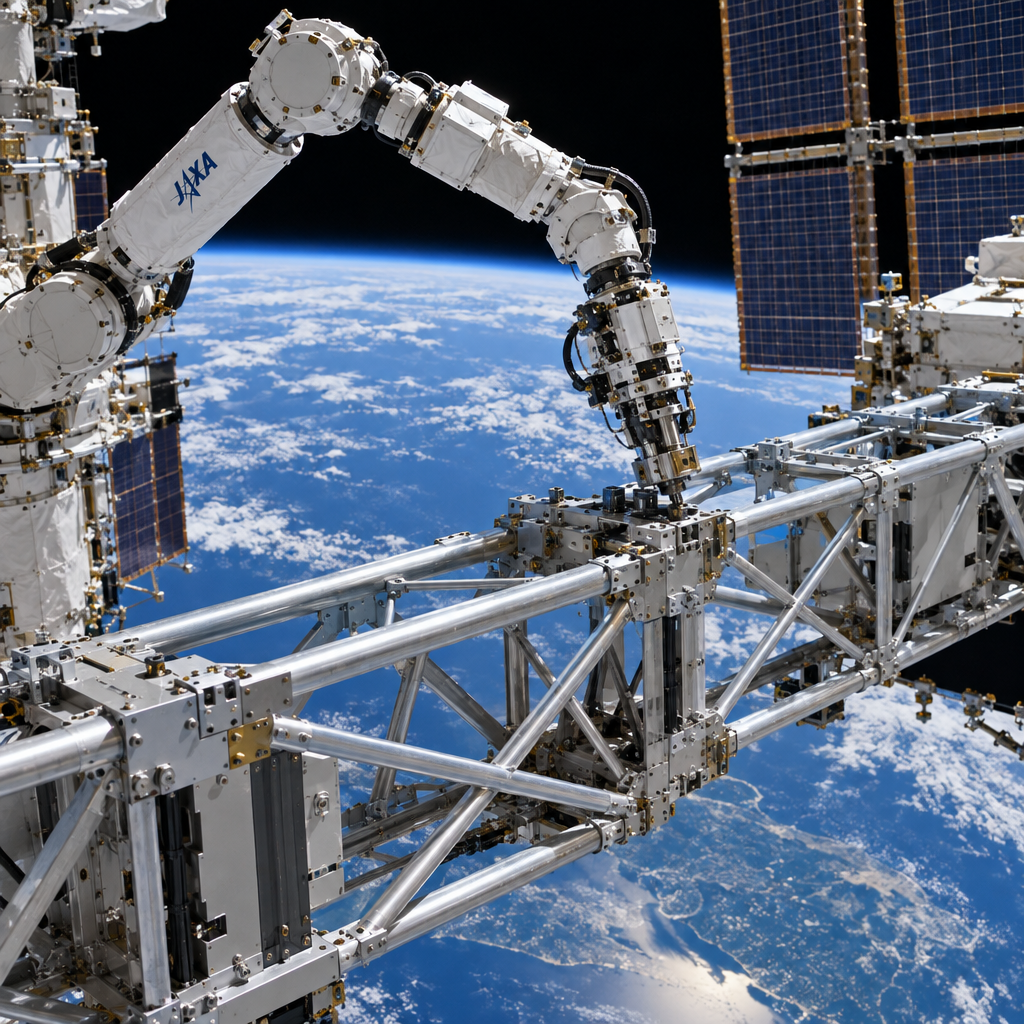
Momentus reported continued progress on the autonomous robotic assembly of a complex truss structure in orbit under a contract with the Defense Advanced Research Projects Agency. The work supports DARPA's Novel Orbital and Moon Manufacturing, Materials and Mass-Efficient Design program, known as NOM4D, and marks progress in demonstrating in-space assembly of complex structures. Under the contract, Momentus managed integration and launch and is providing on-orbit support for a Caltech payload ca
OST Staff · November 12, 2026
Momentus reported continued progress on the autonomous robotic assembly of a complex truss structure in orbit under a contract with the Defense Advanced Research Projects Agency. The work supports DARPA's Novel Orbital and Moon Manufacturing, Materials and Mass-Efficient Design program, known as NOM4D, and marks progress in demonstrating in-space assembly of complex structures.
Under the contract, Momentus managed integration and launch and is providing on-orbit support for a Caltech payload called ASTRA, the Autonomous in-Space Tensioned Reflector Assembly. ASTRA is one of 10 payloads carried by the Momentus Vigoride 7 orbital service vehicle, which launched to low Earth orbit on March 30, 2026, aboard the SpaceX Transporter 16 mission.
The Caltech payload has completed the first three phases of its autonomous modular structure build. Caltech plans to robotically assemble a 1.4-meter-diameter dish reflector as a proof of concept for a larger 100-meter-diameter dish reflector intended for communications and other applications. Trusses serve as structural elements in applications ranging from bridges and roofs to parts of the International Space Station and communications dishes.
"Our engineering team is advancing cutting-edge work and navigating the harsh environment in space, supporting critical priorities for the U.S. military and commercial customers," said Momentus CEO John Rood. "Autonomous operations in space and in-space assembly have great potential to transform essential services like communications with greater capability and lower costs."
Momentus said the Vigoride 7 orbital service vehicle has met all mission objectives since its March launch. The company described the progress as meaningful in demonstrating the ability to assemble complex structures autonomously in orbit.
Rood framed the effort as supporting both military priorities and commercial customers, pointing to the potential for autonomous operations and in-space assembly to deliver communications and other services with greater capability and lower cost. The progress on the first three assembly phases represents a step toward validating the proof-of-concept dish reflector.
Momentus' next mission, Vigoride 8, is scheduled to fly in 2027 and is fully booked supporting NASA payloads. The company still has capacity available on the Vigoride 9 mission planned for late 2027.