MIT Astronomers Identify a "Black Hole Star," a Possible New Class of Cosmic Object
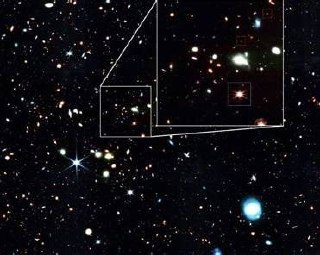
Astronomers at MIT and other institutions have identified an extremely bright red object in the early universe that appears to blur the line between a star and a black hole. Roughly the size of our solar system, the object emits about 100 billion times more energy than any known star can physically produce, an output closer to what a black hole generates. The finding, based on observations from the James Webb Space Telescope, lends credence to a strange explanation for a set of mysterious red s
OST Staff · August 16, 2026
Astronomers at MIT and other institutions have identified an extremely bright red object in the early universe that appears to blur the line between a star and a black hole. Roughly the size of our solar system, the object emits about 100 billion times more energy than any known star can physically produce, an output closer to what a black hole generates.
The finding, based on observations from the James Webb Space Telescope, lends credence to a strange explanation for a set of mysterious red spots seen in the early universe. The researchers have applied the label "black hole star" to describe an object that seems to share properties of both stellar and black hole physics.
The object is compact, roughly the scale of our solar system, yet its energy output far exceeds anything expected from a star of that size. That output, approximately 100 billion times greater than any known star, sits in a range comparable to a black hole. The combination is what led the team to treat it as a distinct type of object rather than an unusual version of a familiar one.
Webb's observation of the object may help account for mysterious red spots astronomers have detected in the early universe. If the interpretation holds, those red spots could be examples of the same phenomenon, giving researchers a framework to explain features that current models do not fully address.
If confirmed, the discovery would represent a genuinely new category of astrophysical object rather than a refinement of an existing one. The "black hole star" designation points to something that current models do not fully explain, combining stellar and black hole characteristics in a single object. Because it was found in the early universe, it is directly relevant to understanding how the first galaxies formed, one of Webb's core science goals.
Should the black hole star model hold up, it could rewrite the timeline of how the first massive structures in the universe formed. Webb has only begun to return data on the early universe, leaving open the possibility that more objects of this kind will be identified as further observations are analyzed.