K2 Space Raises $500 Million, Sets Sights on Building 100 Large Satellites a Year
K2 Space has raised $500 million in a Series D round that values the satellite manufacturer at $6.8 billion, more than doubling its valuation in seven months. The Torrance, California, company said July 30 that the funding will support a move from orbital demonstrations to large commercial and military production. K2 was valued at $3 billion in December, when it closed a $250 million Series C and reported $500 million in signed government and commercial contracts. It now puts that contract figu
OST Staff · July 30, 2026
K2 Space has raised $500 million in a Series D round that values the satellite manufacturer at $6.8 billion, more than doubling its valuation in seven months. The Torrance, California, company said July 30 that the funding will support a move from orbital demonstrations to large commercial and military production.
K2 was valued at $3 billion in December, when it closed a $250 million Series C and reported $500 million in signed government and commercial contracts. It now puts that contract figure at more than $1 billion and says it has raised over $1 billion in total capital. Kleiner Perkins and ICONIQ led the new round, with participation from CapitalG, Lightspeed, Altimeter, Spark Capital, Sands Capital, ARK Invest, T. Rowe Price Associates and existing investors.
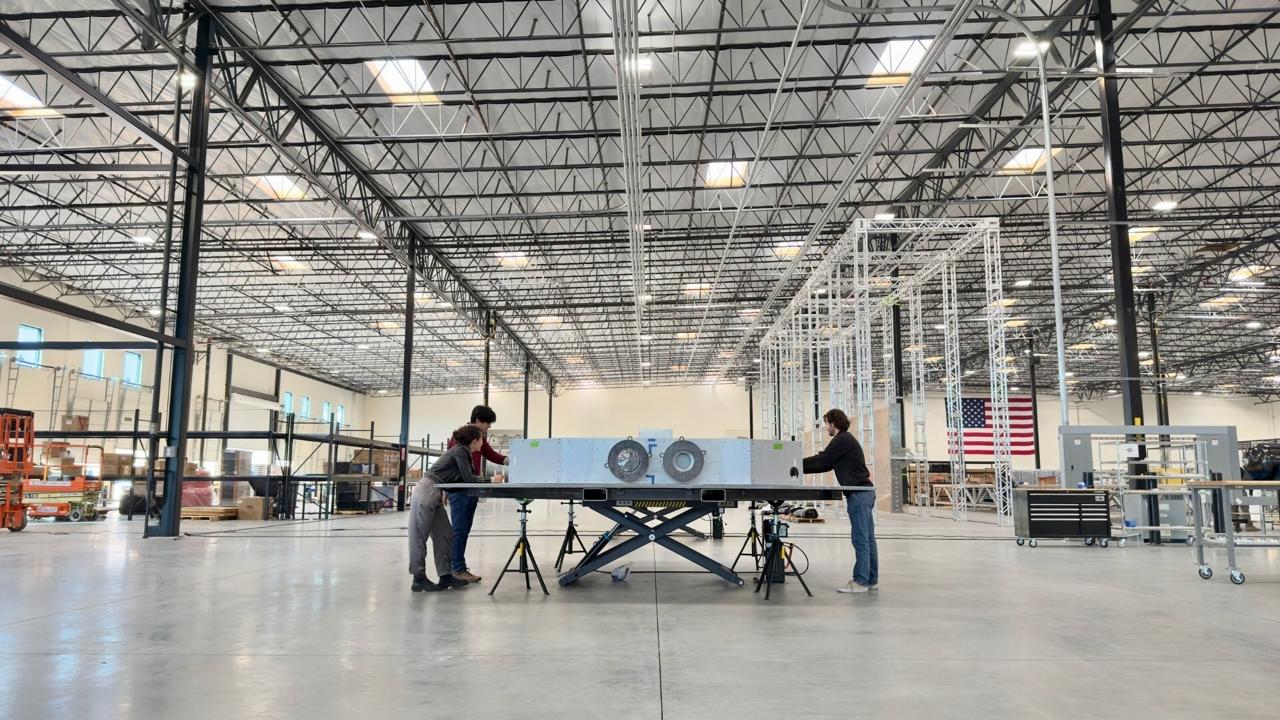
The financing gives K2 the resources to expand production toward a capacity of as many as 100 large satellites a year, co-founder and Chief Executive Karan Kunjur said in the company's announcement. The target marks a new phase for the four-year-old company, which must now show it can manufacture complex spacecraft repeatedly, control costs and meet delivery schedules for multiyear programs. K2 says it produces more than 85 percent of its satellite platform internally, operating a 180,000-square-foot factory in Torrance designed for up to 100 satellites annually. It has opened an engineering office near Seattle and said in July it employed nearly 300 people.
K2 designs larger spacecraft intended to provide more electrical power and carry heavier payloads. Its Mega-class satellite is designed to carry as much as 3,000 kilograms of payload and generate tens of kilowatts of power. A planned Giga-class platform would increase power to about 100 kilowatts, which K2 has presented as a possible foundation for placing computing capacity in orbit. Chief Technology Officer and co-founder Neel Kunjur said the company plans to introduce that spacecraft in the second half of 2028. K2's first flight, a smaller demonstration, launched in January 2025, followed by Gravitas, a roughly 2 metric-ton Mega-class satellite launched in March that carries 12 payloads and is operating in orbit. The roughly $60 million Gravitas project received support through a U.S. Space Force Strategic Funding Increase agreement.
K2's largest disclosed commercial project is tied to a planned SES communications network in medium Earth orbit. The company is supplying satellite platforms to an Anduril Industries-led team working on space-based interceptors for Golden Dome for America, with its Mega-class spacecraft hosting Anduril's interceptor systems. K2 was also selected as a satellite-bus provider for the Space Force's Protected Tactical Satcom-Global program, its first role in a formal Pentagon program of record, providing a spacecraft to a team led by SES Space & Defense.
Karan Kunjur has framed the round as enabling the production ramp K2 needs to serve customers with multiyear programs. The size and pace of the company's financings reflect investor interest in businesses serving both commercial space and the U.S. national-security market, as the Pentagon seeks alternatives to traditional aerospace contractors.
K2's next mission, Trinity, is scheduled to launch in the second quarter of 2027, carrying multiple satellites, placing them into different orbits and testing long-range optical communications. The Giga-class platform is planned for introduction in the second half of 2028.