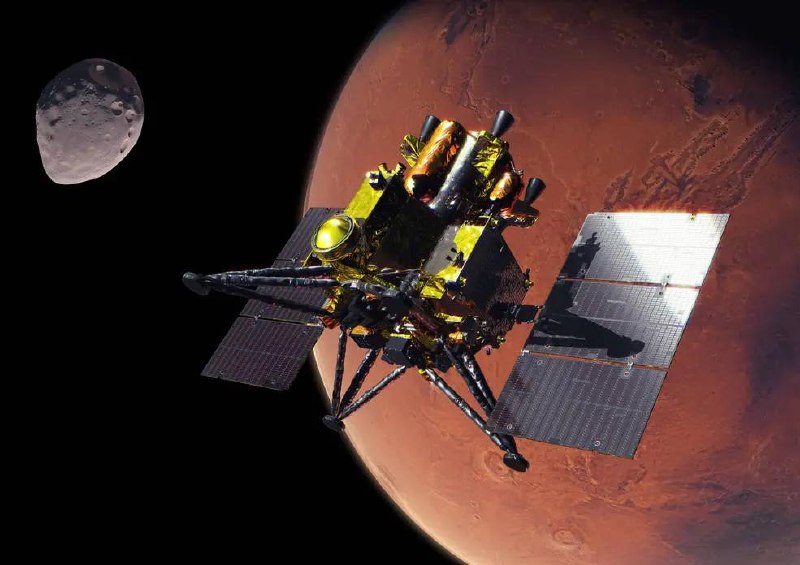
JAXA Sets October 20 Launch for MMX Mars Moon Sample Mission
JAXA announced on August 20 that it will launch its Martian Moons eXploration spacecraft aboard an H3 rocket on October 20. The mission aims to observe the two moons of Mars and return surface samples from Phobos to Earth. The agency confirmed the launch date on Thursday, setting in motion a mission designed to reach Mars roughly a year after liftoff. The spacecraft will study Phobos and Deimos before collecting material from the surface of Phobos for return. The No. 10 H3 rocket is scheduled
OST Staff · August 20, 2026
JAXA announced on August 20 that it will launch its Martian Moons eXploration spacecraft aboard an H3 rocket on October 20. The mission aims to observe the two moons of Mars and return surface samples from Phobos to Earth.
The agency confirmed the launch date on Thursday, setting in motion a mission designed to reach Mars roughly a year after liftoff. The spacecraft will study Phobos and Deimos before collecting material from the surface of Phobos for return.
The No. 10 H3 rocket is scheduled to lift off from JAXA's Tanegashima Space Center in Kagoshima Prefecture, in southwestern Japan, at 4:41:03 a.m. local time on October 20. The MMX spacecraft is expected to arrive near Mars about a year after the launch.
Once at Mars, the spacecraft will observe Phobos and Deimos and collect samples from the surface of Phobos, including sand. The MMX spacecraft is expected to return to Earth in fiscal 2031 carrying those samples.
A successful mission would mark the first sample return from a Martian moon. JAXA's stated objectives for the mission are to study Phobos and Deimos and to bring surface material back to Earth for analysis.
The confirmed launch date and mission profile establish a clear timeline running from the October 20 liftoff through arrival near Mars about a year later and a planned return to Earth in fiscal 2031. Attention now turns to the launch itself from Tanegashima Space Center and the spacecraft's journey toward Mars.