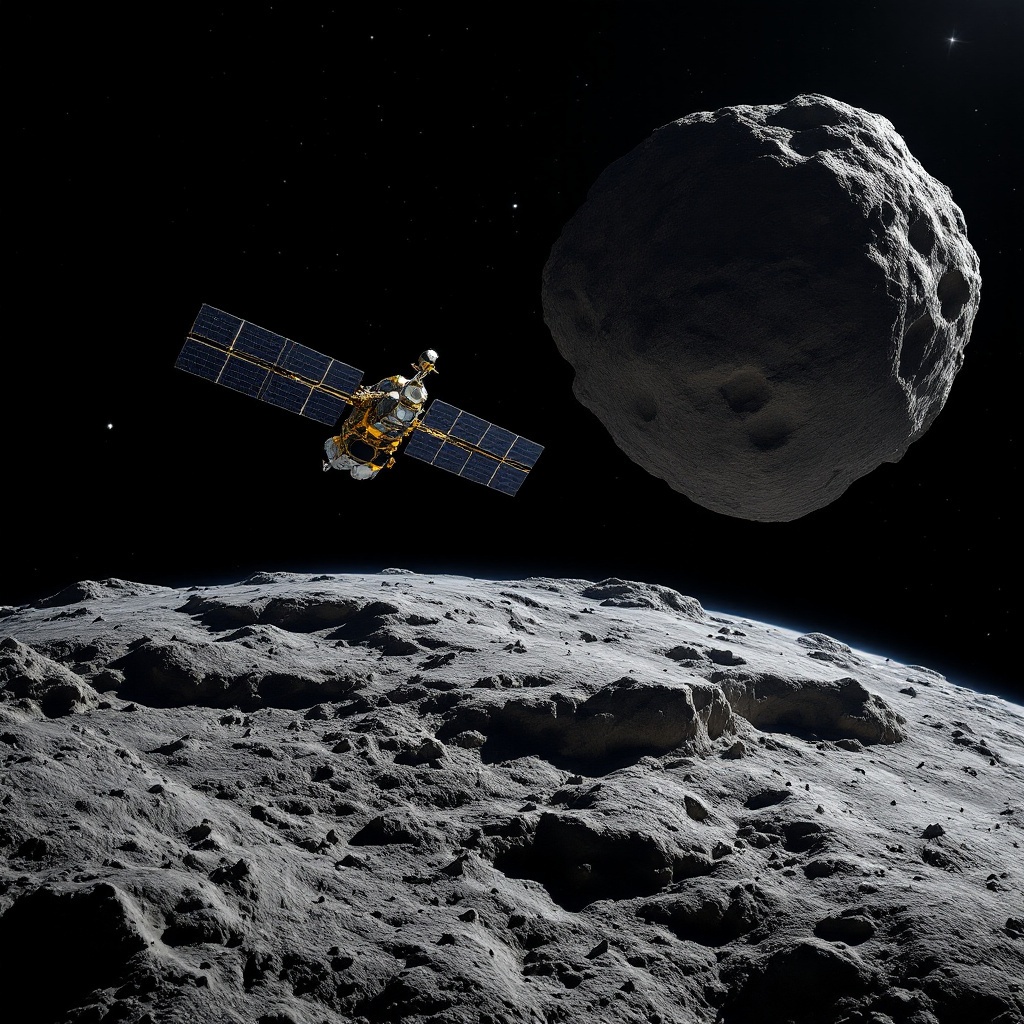
Japanese Probe Sets Record With 400-Meter Asteroid Flyby
A Japanese space agency probe passed just 400 meters, roughly 1,312 feet, from a near-Earth asteroid this month, the closest approach ever recorded for an asteroid flyby mission. The Japanese space agency confirmed the milestone, which places Japan again at the front of close-proximity asteroid operations. The maneuver marks the second time Japan has set the record in this category. The agency previously executed the Hayabusa missions, establishing a track record of close asteroid encounters.
OST Staff · August 1, 2026
A Japanese space agency probe passed just 400 meters, roughly 1,312 feet, from a near-Earth asteroid this month, the closest approach ever recorded for an asteroid flyby mission. The Japanese space agency confirmed the milestone, which places Japan again at the front of close-proximity asteroid operations.
The maneuver marks the second time Japan has set the record in this category. The agency previously executed the Hayabusa missions, establishing a track record of close asteroid encounters.
The probe closed to within 400 meters of the asteroid's surface, a distance described by the agency as the nearest ever achieved on a flyby mission. The target was identified as a near-Earth asteroid. The specific name of the probe and the designation of the asteroid were not confirmed in the available information.
Four hundred meters is extraordinarily close for a spacecraft moving at orbital velocities relative to a small body. At that range, a probe can gather detailed data on an asteroid's surface structure, rotation, and composition.
This proximity data matters for planetary defense planning. Understanding a target's physical characteristics at close range is what makes deflection missions possible, giving mission planners the information they need to assess how a small body might be moved. Japan's back-to-back records in this category underscore the value of getting near these objects to study them directly.
Analysis of the data returned from the flyby is expected to inform future planetary defense work. As one assessment framed it, the closer a spacecraft can get to these rocks before they get close to Earth, the better the odds of doing something about it.