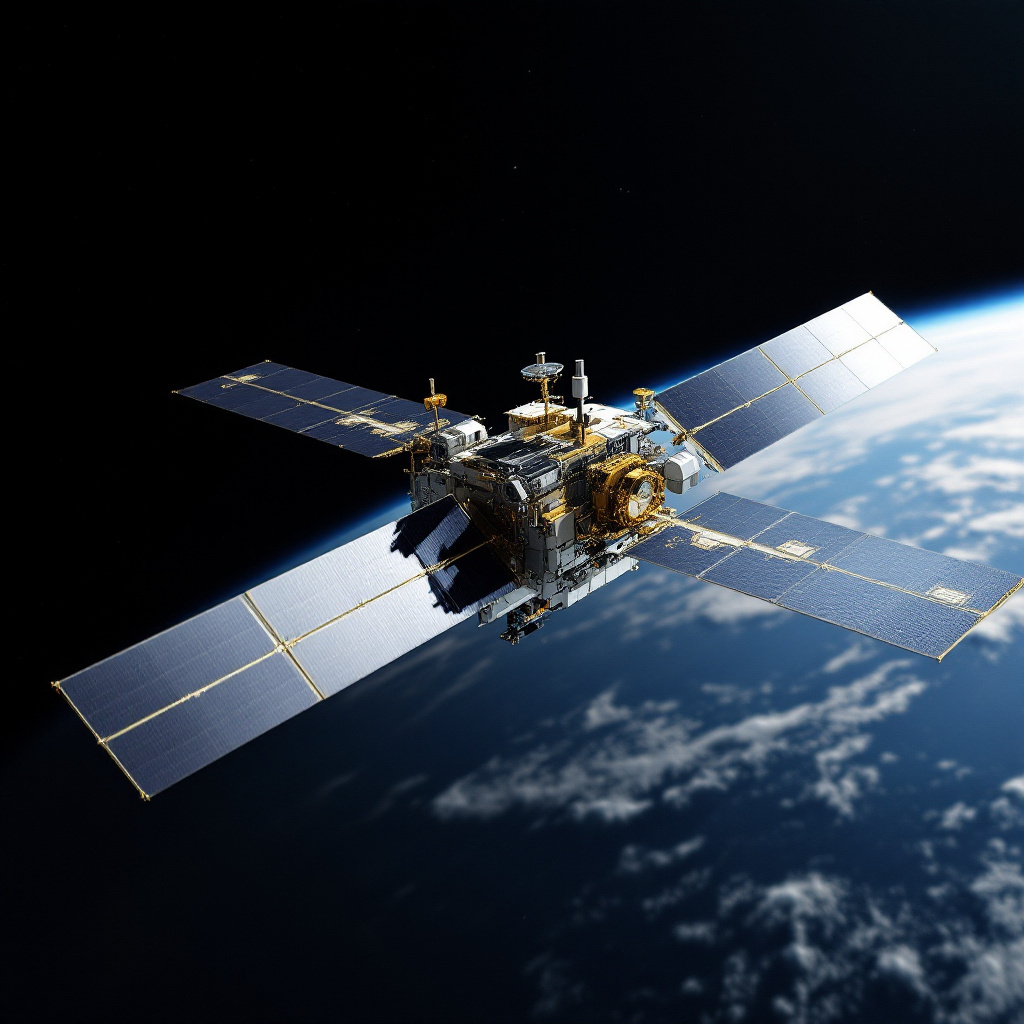
Intuitive Machines Wins Order for Two IM 300 Satellites from Undisclosed Customer
Intuitive Machines has secured a contract to build two IM 300 series platforms for a new, undisclosed customer, the company announced September 1. The award opens a new market segment for the modular spacecraft line and reflects demand for mission-configurable satellites built on compressed timelines. The contract adds a new category of customer to the IM 300 base. The company said the deal reflects continued demand for spacecraft platforms that can be configured to a specific mission and deliv
OST Staff · September 1, 2026
Intuitive Machines has secured a contract to build two IM 300 series platforms for a new, undisclosed customer, the company announced September 1. The award opens a new market segment for the modular spacecraft line and reflects demand for mission-configurable satellites built on compressed timelines.
The contract adds a new category of customer to the IM 300 base. The company said the deal reflects continued demand for spacecraft platforms that can be configured to a specific mission and delivered quickly.
Chris Johnson, President of Intuitive Machines Space Systems, said the contract shows the IM 300 can serve multiple missions with various customers. He said the platform's modularity allowed the company to scale its capability to support a heavier, higher-power payload class.
The IM 300 is described as the proliferated platform in the company's satellite product line, engineered around a modular architecture that lets the same core bus support substantially different payloads and mission profiles. The company said the platform's low unit mass allows multiple spacecraft to be manifested on a single launch, lowering the cost of deploying and replenishing a constellation. The IM 300 is designed to carry a relatively heavy payload on a low-mass bus, with power capability the company describes as top of its class.
Standardized interfaces are intended to support commercial, civil, and national security payloads across all mission sets. The platform supports both optical and radio frequency inter-satellite links, enabling operation as a networked constellation node rather than a standalone asset. Customers can select chemical or electric propulsion depending on orbit, maneuvering requirements, and mission duration.
The IM 300 is produced at the company's high-volume satellite production facility in Palo Alto, California, which was purpose-built for serial spacecraft manufacturing rather than one-off builds. The company said that infrastructure, combined with a qualified supplier base, allows it to accept new orders without disrupting existing customer schedules.
The company said the award marks the addition of a new market segment for the IM 300 and demonstrates the platform's ability to serve multiple missions with various customers. Johnson framed the deal as evidence that the modular architecture can scale to support heavier, higher-power payloads.
The source does not name further milestones, delivery dates, or next steps for the two platforms.