IBM and NASA Open-Source First Lunar Foundation AI Model to Speed Moon Science
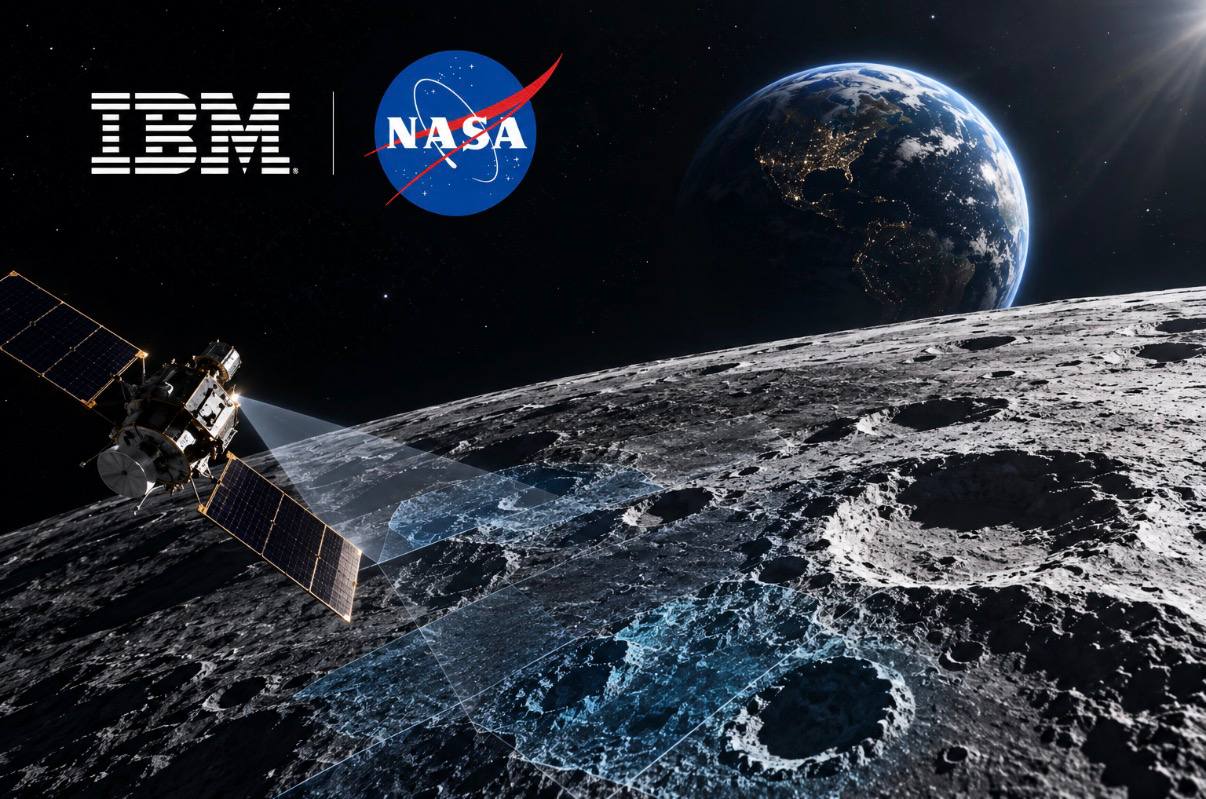
IBM and NASA released the NASA-IBM Lunar Foundation Model, one of the first publicly available foundation models built for scientific exploration of the Moon. Trained on an extensive lunar observation dataset curated by researchers from both organizations, the model turns decades of multi-instrument data into insights meant to support the establishment of a sustained human presence on the Moon. For decades, sensors and instruments have continuously observed the Moon, generating petabytes of dat
OST Staff · September 10, 2026
IBM and NASA released the NASA-IBM Lunar Foundation Model, one of the first publicly available foundation models built for scientific exploration of the Moon. Trained on an extensive lunar observation dataset curated by researchers from both organizations, the model turns decades of multi-instrument data into insights meant to support the establishment of a sustained human presence on the Moon.
For decades, sensors and instruments have continuously observed the Moon, generating petabytes of data. To study the surface, scientists have had to sift through maps and images by hand or rely on low-resolution, task-specific machine learning models. These methods can be computationally intensive and can lack the scientific accuracy needed to identify and analyze geographic features. Despite the volume of data available, no publicly available, unified dataset previously existed that brought multi-modal, multi-resolution lunar data into a common framework suitable for modern machine learning.
Alongside the model, IBM and NASA scientists built the first open-source lunar dataset of its kind, aggregating over 30 spatially aligned layers from nine instruments across four missions. It combines tens of thousands of images and maps from NASA's Lunar Reconnaissance Orbiter and GRAIL mission, and incorporates complementary data from the Japan Aerospace Exploration Agency's SELENE/Kaguya mission for a view of both the lunar surface and subsurface. The model can help researchers investigate potential lunar ice deposits, volcanic history, and craters.
A technical paper authored by IBM and NASA reports specific gains over the SwinV2-B (ImageNet) model. The Lunar Foundation Model reduced error in identifying areas with high potential for lunar ice by up to 22 percent. In mapping volcanic features known as Irregular Mare Patches, it captured their extent 3 percent better using imperfect labels. For crater detection at context-scale resolution of about 100 meters, it outperformed SwinV2-B by nearly 19 percent while using just half the training data, and it can identify and classify craters at meter-scale resolution. Lunar ice matters because it indicates the presence of water and oxygen, resources considered essential for a future Moon base and for producing rocket fuel for future missions to Mars. Crater mapping also helps NASA select safe landing sites and plan long-term lunar infrastructure.
"NASA has spent decades building an extraordinary scientific record of the Moon, but collecting data is only part of the job," said Kevin Murphy, chief science data officer and acting chief data and AI officer at NASA Headquarters in Washington. "We also have to make data easier for scientists to explore and use." Juan Bernabe-Moreno, Director of IBM Research Europe, UK and Ireland, said the model gives scientists a foundation to explore the Moon at scale, "connecting observations across instruments, revealing patterns that are difficult to see in isolation, and providing an open platform the global research community can build on."
By open-sourcing the model, IBM and NASA say scientists and researchers gain access to cutting-edge AI systems to accelerate progress in lunar exploration. The model joins the Prithvi family of open foundation models, which spans geospatial, weather, heliophysics, and now the Moon. Together, the two organizations say, these models advance a vision in which researchers start from a shared model and adapt it to new tasks rather than building a new algorithmic system for every scientific question.
The model and the accompanying dataset are now available for the lunar science community to build on and adapt to new research tasks.