Honda and Redwire Team on Robotic Lab Assistant for Commercial Space Stations
Honda is partnering with space infrastructure firm Redwire to develop an automated laboratory support system intended for future commercial space stations. The system aims to take over routine scientific maintenance tasks on stations that will be smaller than the International Space Station and frequently uncrewed. On the ISS, astronaut time is the most limited resource, with crew schedules planned to the minute. Some of that time goes to mundane work such as scanning barcodes for inventory man
OST Staff · October 11, 2026
Honda is partnering with space infrastructure firm Redwire to develop an automated laboratory support system intended for future commercial space stations. The system aims to take over routine scientific maintenance tasks on stations that will be smaller than the International Space Station and frequently uncrewed.
On the ISS, astronaut time is the most limited resource, with crew schedules planned to the minute. Some of that time goes to mundane work such as scanning barcodes for inventory management or swapping out biological sample trays, tasks that fall to astronauts because no one else is aboard to handle them. The station itself is also running short on time, as NASA plans to deorbit it around 2030, crashing it into a remote part of the Pacific Ocean.
In place of the ISS, private companies including Axiom Space, Vast, and Orbital Reef are hoping to launch their own stations, with NASA as one customer among many. These outposts will be much smaller at first, many carrying crews of only two or four astronauts and going long stretches without any crew at all. To keep microgravity experiments running, operators will need to rely on automation.
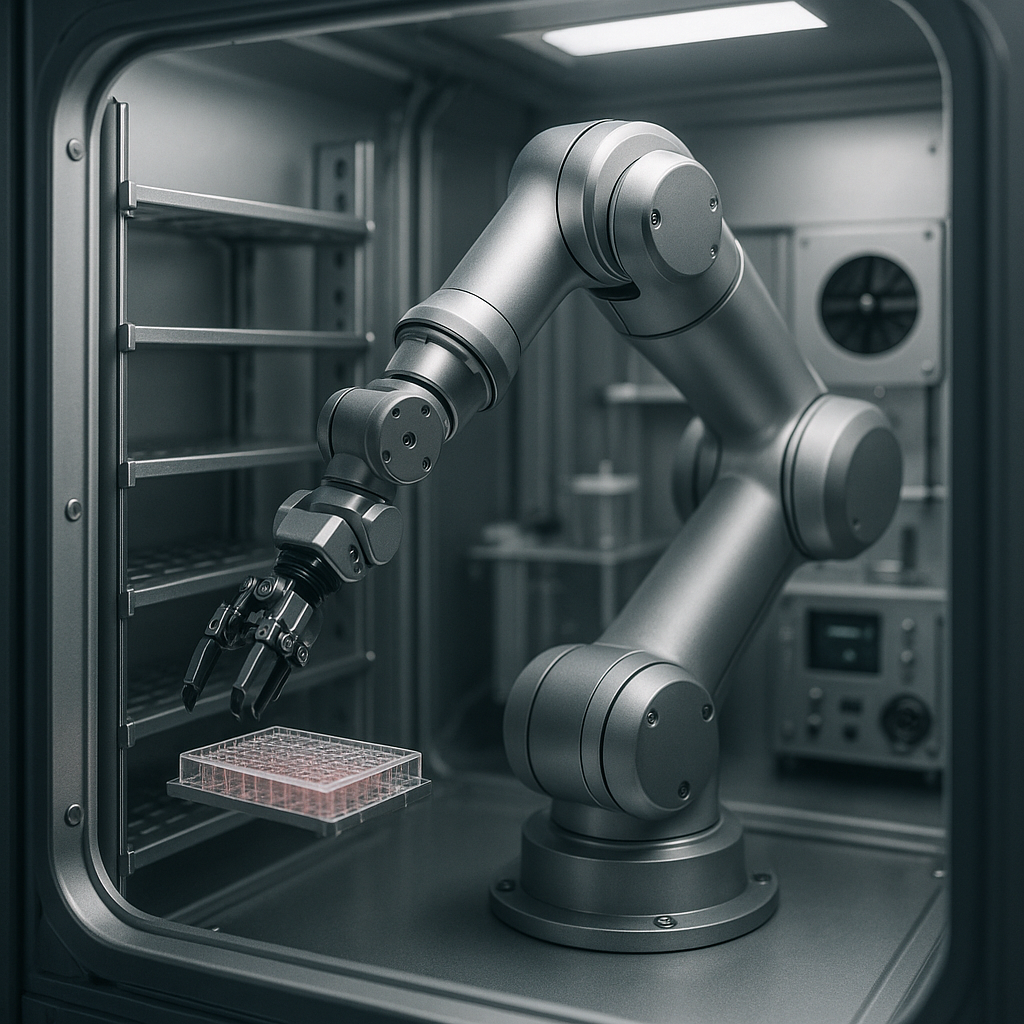
Redwire is contributing a reaching and motion platform called the Space Technology Autonomous Agile Robotic Kit, or STAARK, designed to autonomously interact with and grab dynamic objects. Redwire already manages eight operational science facilities aboard the ISS. Honda provides the detailed robotic manipulation. Its current robotic hand features independently articulated fingers, each equipped with tactile and force sensors, giving the robot a sense of touch so it does not crush a sample vial or let one float out of reach. The combined system joins Redwire's reach capability with Honda's grip.
Honda is best known publicly for its mobility products, but it has a long track record in robotics, including its ASIMO robot. The company introduced the concept through a press release and attended the International Astronautical Congress in Antalya, Turkey.
The collaboration frames automation as a way to keep scientific experiments operating on stations that are smaller and less consistently crewed than the ISS, performing the routine laboratory tasks that would otherwise consume valuable astronaut time.
It will still be a while before the system flies. Early commercial stations such as Vast's Haven-1 and Axiom Station from Axiom Space could launch as early as next year, but no agreements have been announced for any of them to adopt the Redwire and Honda robotic setup. It remains to be seen whether this offering is what the space automation industry will rally around or whether another option would better fit the need.