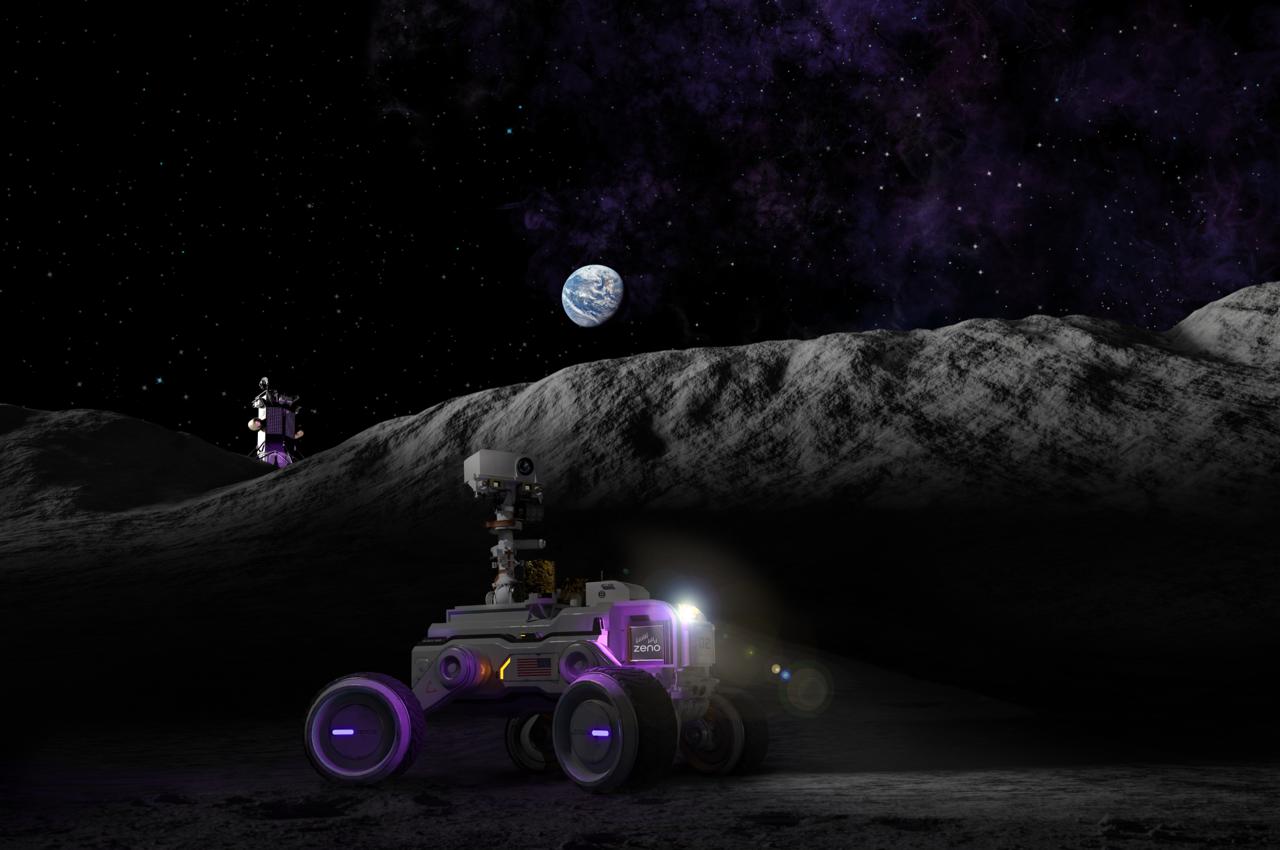
Firefly and Zeno Power to Test Nuclear Heating That Could Survive the Lunar Night
Firefly Aerospace and Zeno Power have signed a commercial payload agreement to fly a radioisotope heating unit to the Moon on a mission launching no earlier than 2028. The payload, called the Survive-the-Night Package, aims to demonstrate whether nuclear heating can keep lunar hardware alive through the two-week lunar night, one of the hardest problems facing sustained surface operations. Lunar missions typically do not last long. With temperatures dropping below minus 133 degrees Celsius durin
OST Staff · August 19, 2026
Firefly Aerospace and Zeno Power have signed a commercial payload agreement to fly a radioisotope heating unit to the Moon on a mission launching no earlier than 2028. The payload, called the Survive-the-Night Package, aims to demonstrate whether nuclear heating can keep lunar hardware alive through the two-week lunar night, one of the hardest problems facing sustained surface operations.
Lunar missions typically do not last long. With temperatures dropping below minus 133 degrees Celsius during the lunar night, unprotected payloads quickly freeze and stop functioning. To operate through darkness, or to explore the Moon's permanently shadowed regions, surface hardware needs a reliable source of heat.
Zeno's solution uses Americium-241, a radioisotope fuel that gives off heat as it decays. On this first mission, the 5-watt unit will be self-contained, warming itself to keep its communications, power, data handling, and thermal management infrastructure running while the rest of Firefly's payloads are frozen into what the companies call monument mode. Future missions could incorporate several such units to keep multiple payloads, or an entire lander, operating in the dark.
The demonstration flies on Firefly's CS-8 CLPS mission and is a direct result of NASA's CS-8 task order, which included a financial incentive for contractors who can demonstrate survive-the-night capabilities. To win that bonus, the value of which Zeno declined to share, the heating unit must send a signal back to Earth after 120 Earth hours of lunar night. Zeno Chief Executive Tyler Bernstein said the system is expected to last far longer. "We are building to meet that requirement of 120 hours. But Americium has a half-life of 440 years," Bernstein said. "We believe this will prove out the technology that in the future, we'll be able to demonstrate years of operations on the lunar surface."
Farah Zuberi, Firefly's Director of Spacecraft Mission Management, described the effort as an early step. "It's a step in the right direction," she said. "We're going to have a lot of learnings throughout the demo mission, and then incorporate them into future missions, depending on what we learn."
Every commercial lander to touch down on the Moon so far has died when the lunar night began, making the ability to survive that period a genuine enabler for future missions, including sustained surface operations. Zuberi said the demonstration could help Firefly sell longer-duration missions to customers and gather its own data over longer stretches on the surface. Bernstein framed the demonstration as a foundation for years of future operation rather than a single test.
Beyond the heating unit, Bernstein said Zeno is developing a larger Stirling radioisotope generator intended to provide both heat and electricity to lunar payloads. The near-term milestone remains the CS-8 mission, launching no earlier than 2028, and the requirement to return a signal from the surface after 120 hours of lunar night.