Nonprofit Targets $15 Million Mission to Alpha Centauri by 2029
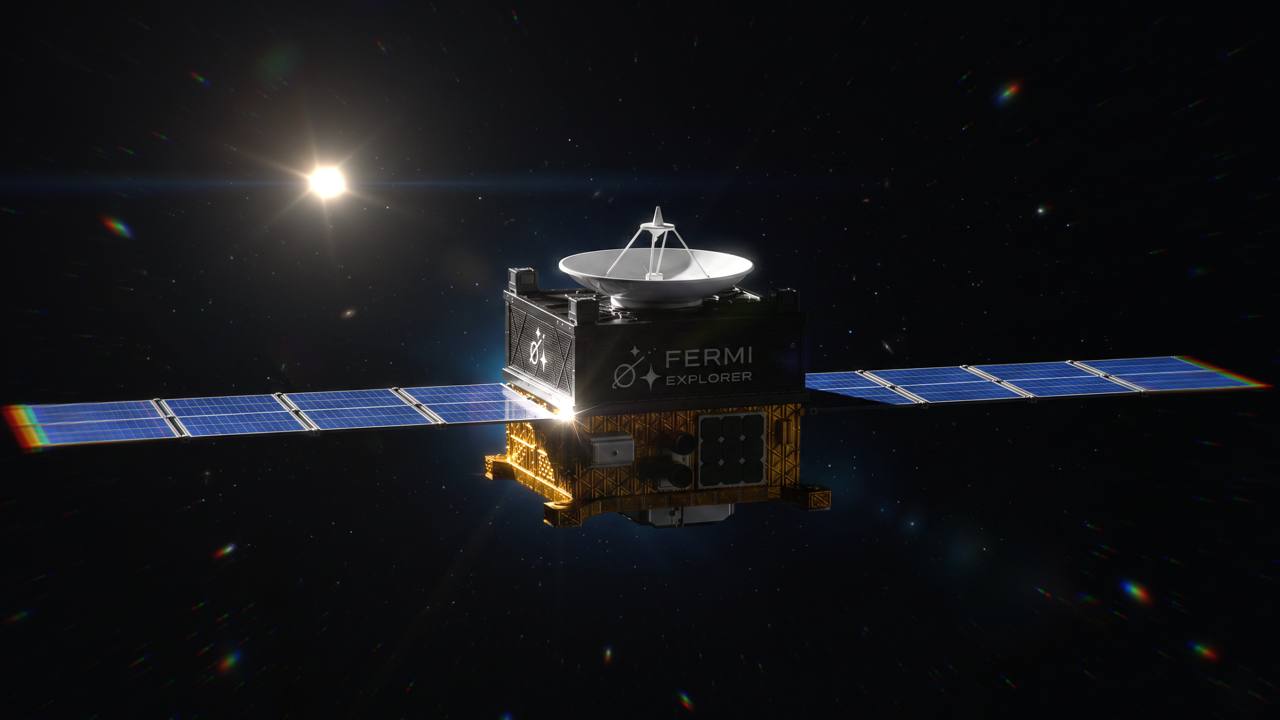
A new nonprofit called Fermi Explorer announced plans on September 1, 2026, to launch humanity's first mission to Alpha Centauri by the end of 2029, on a budget of less than $15 million. The mission, founded by the co-founders of Starcloud, aims to succeed where Breakthrough Starshot struggled, sending a cubesat-sized spacecraft toward a star roughly four light-years away. The mission began with a conversation. Starcloud CEO and co-founder Philip Johnston, now also Fermi Explorer president and
OST Staff · September 1, 2026
A new nonprofit called Fermi Explorer announced plans on September 1, 2026, to launch humanity's first mission to Alpha Centauri by the end of 2029, on a budget of less than $15 million. The mission, founded by the co-founders of Starcloud, aims to succeed where Breakthrough Starshot struggled, sending a cubesat-sized spacecraft toward a star roughly four light-years away.
The mission began with a conversation. Starcloud CEO and co-founder Philip Johnston, now also Fermi Explorer president and co-founder, told Payload he was speaking with another founder at a conference last year who planned to spend $1 billion on an interstellar probe after retirement. "I told him, you could probably do that for like $10 million or $15 million and he replied, 'No, you couldn't,'" Johnston said. He then went searching for proof. "It ended up being a lot harder than I was expecting, to be honest."
The team defines four primary objectives. The spacecraft must reach at least 99 percent of the way to Alpha Centauri within 80,000 years, carry at least a 1 kg payload holding donor, scientific, and artistic contents, launch before the end of 2029, and cost less than $15 million to design, build, launch, and operate. After spiraling out from Earth, the spacecraft will spend about 12 years widening its orbit around the Sun, firing at each close pass to gain speed, before a final burn slings it out of the solar system toward Alpha Centauri at roughly 24 km/s.
After months stuck on bus design and trajectory planning, the team turned to Physical Superintelligence, an AI lab, to build a mission design. "We'd spent three months and one billion tokens on it," Johnston said. "In a week, they spent 10 billion tokens on it, and it came up with this ingenious perihelion-pump maneuver that we then validated with the NASA guys." The mission will be mostly autonomous, and the team is prepared to lose radio communications after the first year to keep antenna mass low, relying on retroreflectors to track location. Program manager Garrett Jameson said he will be happy once Fermi makes it to the launchpad. "The way that this is designed from the get-go is not to be this thing that will balloon into something that never actually leaves the ground," he said.
For Johnston, mission success means leaving the solar system on the right trajectory, which will take about 12 years and will be faster than either the Voyager 1 or Voyager 2 missions that reached interstellar space in about 35 and 40 years, respectively. Because 80,000 years is too long for most investors, the nonprofit relies on donations. For $100, donors can have their names etched onto the spacecraft. Fermi also plans to carry a replica of the Voyager Golden Record and 300-character messages from children in every country, solicited through national education ministries.
The team will open the mission to satellite manufacturers for bids and has already received one proposal from a bus manufacturer for less than $15 million. Johnston said the next mission after this one would aim further still. "For $100 million, the next mission after this will be to send a spacecraft to the nearest galaxy, Andromeda, in a billion years," he said.