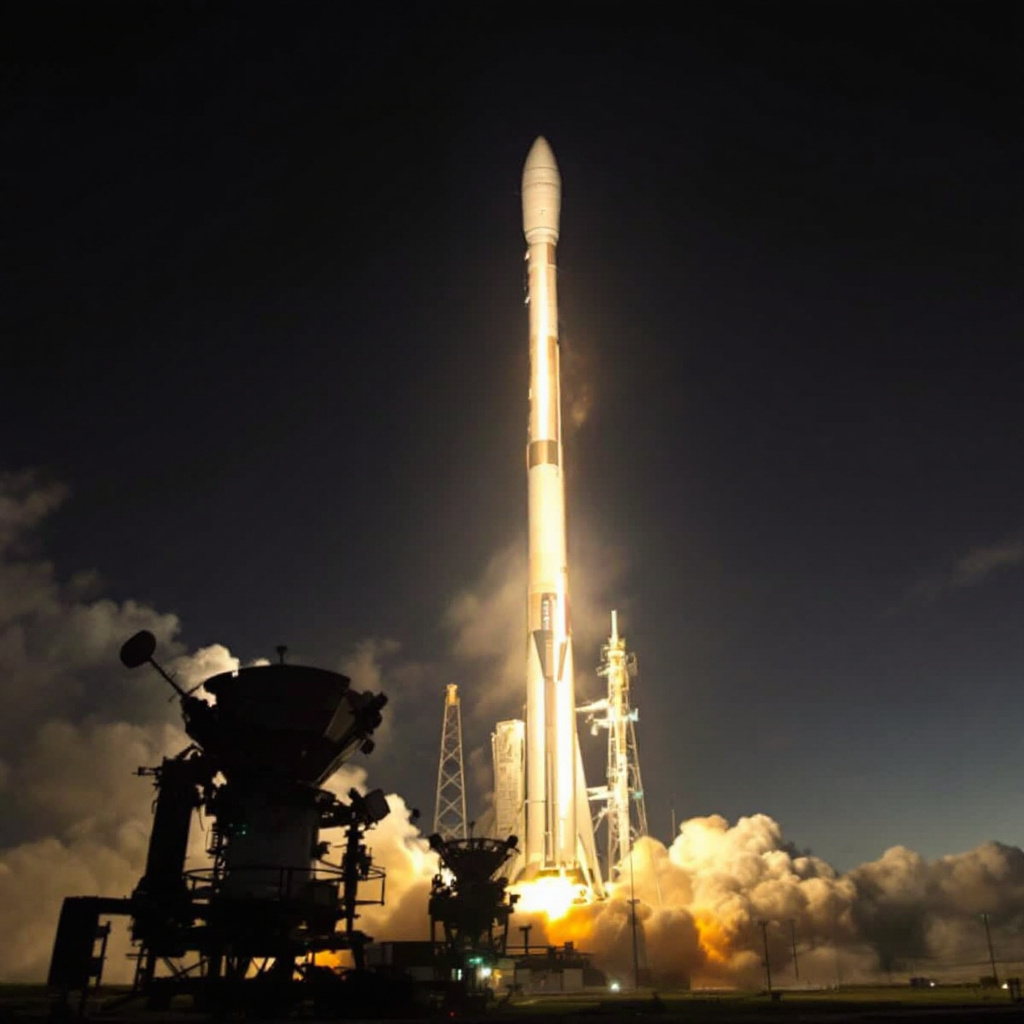
FCC Clears SpaceX to Launch 15,000 Satellites for Next-Gen Starlink Mobile
The Federal Communications Commission has authorized SpaceX to launch and operate 15,000 next-generation satellites for Starlink Mobile, the company's service delivering satellite connectivity directly to phones. The approval, issued Tuesday, creates a regulatory path for SpaceX to position Starlink Mobile as a competitor to AT&T, T-Mobile, and Verizon. SpaceX originally filed the application in September 2025. Alongside the constellation approval, the FCC issued a waiver allowing SpaceX to off
OST Staff · October 7, 2026
The Federal Communications Commission has authorized SpaceX to launch and operate 15,000 next-generation satellites for Starlink Mobile, the company's service delivering satellite connectivity directly to phones. The approval, issued Tuesday, creates a regulatory path for SpaceX to position Starlink Mobile as a competitor to AT&T, T-Mobile, and Verizon.
SpaceX originally filed the application in September 2025. Alongside the constellation approval, the FCC issued a waiver allowing SpaceX to offer wireless services through satellites without entering into a leasing agreement with a ground-based mobile operator. The current "version 1" of Starlink Mobile is available in the US only through T-Mobile as T-Satellite, using around 650 satellites with data speeds estimated at 4Mbps.
The upcoming 15,000 satellite constellation promises to deliver 5G speeds at 150Mbps per user, according to the company. Rather than relying on traditional cell towers, SpaceX envisions using both satellites and smaller, cost-effective ground-based femtocells to provide cellular coverage for phones, including in suburban areas and cities. Some in the telecom industry, including T-Mobile's CFO, have been dismissive of the approach.
The FCC said the deployments "will reshape spectrum-based connectivity by improving competition, allowing more consumers more choices in more places." It added that the planned constellation promises to serve users in cellular dead zones and bring "increased competition in the provision of retail wireless services to American consumers." The grant allows SpaceX to orbit the satellites from 335 kilometers to as low as 326 kilometers, a new low compared to the first-generation cellular-focused Starlink satellites, which will likely help reduce latency.
The authorization lets the satellites use additional radio spectrum SpaceX is acquiring from Boost Mobile's parent EchoStar, including the 1695 to 1710, 2000 to 2020, 2180 to 2200, 1915 to 1920, and 1995 to 2000MHz bands in the US. The company has also been cleared to use the satellites for cellular operations outside the US. The order specifies SpaceX can only test using the EchoStar frequencies until Step Two of the SpaceX-EchoStar transaction is consummated, scheduled for November 30, 2027. By that time, the company projects it will have begun launching the first "version 2" satellites. The grant also lets the 15,000 satellites use T-Mobile's "PCS G-block" spectrum in the 1910-1915 MHz and 1990-1995 MHz bands, which SpaceX has already been tapping for the current version of Starlink Mobile.
The FCC stated the deployments will "connect everyone, everywhere to modern communications services," framing the approval as a means of furthering competition in US wireless. The Commission largely cleared SpaceX's proposal despite opposition from rival satellite communication providers and environmental groups concerned about radio interference and light pollution.
The FCC deferred on other parts of SpaceX's application, including the request to use the 2020 to 2025 MHz band and a request to use the 1429 to 2690 MHz range outside the US. T-Mobile has been downplaying T-Satellite and floating the possibility of partnering with other satellite providers, leaving open the question of whether it will continue to use Starlink Mobile. The Step Two closing of the SpaceX-EchoStar transaction remains scheduled for November 30, 2027.