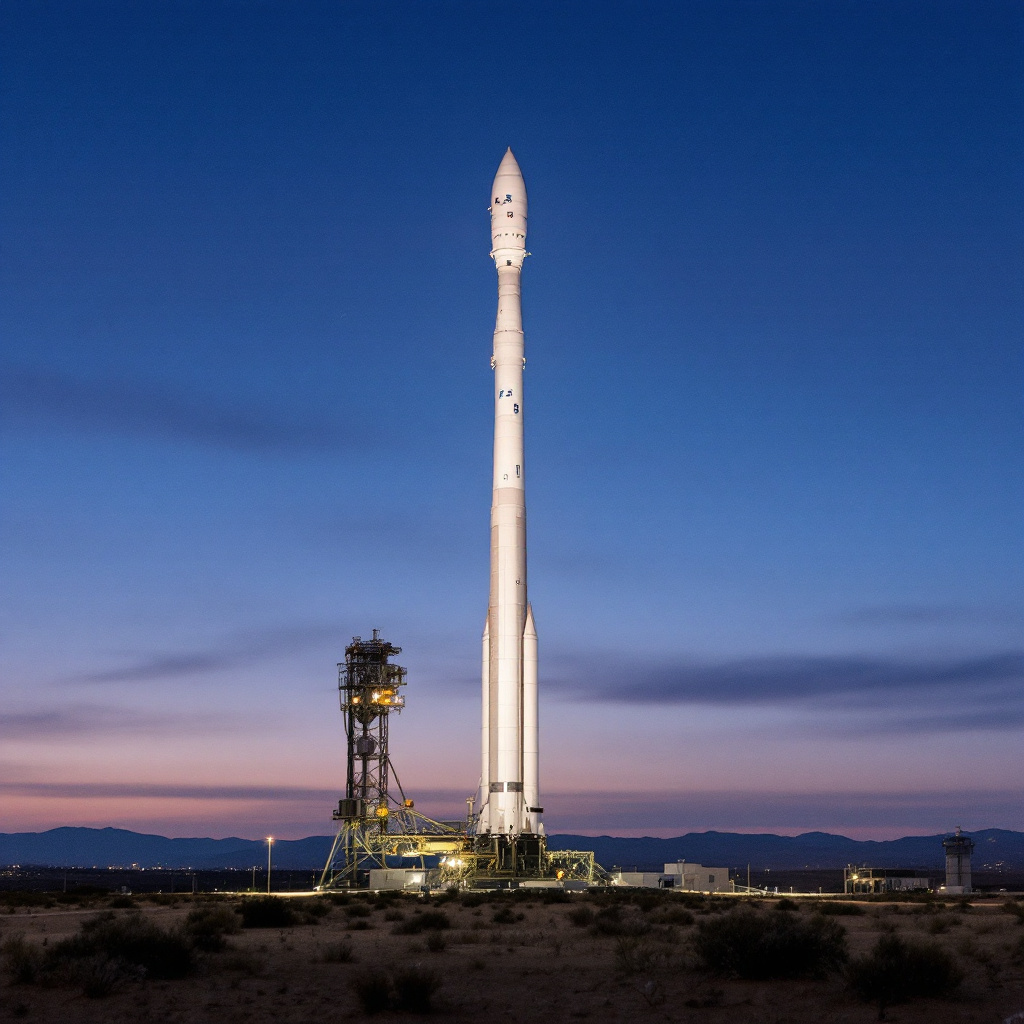
SpaceX Sets Vandenberg Launch of Classified USSF-153 Space Force Mission
SpaceX is preparing to launch USSF-153, a classified mission for the United States Space Force, aboard a Falcon 9 Block 5 from Vandenberg Space Force Base. Liftoff is targeted for 15:42 UTC on September 10, 2026, within a three-hour window opening at 15:37 UTC. The mission carries an undisclosed number of satellites and marks another instance of the Space Force relying on SpaceX hardware for a secretive payload. The mission launches from Space Launch Complex 4E, the pad SpaceX typically uses fo
OST Staff · September 10, 2026
SpaceX is preparing to launch USSF-153, a classified mission for the United States Space Force, aboard a Falcon 9 Block 5 from Vandenberg Space Force Base. Liftoff is targeted for 15:42 UTC on September 10, 2026, within a three-hour window opening at 15:37 UTC. The mission carries an undisclosed number of satellites and marks another instance of the Space Force relying on SpaceX hardware for a secretive payload.
The mission launches from Space Launch Complex 4E, the pad SpaceX typically uses for polar launches. USSF-153 was added to the manifest on September 1, cleared as go for launch on September 2, and its target time was updated to 15:42 UTC early on September 10.
The payload is classified and its purpose has not been disclosed. Trackers assess it as possibly a batch of classified low Earth orbit satellites built on SpaceX's Starshield satellite bus. That assessment is based on the locations of the rocket stage drop zones, which are described as exact fits for previous Starlink Group 15 launches.
The first stage assigned to the mission is booster B1081, flying for the 27th time. B1081 first flew on August 26, 2023, and last flew on August 1, 2026. Across 26 previous flights it has recorded 26 landing attempts and 26 successful landings. After stage separation, B1081 is set to land on the autonomous spaceport droneship Of Course I Still Love You.
The Falcon 9 Block 5 is a two-stage vehicle standing 70 meters tall with a diameter of 3.65 meters and a fairing diameter of 5.2 meters. It has a launch mass of 549 tonnes and produces 7,607 kilonewtons of thrust, with a low Earth orbit payload capacity of 22,800 kilograms.
The mission profile pointing to a Starlink-style trajectory reinforces the assessment that the government is again turning to SpaceX's Starshield variant for a proliferated, classified constellation in low Earth orbit. Each of these quiet classified batches expands a government constellation that SpaceX both builds and launches, underscoring how deeply SpaceX hardware is now embedded in US national security space.
The three-hour launch window closes at 18:37 UTC on September 10. A successful flight would add another mission to SpaceX's record and a 27th landing to booster B1081.