Verde to Fly Perovskite Solar Cells on ISS in First Space Validation
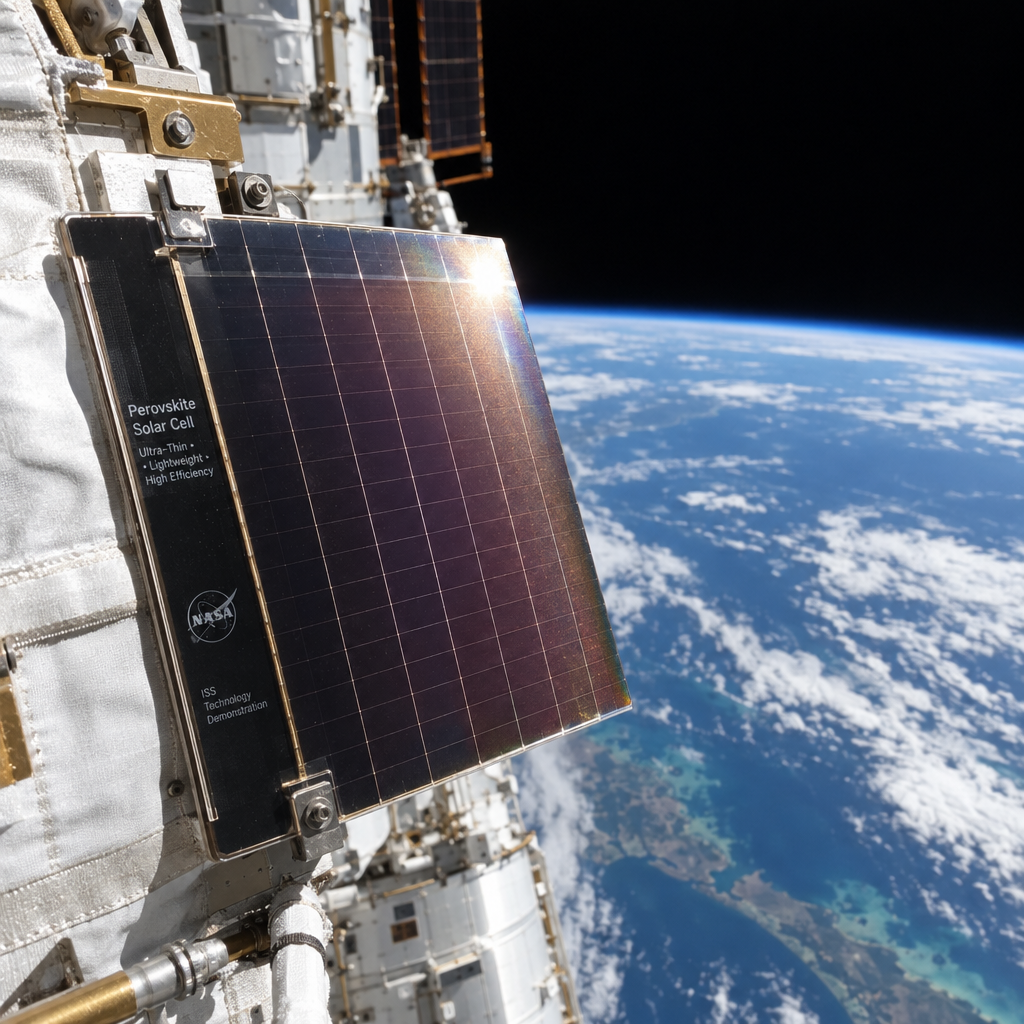
Solar cell manufacturer Verde Technologies has signed a contract with NASA to send its lightweight, ultra-thin perovskite solar cells to the International Space Station no earlier than June 2027. The mission will mark the first time Verde's perovskite technology is validated in space, a step the company says is necessary before it can produce and sell cells to spacecraft operators at scale. The flight is part of NASA's Materials International Space Station Experiment, known as MISSE, which test
OST Staff · November 23, 2026
Solar cell manufacturer Verde Technologies has signed a contract with NASA to send its lightweight, ultra-thin perovskite solar cells to the International Space Station no earlier than June 2027. The mission will mark the first time Verde's perovskite technology is validated in space, a step the company says is necessary before it can produce and sell cells to spacecraft operators at scale.
The flight is part of NASA's Materials International Space Station Experiment, known as MISSE, which tests new materials and components on the orbital laboratory. Verde's cells will be bolted to the exterior of the ISS for six months before being returned to Earth for analysis. The mission arrives just one year after Verde, originally founded to serve the terrestrial solar market, pivoted to focus on space and high-altitude applications.
Verde's goal is to lighten the solar-cell load for satellites and drones, reducing overall vehicle weight and driving down total mission cost for space customers. Company officials said a sharp rise in demand from satellite builders drove the pivot. The industry is projecting tens of thousands of new satellites in orbit over the next five years, many aimed at higher-energy applications such as power beaming and orbital data centers, pushing demand for satellite solar panels even faster than demand for spacecraft themselves.
CEO Jean-Noel Poirier said the company plans to validate the technology completely before entering the market in steps, beginning with satellites and high-altitude drones, then smallsats and larger spacecraft, constellations, and orbital data centers. He described the current options for satellite builders as limited. Gallium arsenide cells, used by NASA for long-term exploration, work well but lack production capacity, he said. Silicon is plentiful on Earth but degrades, is inefficient, heavy, and clunky in space, and most silicon comes from China.
Verde's approach differs from other manufacturers who print perovskite onto silicon or glass. The company is commercializing a perovskite-only cell printed onto a lightweight, flexible substrate. That method allows the cells to be folded or rolled tightly during launch and then deployed into large structures, with partners helping maintain the array's rigidity. By avoiding silicon, the company says it can sidestep international supply-chain concerns and directly serve the US defense market.
Poirier framed the effort as filling a specific gap. The industry needs non-Chinese dependent solutions that work well in space at low cost and at scale, he said, and that is what Verde aims to provide. The company positions its product as a third option alongside gallium arsenide and silicon.
The ISS demonstration serves as the validation milestone Verde has identified before moving into commercial production. Poirier said the plan is to validate the technology completely, then start entering the market in steps.
What to watch next is the mission itself, scheduled no earlier than June 2027, when Verde's cells will spend six months mounted outside the ISS before returning to Earth for analysis.