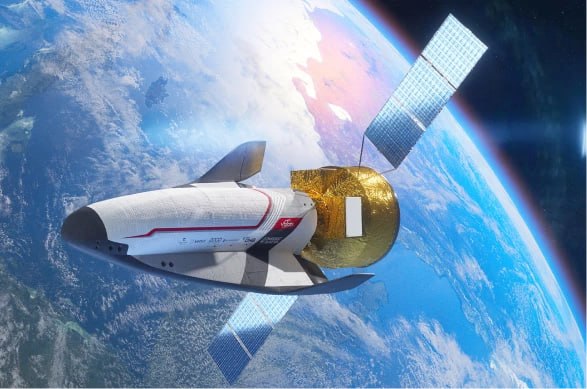
Space Cargo Unlimited Locks Up a Third of SpaceX's Starfall Return Capacity
Space Cargo Unlimited has secured a dedicated mission on SpaceX's new Starfall reentry vehicle and has already sold one-third of the vehicle's 1,000-kg capacity, CEO Nicolas Gaume told Payload. The Luxembourg-based company expects to have customers locked in for half of the vehicle by the end of the year, an early signal of commercial momentum for the Starfall concept ahead of its expected 2028 launch on a Starship rocket. The booking comes as demand climbs from pharmaceutical companies and res
OST Staff · September 19, 2026
Space Cargo Unlimited has secured a dedicated mission on SpaceX's new Starfall reentry vehicle and has already sold one-third of the vehicle's 1,000-kg capacity, CEO Nicolas Gaume told Payload. The Luxembourg-based company expects to have customers locked in for half of the vehicle by the end of the year, an early signal of commercial momentum for the Starfall concept ahead of its expected 2028 launch on a Starship rocket.
The booking comes as demand climbs from pharmaceutical companies and researchers recognizing that microgravity can provide benefits in drug discovery and research. As alternatives to the retiring ISS begin to come online, Space Cargo is positioning itself to capture as much of that newfound supply as possible.
Space Cargo is building relationships with a range of reentry companies to give customers diverse options for sending manufacturing experiments to space and back, according to Gaume. The company's bookings and projects include seven flights on ATMOS Space Cargo's Phoenix reentry vehicle, the first of which is expected to fly next year, a mission on Dassault's VORTEX reentry vehicle, a mission with ElevationSpace's ELS-R reentry vehicle, and another mission on ESA's Space Rider spaceplane. Space Cargo is also developing its own reentry vehicle in partnership with Thales Alenia Space, called REV1, which is based on ESA's Space Rider.
Across these missions, Space Cargo plans to fly its vehicle-agnostic payload, called BentoBox, which it describes as a standardized, autonomous factory for in-space manufacturing and research. The goal, regardless of vehicle, is to let researchers on Earth transfer their terrestrial lab technology to space without learning how to operate in orbit.
Starfall stands out from the rest of the fleet. Its capacity allows Space Cargo to fly as many as 10 times more payloads for customers than other vehicles, and it is designed to offer considerably more power, which Gaume said allows the company to offer better services and better economics. "The level of volume and power offered by Starfall is a paradigm shift," Gaume told Payload. "The platform only works if it provides tools and efficacy, not for our customers, but for our customers' customers, and we're obsessed with the customers of our customers."
Gaume framed the company's mission in similar terms. "We aim to despaceify space, allowing equipment and experiments from the lab to fly in orbit," he said. "We want space to learn bio, not the other way around."
With one customer already taking a third of Starfall's capacity and Space Cargo targeting half by year's end, the outstanding question is whether the vehicle sells out before it flies.
Watch for Space Cargo to confirm additional bookings by the end of the year as it works toward filling half of Starfall's capacity, and for the first flight of ATMOS Space Cargo's Phoenix reentry vehicle expected next year.