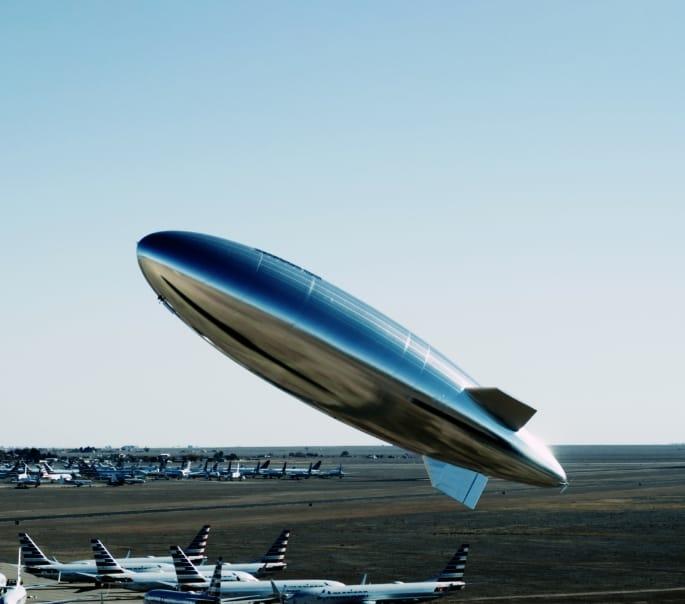
Sceye to Build and Fly 40-Unit HAPS Fleet for SoftBank Over Japan
Sceye has signed a five-year master-services agreement with SoftBank to manufacture, launch, and operate a fleet of high-altitude platform systems over Japan. The deal covers the full lifecycle of the stratospheric platforms, from build through operations, and marks a multi-year operator commitment from a carrier the size of SoftBank. The companies position HAPS operating at roughly 20 km as a stratospheric bridge between terrestrial communications infrastructure and satellite networks. SoftBan
OST Staff · November 3, 2026
Sceye has signed a five-year master-services agreement with SoftBank to manufacture, launch, and operate a fleet of high-altitude platform systems over Japan. The deal covers the full lifecycle of the stratospheric platforms, from build through operations, and marks a multi-year operator commitment from a carrier the size of SoftBank.
The companies position HAPS operating at roughly 20 km as a stratospheric bridge between terrestrial communications infrastructure and satellite networks. SoftBank previously backed several HAPS efforts before investing $15M in Sceye's Series C in 2025. Founder and CEO Mikkel Vestergaard Frandsen said SoftBank committed once Sceye became the first to close the power loop, holding altitude over the same area through the night until the sun returned to recharge its batteries.
The agreement builds toward what Vestergaard Frandsen described as a very significant fleet of at least 40 units over five years. Sceye will own and operate the platforms and sell SoftBank the service. Most of the fleet will provide mobile broadband, while a subset will form a free-space optical laser network in the stratosphere.
In September, Sceye completed its Service Test 1 mission with SoftBank, which spent 30 days traveling from New Mexico to Japan and back while testing several applications. SceyeCell, the company's cell tower in the sky, delivered texts, voice calls, internet, and video streaming directly to standard phones, including indoors. Sceye also demonstrated stratospheric laser ranging by tracking a HAPS from the ground, laying the groundwork for the FSO network. Edge-computing tests aboard the platform reduced latency by 40% compared with cloud computing, according to Vestergaard Frandsen.
Sceye's platforms reach cruising altitude in under 30 minutes using lifting gas, which the company presents as an alternative for operators concerned about launch availability. Vestergaard Frandsen called the independence from external launch vehicles a massive strategic upside, noting the company has its own fully integrated setup. Sceye compares its platforms to GEO satellites in their ability to maintain a consistent altitude and area of operation, while being 1,800 times closer to Earth's surface, replaceable, and serviceable.
Vestergaard Frandsen framed the stratospheric and LEO layers as complementary rather than competing, saying both are required to make sure nobody is left behind. SoftBank is also adopting Starlink's direct-to-cell service in Japan. The deal represents a meaningful validation of the stratospheric-connectivity model, which has struggled to reach commercial scale, and deepens the US-Japan link in alternative connectivity infrastructure. If the fleet flies as planned, the stratosphere becomes SoftBank's newest piece of network infrastructure.
Sceye's current flight record stands at 30 days, and recovered platforms are broken down and tested before parts are reused, with turnaround currently measured in months. Vestergaard Frandsen wants to cut that time to weeks, with single vehicles remaining aloft for six months or more.