Kapta Space Raises $24M Series A to Fund Low-Cost Moving-Target Radar for Orbit
Kapta Space, a Seattle startup building radar payloads designed to track moving targets from orbit, has closed a $24 million Series A, bringing its total financing to $30 million since it was founded in 2022. The capital will fund production of the company's moving target indication radar payloads in support of classified missions secured this year. The US government has invested heavily in expanding its space-based intelligence, surveillance, and reconnaissance capabilities, buying data and se
OST Staff · October 9, 2026
Kapta Space, a Seattle startup building radar payloads designed to track moving targets from orbit, has closed a $24 million Series A, bringing its total financing to $30 million since it was founded in 2022. The capital will fund production of the company's moving target indication radar payloads in support of classified missions secured this year.
The US government has invested heavily in expanding its space-based intelligence, surveillance, and reconnaissance capabilities, buying data and services from a range of Earth-observation operators across synthetic aperture radar, optical, thermal, and hyperspectral mediums. Kapta is building something outside the government's current capability set. The company says the government has for decades tried to move its radar capabilities to orbit, but cost and complexity have been prohibitive until now.
Washington Harbour Partners and Bison Ventures led the round, with participation from MetaVC Partners, MYDA Advisors, Entrada Ventures, Aurelia Foundry, and Fitz Gate Ventures. CEO Milton Perque said the company is executing two high-profile demonstration missions that will lead to highly proliferated MTI missions in the future, with flight heritage expected in the next 24 to 36 months.
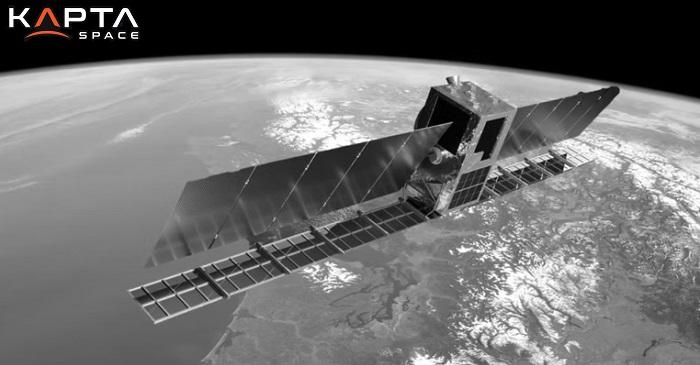
Kapta's radar payload uses a new take on electronic steering. It is designed to offer a wide view while maintaining custody of a moving target across land, air, and sea, at significantly lower cost, power, and complexity than active electronically scanned arrays. The company expects the payload to track missiles in the mid-course phase, where missiles have been known to evade ground-based radar sensors. The radar is also modular, so a scaled-down version could offer SAR capabilities to operators looking to fly simpler radar technology in a smaller form factor.
Perque said the capability transcends the proposed missile-defense shield known as Golden Dome and that Kapta's program predates it. He attributed the difficulty of proliferating space-based radar to its historical expense. Space-based radar has been extremely expensive, Perque said, which has denied the ability to proliferate into the hundreds or thousands required to meet the concept of operations of an MTI system. He said Kapta has its own IP-protected proprietary architecture that changes the economics and scalability of spaceborne radar.
For Kapta, the Series A validates a bet that moving-target tracking from orbit, a capability the Space Force most wants to buy, can be delivered at a cost and scale that earlier systems could not reach. The company frames its architecture as the enabler that makes proliferation possible where prior approaches were too costly and complex.
Next, Kapta will carry out its two demonstration missions, with flight heritage expected within 24 to 36 months, work the company says will lead to highly proliferated MTI missions.