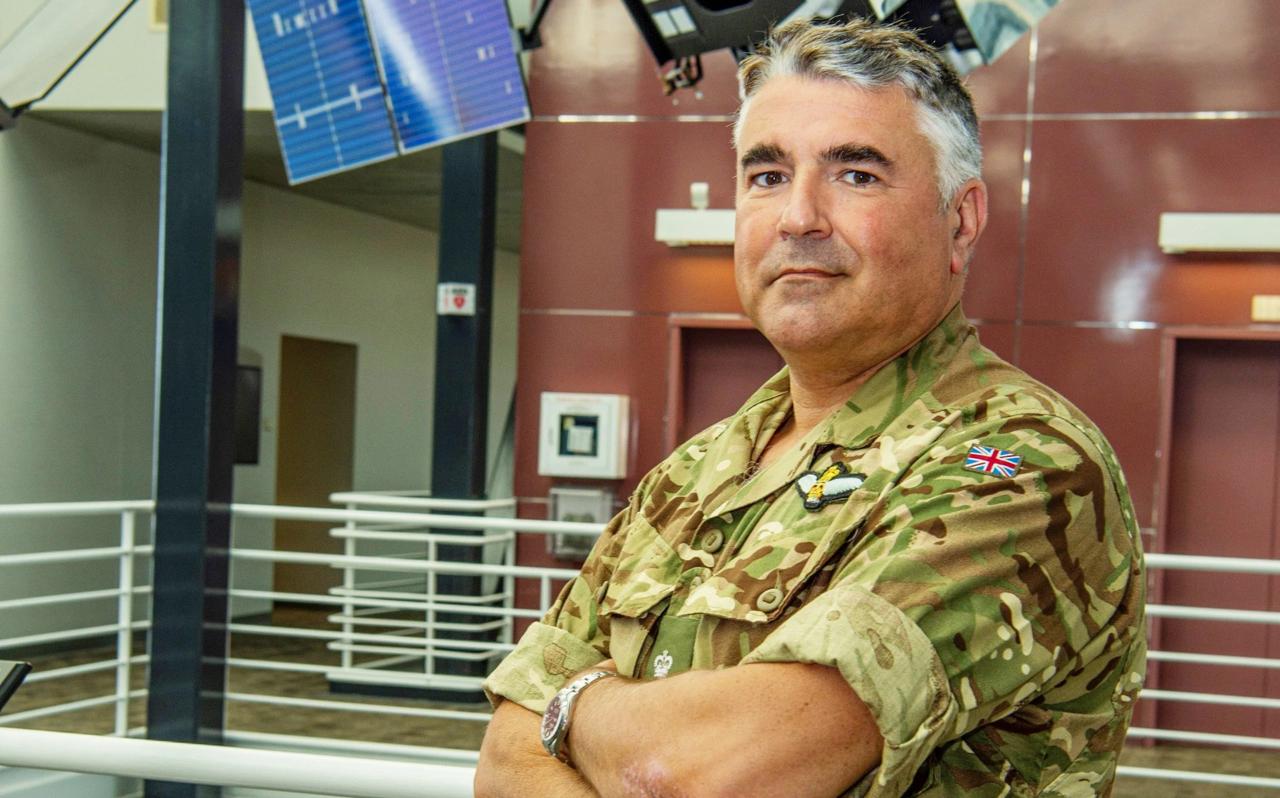
Former UK Space Command Chief Tells Parliament Britain's Space Resilience Is "Not a Clear Yes"
Britain cannot be confident it could absorb a first strike in space and still deliver the capabilities its armed forces depend on, Major General Paul Tedman, who commanded UK Space Command until this summer, told Parliament's Joint Committee on the National Security Strategy. The warning came during the committee's inquiry into space resilience and amounts to a public acknowledgement of potential vulnerabilities in Britain's reliance on orbital infrastructure. Tedman gave evidence on 16 Novembe
OST Staff · November 22, 2026
Britain cannot be confident it could absorb a first strike in space and still deliver the capabilities its armed forces depend on, Major General Paul Tedman, who commanded UK Space Command until this summer, told Parliament's Joint Committee on the National Security Strategy. The warning came during the committee's inquiry into space resilience and amounts to a public acknowledgement of potential vulnerabilities in Britain's reliance on orbital infrastructure.
Tedman gave evidence on 16 November. He led UK Space Command from 2024 after two years at US Space Command, and has since handed over to Air Vice-Marshal Jamie Thompson on retiring from the Army. He is now Managing Director for European Space at Anduril Industries.
Pressed on whether the UK could take and survive an opening blow in orbit, Tedman framed the challenge in two parts. "Do we have, first, the control and the capabilities to deter, and, secondly, should that deterrence fail, arguably we are close, are we resilient enough to be able to take a first-move punch, absorb it and still deliver those capabilities that are essential for our Armed Forces on the backside? That is a question that everyone should wrestle with." When Lord Sedwill, the former National Security Adviser, observed that it did not sound like a confident yes, Tedman replied: "It is not a clear yes, Lord Sedwill."
Asked how far the Defence Investment Plan would close the gap, Tedman said the strategy and the funding were in place but the pace was his concern. "I would say that the SDR provides good ends, the strategy, and the DIP closes with the means. It is the ways that I worry about. Are we going to get there sufficiently quickly to match the threat? Policy is free; the threat is not. Are we going to be able to match the threat, which is increasing exponentially? That is the bit that I am worried about: time."
Tedman said British forces could always fall back to "maps and compasses" and fight without space, but would not be efficient or effective. He told the committee that "3,000 systems in an Army brigade rely on space-based systems." Without space, he said, forces "would not be able to understand through space-based ISR; you would not be able to move through positioning, navigation and timing; you would not be able to communicate through satellite communications and data relays; and, ultimately, you would not be able to fight."
The testimony carries weight because it comes from the officer who led the UK's dedicated space command until this summer. His assessment that resilience is "not a clear yes" acknowledges that modern military operations hinge heavily on orbital infrastructure, and that the ability to keep fighting after a counterspace attack cannot be taken for granted. By his own account, the strategy and funding exist, but matching an exponentially increasing threat in time remains an open question.
The Joint Committee on the National Security Strategy's inquiry into space resilience continues, with the pace of delivery under the Defence Investment Plan set against an increasing threat as the central concern Tedman raised.