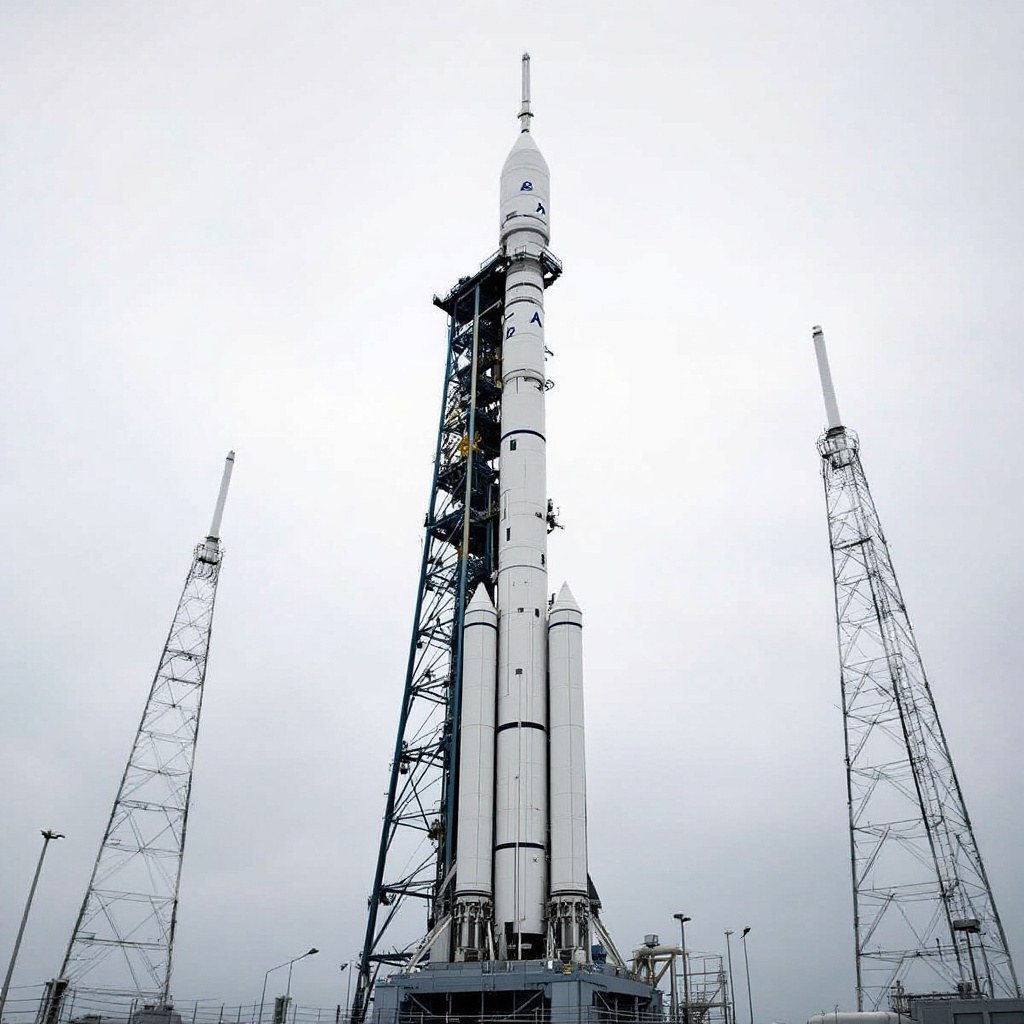
ESA Rules Out Ariane 6 Block 3, Citing No Programme Need
The European Space Agency has confirmed it is no longer considering the Ariane 6 Block 3 evolution, telling European Spaceflight there is "no programme need or justification" for the upgrade at this time. The decision shelves a more capable variant of Europe's heavy-lift rocket, along with the ICARUS lightweight upper stage that had been tied to it. Questions about the Block 3 upgrade surfaced earlier this month after SpaceScout reported that an ESA study team had been told Ariane 6 Block 2 wou
OST Staff · August 20, 2026
The European Space Agency has confirmed it is no longer considering the Ariane 6 Block 3 evolution, telling European Spaceflight there is "no programme need or justification" for the upgrade at this time. The decision shelves a more capable variant of Europe's heavy-lift rocket, along with the ICARUS lightweight upper stage that had been tied to it.
Questions about the Block 3 upgrade surfaced earlier this month after SpaceScout reported that an ESA study team had been told Ariane 6 Block 2 would be the rocket's final major version. That guidance forced the team to rework a proposed Enceladus mission, a planned probe to Saturn's icy moon, which had been designed around the more capable Block 3 version of the four-booster Ariane 64. A presentation slide seen by the study team stated that Ariane 6 would "not be developed further."
In emailed responses, an ESA spokesperson described a near-term roadmap for Ariane 6 upgrades that includes the already introduced P160C boosters and a lighter Vulcain Aft Bay, intended to "increase launcher performance and competitiveness." Those changes will be followed by the introduction of the Astris orbital transfer vehicle around 2029, which the spokesperson said would "bring significant additional capabilities to the Ariane 6 ecosystem."
On the ICARUS lightweight upper stage, the spokesperson was explicit. "No evolution of the ULPM [ICARUS] was approved at CM25, as no programme need was identified for such an evolution at this stage. Consequently, no development activities are currently underway." ICARUS would have made extensive use of carbon-composite structures developed under ESA's technology programme. As recently as October 2025, ESA was still describing PHOEBUS carbon-fibre tanks as having a "potential future application on Ariane 6." A month later, member states decided not to approve an evolution of the upper stage.
At the November 2025 Ministerial Council meeting, known as CM25, ESA had proposed a 304.4 million euro envelope for the Ariane 6 adaptations element. Member states committed just 145.94 million euros, leaving 158.46 million euros uncovered, a 52 percent shortfall. The agency's breakdown of the funding received does not specify which upgrades were included in the unfunded portion. The spokesperson did not tie the shortfall to the Block 3 decision, framing it instead as a matter of programme need.
On the rocket's longer-term future, the spokesperson was less definitive. "Ariane 6 will continue to evolve whenever new mission requirements justify further developments," the spokesperson said, adding that "human spaceflight is also being considered in the context of developing a future European capability to send astronauts to space aboard a European vehicle launched from European territory."
The confirmation establishes that Ariane 6 Block 2 is, for now, the rocket's final major version, with no development activity underway on either the Block 3 evolution or the ICARUS upper stage. ESA frames the near-term path forward around the P160C boosters, the lighter Vulcain Aft Bay, and the Astris orbital transfer vehicle.
What to watch is the introduction of the Astris orbital transfer vehicle, expected around 2029, and whether new mission requirements or a future human spaceflight capability prompt ESA to justify further Ariane 6 developments.