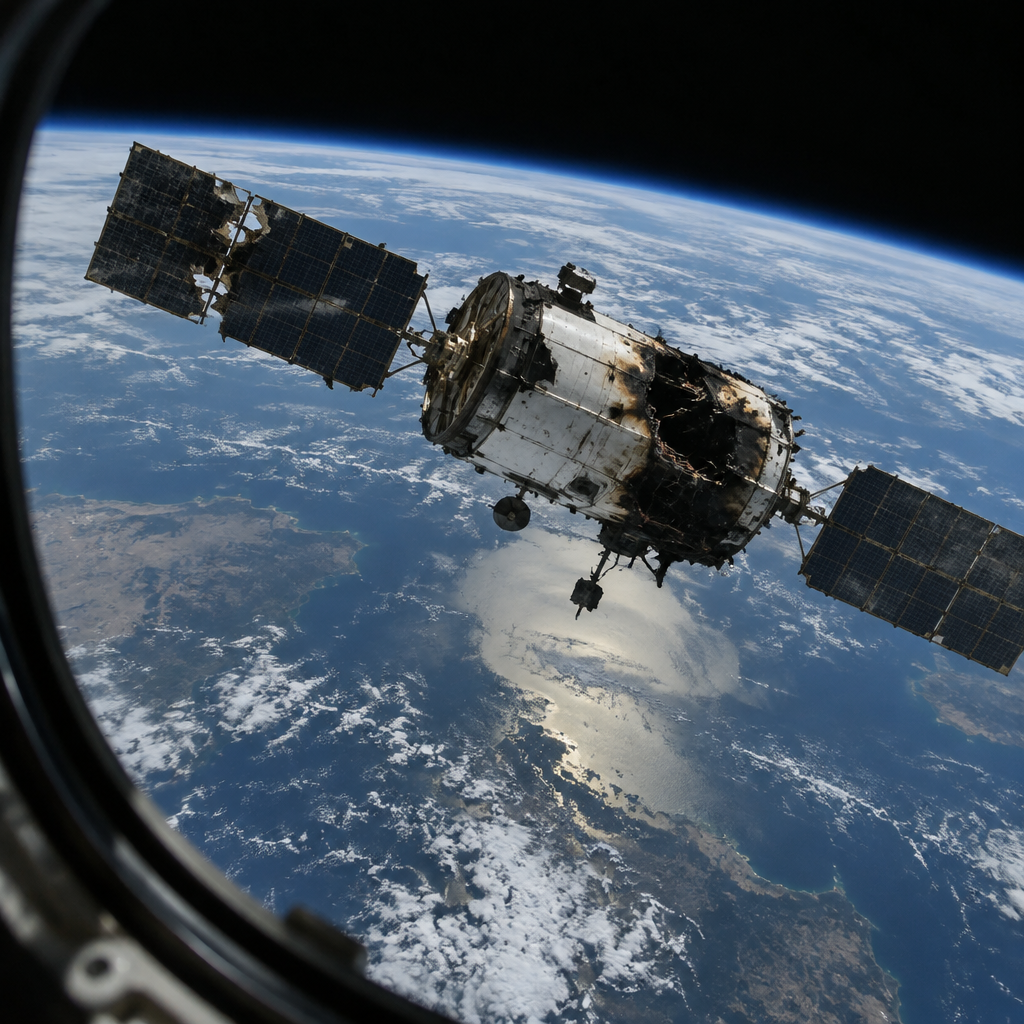
DIA Warns China and Russia Building "Formidable" Counterspace Arsenals
China, Russia, Iran, and North Korea are developing, testing, and deploying space capabilities in ways that threaten the security of all space systems, according to a Defense Intelligence Agency assessment. The report states that China and Russia in particular are building a spectrum of offensive capabilities ranging from kinetic destruction to jamming and cyber operations that could degrade or destroy the space services of other countries. The assessment frames the four actors as exhibiting be
OST Staff · October 27, 2026
China, Russia, Iran, and North Korea are developing, testing, and deploying space capabilities in ways that threaten the security of all space systems, according to a Defense Intelligence Agency assessment. The report states that China and Russia in particular are building a spectrum of offensive capabilities ranging from kinetic destruction to jamming and cyber operations that could degrade or destroy the space services of other countries.
The assessment frames the four actors as exhibiting behaviors that run counter to a safe, secure, and sustainable space domain. It notes that their efforts extend beyond technology into diplomatic and economic arenas, pointing to proposals by China and Russia for unverifiable international space treaties and commitments such as "no first placement of weapons in outer space." The report states that both countries refuse to acknowledge their ongoing development of dual-use and counterspace weaponry or their dangerous and ambiguous behavior on-orbit.
The four countries have expanded bilateral cooperation on space-related activities, including China's supply of space components to Russia. The report states that Beijing and Moscow are expanding their worldwide space cooperation, both offering launch and satellite services to many other countries. China and Russia view these international engagements as opportunities to gain geopolitical influence and bolster their scientific prestige. Both are pursuing a broader strategy to improve military force capabilities and technological innovation by integrating civilian, commercial, and academic space expertise into military programs.
The assessment highlights the rapid worldwide expansion of commercial space operations and the importance of an open and secure space domain. It states that sustained access to space is key to global interconnectivity and economic prosperity, with more nations becoming reliant on space services for economic and national security activities. The production of cheaper, smaller, and simpler satellites, faster to develop and deploy, combined with the expansion of commercially available launch services, is driving rapid integration of commercial space alternatives to support national security.
The report cites the Russia-Ukraine war as a demonstration of the advantages of commercial space capabilities for national security, including tactical advantages for the military. The effectiveness of commercial satellite communications services supporting Ukraine has driven a perception in Moscow that Russia needs more satellites to keep pace. Russia has responded by targeting the commercial constellations with jammers. It has also designated U.S. commercial space industry terminals and other commercial satellites supporting Ukraine as legitimate military targets. Since Russia's 2022 invasion of Ukraine, Russian government and military-related organizations have looked to China for space-based support for their operations in Ukraine and to maintain Russia's own space-based capabilities.
According to the assessment, the combined effect of these developments threatens the security of all space systems and their associated benefits. The report emphasizes that the malign efforts of China, Russia, Iran, and North Korea threaten a safe, secure, and sustainable space domain at a time when more nations depend on space services for economic and national security purposes.
The assessment points to continued expansion of commercial space operations and the ongoing integration of commercial alternatives into national security activities as areas shaping the future of the domain. It also signals continued cooperation between China and Russia, including Beijing's support for Russian operations, as a dynamic to monitor.