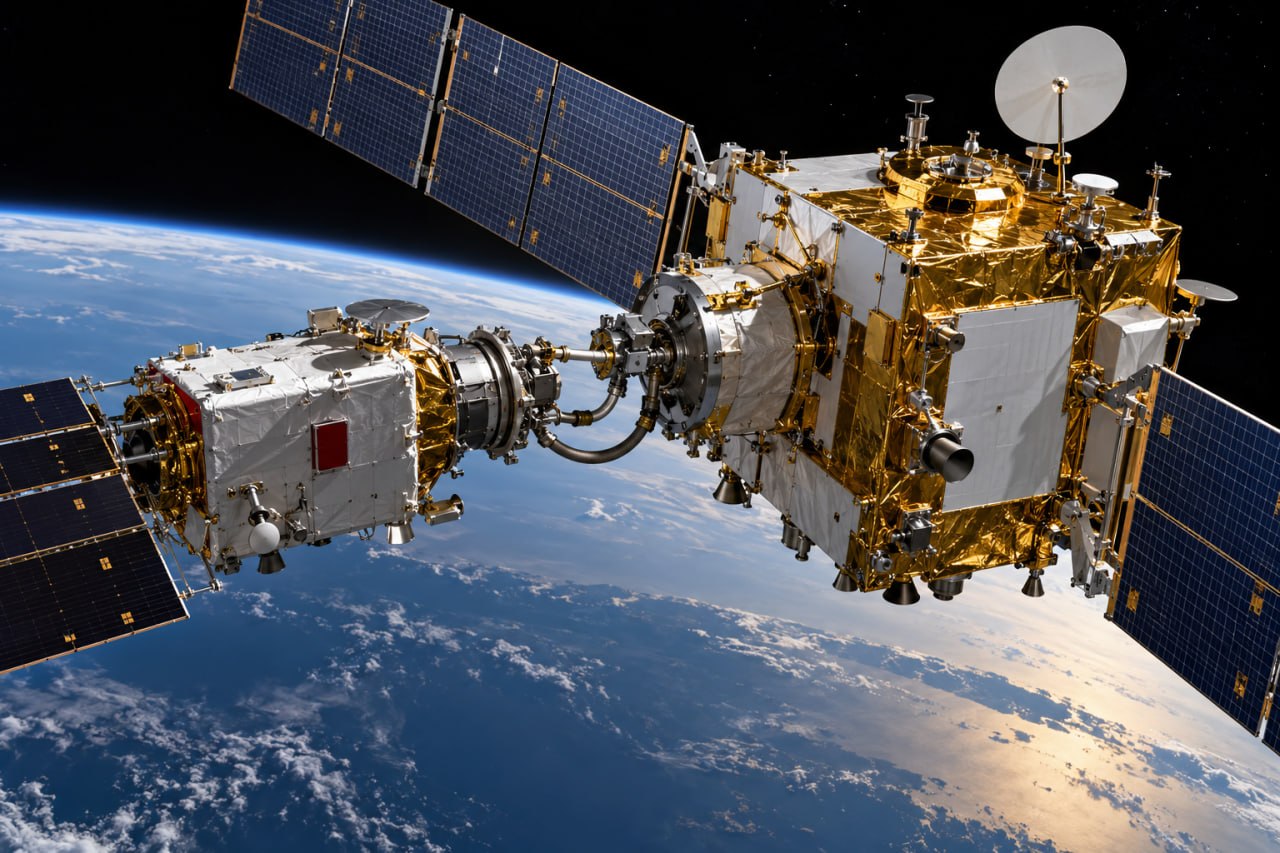
Chinese Researchers Signal First In-Orbit Refuelling of a BeiDou Satellite
Chinese researchers appear to have disclosed a previously unknown satellite-to-satellite refuelling operation in high Earth orbit, involving a BeiDou navigation satellite. The disclosure, contained in a paper undergoing peer review, points to a demonstration of a technology that could reshape the space race and carries potential military implications. The claim surfaced in a paper submitted to the Journal of Deep Space Exploration by a team from the state-funded Deep Space Exploration Laborator
OST Staff · September 27, 2026
Chinese researchers appear to have disclosed a previously unknown satellite-to-satellite refuelling operation in high Earth orbit, involving a BeiDou navigation satellite. The disclosure, contained in a paper undergoing peer review, points to a demonstration of a technology that could reshape the space race and carries potential military implications.
The claim surfaced in a paper submitted to the Journal of Deep Space Exploration by a team from the state-funded Deep Space Exploration Laboratory. Research papers cited in reporting suggest the operation occurred in February of last year. The researchers gave no details about how the manoeuvre was conducted.
In the paper, the team said China had successfully provided room-temperature propellant refuelling for a high-orbit BeiDou satellite for the first time. They said the operation had given China valuable experience, while emphasising the need to develop technologies for transferring extremely low-temperature propellants, which offer better performance for large spacecraft and deep-space missions. The operation is documented via the research papers and framed as carrying military implications.
The claimed refuelling contrasts with the timeline for comparable capability in the United States, where commercial servicing demonstrations are not scheduled until 2027. On-orbit refuelling extends a satellite's maneuvering capability and lifespan, a strategically significant servicing technology.
If confirmed, the operation would be a historic demonstration of on-orbit refuelling of an operational navigation satellite, a development the reporting frames as one that could shift the space race and place Beijing ahead in servicing technology.
Whether the claim holds depends on the paper completing peer review for the Journal of Deep Space Exploration. The researchers themselves pointed to the next technical step, developing the ability to transfer extremely low-temperature propellants for larger spacecraft and deep-space missions.