China Advances Tianwen-3 Mars Sample Return Into Prototype Phase
China has moved its Tianwen-3 Mars Sample Return mission into prototype development, targeting a 2028 launch and the return of Martian samples to Earth around 2031. The effort could become the world's first Mars sample return mission, running alongside an expanding lunar program, a student-led asteroid flyby, and new launch infrastructure. The progress comes as China integrates crewed and robotic missions to further its lunar exploration program, with the China Manned Space Agency now overseein
OST Staff · September 19, 2026
China has moved its Tianwen-3 Mars Sample Return mission into prototype development, targeting a 2028 launch and the return of Martian samples to Earth around 2031. The effort could become the world's first Mars sample return mission, running alongside an expanding lunar program, a student-led asteroid flyby, and new launch infrastructure.
The progress comes as China integrates crewed and robotic missions to further its lunar exploration program, with the China Manned Space Agency now overseeing uncrewed robotic lunar missions previously managed by the China National Space Administration, beginning with Chang'e 7. Personnel, resources, and knowledge are being pooled to benefit the Chinese Lunar Exploration Program.
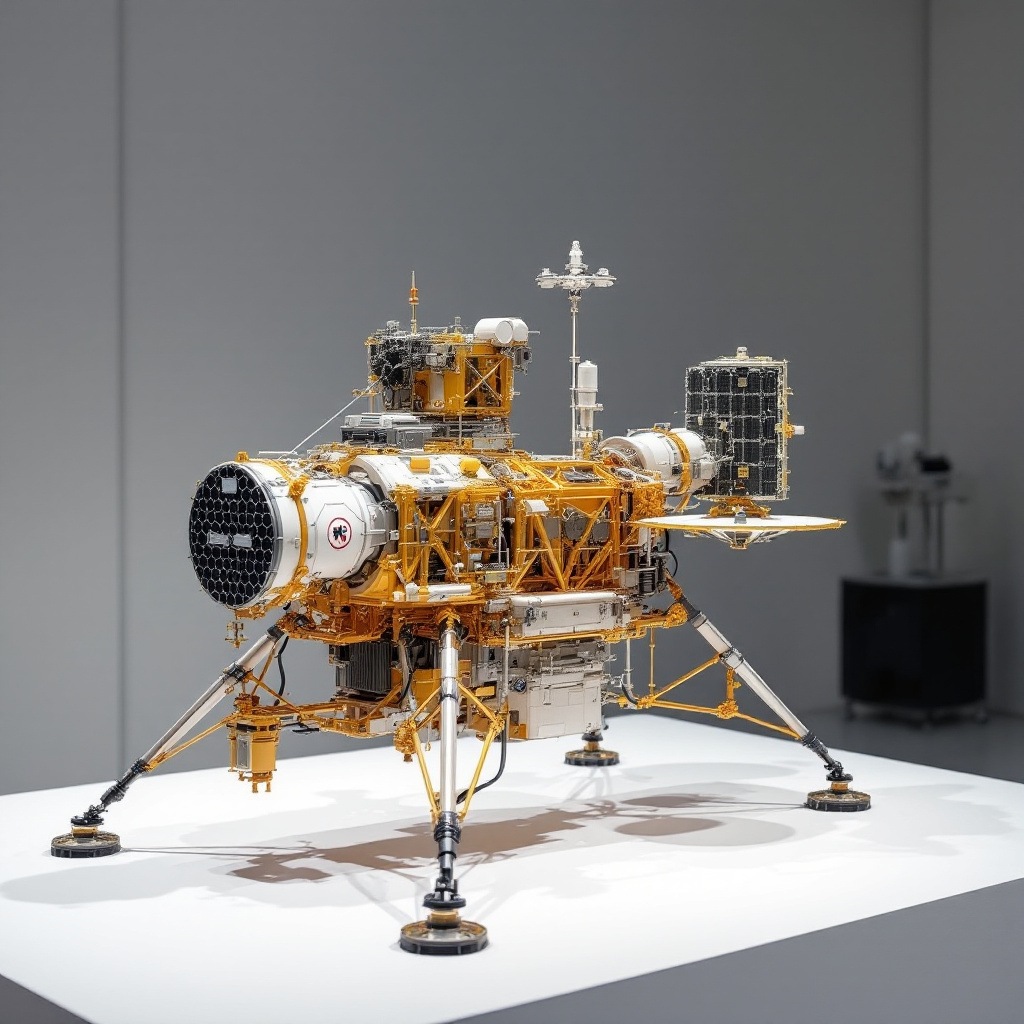
Tianwen-3 has entered prototype development with scientific preparations underway, according to the project's Chief Scientist and Chinese Academy of Sciences academician Hou Zengqian. The mission targets a 2028 launch aboard two Chang Zheng 5 vehicles, surface sampling in 2030, and sample return around 2031. Its primary scientific goal is to search for traces of past life on Mars. A lander will drill up to two meters below the surface and load samples into an onboard launcher that carries them to orbit, where a robotic arm on the awaiting orbiter retrieves them for a return capsule. Hou noted the process is far more daunting than lunar sampling, not least because Mars is significantly further away. Eight candidate landing sites have been selected, with the goal of obtaining around 500 grams of high-value scientific samples.
The mission benefits from five years of Tianwen-1 orbiter data, now being collated into a 1:5,000,000-scale global geological map of Mars expected before the end of 2028. Samples will initially be analyzed at the Deep Space Exploration Laboratory in Anhui province.
In the lunar program, China handed over Chang'e 6 far-side samples, collected in June 2024, to the United Nations this month for permanent display in Vienna. The Chang'e 7 launch was delayed in August following unfavorable local weather and restrictive timing constraints, pushing it to no earlier than early 2027. Its solar-powered lander and rover must reach the lunar south pole during prolonged sunlight with suitable illumination for navigation and landing. Unconfirmed rumors circulated this month about Chang'e 8 being cancelled or its instruments diverted, following comments by one team at September's Europlanet Science Congress. Chang'e 8 remains officially scheduled for launch around 2029, targeting the Leibnitz-Beta Plateau, and attracted 10 collaborative projects involving 11 countries and regions, with 200 kg of payload capacity for overseas partners.
Separately, Tsinghua University's START mission to asteroid Apophis has moved from review to build. The 300 kg craft will launch in early 2028 aboard a ZhuQue-3, raising its orbit to 31,600 km using solar electric propulsion before a high-speed 8.74 km/s flyby in April 2029, passing within 7 km of its target. Imagery and data are expected within seven days.
The breadth of parallel missions, from lunar to Mars to asteroids, comes as China expands its launch infrastructure. The commercial spaceport in Wenchang is entering a third phase, with the Hainan International Commercial Aerospace Launch Company planning four further universal pads. Work is nearing completion on launch complex LC-301, which will house two Chang Zheng 10 vehicles for China's crewed Mengzhou capsule and Lanyue lander lunar landing attempt before the end of the decade.
Commercial pads 3 and 4 at Wenchang could host a launch before the year is out, while crew access arms have yet to be installed at LC-301.