China Presses Ahead With Guowang Launch Days After Long March 7A Failure
China launched a fresh batch of Guowang megaconstellation satellites aboard a Long March 12 rocket early on August 16, followed hours later by a Long March 2C mission carrying a developmental Earth observation satellite for the United Arab Emirates. The Long March 12 success came less than a week after the explosive failure of a Long March 7A, indicating the earlier anomaly was not tied to the YF-100 engine family. The Long March 7A grounding, which followed its August 10 failure, will affect C
OST Staff · August 17, 2026
China launched a fresh batch of Guowang megaconstellation satellites aboard a Long March 12 rocket early on August 16, followed hours later by a Long March 2C mission carrying a developmental Earth observation satellite for the United Arab Emirates. The Long March 12 success came less than a week after the explosive failure of a Long March 7A, indicating the earlier anomaly was not tied to the YF-100 engine family.
The Long March 7A grounding, which followed its August 10 failure, will affect China's plans and scheduling for geosynchronous and related launches. Because the Long March 7A inherited its third stage from the Long March 3B, the situation could carry further implications for China's workhorse launcher for geosynchronous orbit. The 3B only recently returned to flight after a January failure.
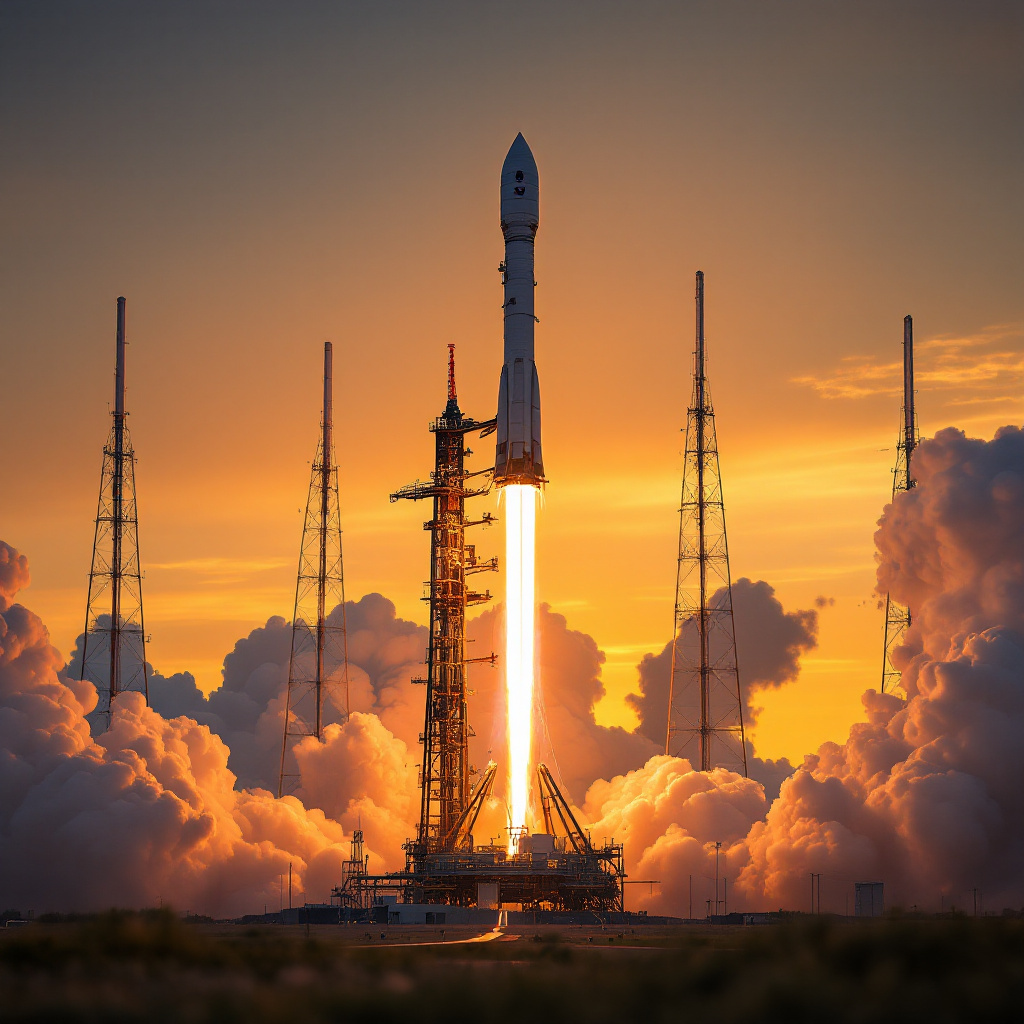
The Long March 12 lifted off at 12:10 a.m. Eastern (0410 UTC) August 16 from pad 2 at the Hainan commercial space launch center in southern China. The China Aerospace Science and Technology Corporation, or CASC, announced launch success and identified the payload as a new batch of Guowang satellites. It was the 24th operational batch launched for the program, bringing the number of satellites in orbit to 195, not counting related experimental satellites. The satellites were built by CASC's China Academy of Space Technology. No details or images of the satellites were released. The program calls for roughly 13,000 satellites in low Earth orbit.
The mission was the seventh flight of the standard, expendable Long March 12, which uses YF-100K engines. Local reports highlighted that the pad quickly switched from a 5-meter rocket to a 4-meter rocket, having supported the Long March 10B flight in early July, and noted that the Long March 12 occupied the pad for just 2.5 days ahead of launch.
China followed the Guowang mission with the UAE launch later Sunday. A Long March 2C hypergolic rocket lifted off at 11:02 p.m. Eastern August 16 (0302 UTC August 17) from Taiyuan Satellite Launch Center in northern China, carrying the Satellite for Earth Observation, or SEO, into orbit. China Great Wall Industry Corporation, a CASC entity that facilitates international launch contracts, said the mission "aims to develop advanced space technologies and represents an ambitious step toward utilizing space technologies to support sustainability and future development." The satellite is a project of UAE University's National Space Science and Technology Center, developed with the UAE Space Agency and Chinese partners.
The successful Long March 12 flight, using YF-100K engines, suggests the anomaly that caused the August 10 Long March 7A failure was not engine-related. That distinction matters because an engine issue could have had a substantial and cascading effect on major Chinese programs.
The Long March 12 and Long March 2C missions were China's 58th and 59th launches of 2026, with the country understood to be targeting more than 100 launches this year. The Zhuque-3 rocket could make a launch and recovery attempt in the coming days, and Galactic Energy's Pallas-1 rocket could also debut from Jiuquan's commercial innovation launch zone in the near future.