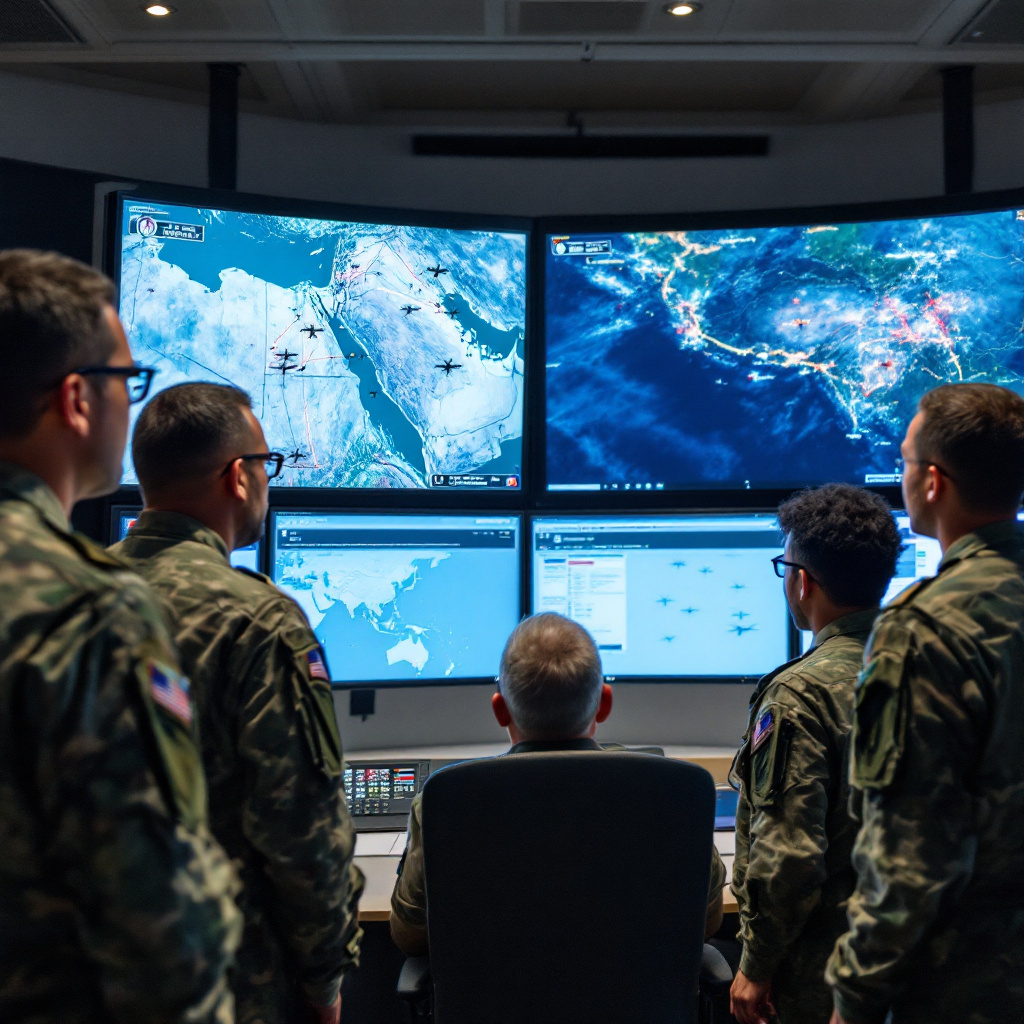
CENTCOM Stands Up Multinational Task Force Falcon Strike for One-Way Attack Drones
U.S. Central Command has launched a multinational attack drone task force called Task Force Falcon Strike, built around one-way attack drones operating across air, sea surface, and undersea domains. The force is staffed by military personnel from the United States and regional partners, and CENTCOM is inviting Middle Eastern allies to join what analysts describe as a new era of regional collective defense. The task force represents a doctrinal shift for CENTCOM. Rather than treating one-way att
OST Staff · August 16, 2026
U.S. Central Command has launched a multinational attack drone task force called Task Force Falcon Strike, built around one-way attack drones operating across air, sea surface, and undersea domains. The force is staffed by military personnel from the United States and regional partners, and CENTCOM is inviting Middle Eastern allies to join what analysts describe as a new era of regional collective defense.
The task force represents a doctrinal shift for CENTCOM. Rather than treating one-way attack drone warfare as a purely American capability, the command is institutionalizing it as a shared allied function. Analysts characterize the structure as a NATO-style approach to collective defense, adapted to the Middle East.
Task Force Falcon Strike is designed as a multi-domain effort from the outset. The unmanned systems involved operate from above, on, and below the sea, combining aerial one-way attack drones with surface and undersea platforms. CENTCOM has extended an invitation to regional Middle Eastern partners to participate, though no specific partner nations have been named.
The inclusion of undersea and surface drones alongside aerial systems signals that the task force was conceived as a multi-domain capability rather than an air-only construct. By pooling these systems under a single multinational structure, CENTCOM is positioning strike capability as something shared among allied militaries.
The significance, as described, lies in the move from American-owned capability to allied-owned capability. Analysts frame the effort as building a NATO-style drone coalition in the Middle East, institutionalizing one-way attack drone warfare as a joint allied function and marking what they call a new era of regional collective defense.
If the model proves effective, similar multinational drone task forces could be stood up in other combatant commands, potentially changing how allied militaries share strike capability. For now, the immediate step to watch is which Middle Eastern partners accept CENTCOM's invitation to join Task Force Falcon Strike.