Carney Elevates Space in Pitch for Deeper Canada-EU Partnership
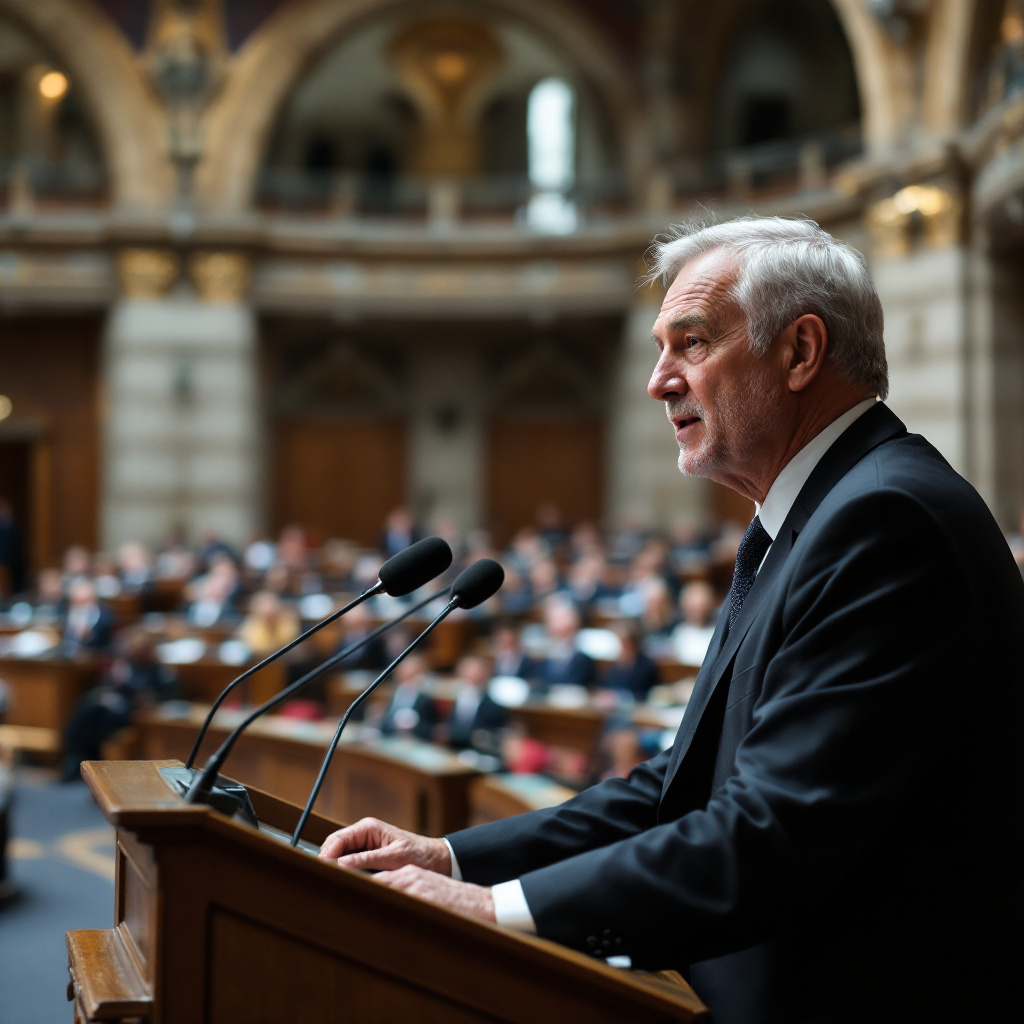
Prime Minister Mark Carney listed space among the core strengths Canada would bring to a proposed deeper partnership with the European Union, placing it alongside artificial intelligence, quantum computing and critical minerals in a September 18 address to the European Parliament in Strasbourg. The remarks, delivered during a two-day visit to France that concluded Thursday, frame space capability as central to Canada's transatlantic industrial ambitions. The pitch builds on the Canada-EU partne
OST Staff · September 20, 2026
Prime Minister Mark Carney listed space among the core strengths Canada would bring to a proposed deeper partnership with the European Union, placing it alongside artificial intelligence, quantum computing and critical minerals in a September 18 address to the European Parliament in Strasbourg. The remarks, delivered during a two-day visit to France that concluded Thursday, frame space capability as central to Canada's transatlantic industrial ambitions.
The pitch builds on the Canada-EU partnership established in June 2025. In his address, Carney positioned Canada as a partner offering abundant energy, critical minerals, world-class capabilities in space, AI and quantum, and one of the world's strongest banking systems. He said Canada would work with speed and ambition to create greater certainty, security, and prosperity for both peoples for generations to come.
Carney referred to Canada becoming an associate member, though the specifics of what a deeper space relationship or associate membership would entail have not been defined. Canada's existing space ties to Europe are more established. Canada is a Cooperating State through its Cooperating Agreement with the European Space Agency, an arrangement dating to 1979 and most recently renewed in 2019, extending through 2030. Last year the Canadian government committed 664.6 million dollars to ramp up its ESA contribution.
The EU and ESA are distinct organizations with partially overlapping but non-identical member states and different mandates. The EU is a political and economic union, while ESA is an intergovernmental organization dedicated to the peaceful exploration and use of space. The EU provides upwards of 24 percent of ESA's total budget.
Canada joined the EU's Security Action for Europe defence-procurement program in February 2026, becoming the first non-European country admitted after negotiating a Canadian-content exemption well above the norm for outside suppliers. That step opens European defence contracts to Canadian space companies including MDA Space, Telesat and NorthStar Earth and Space. Two months later, Canada and ESA signed a security agreement letting Canadian firms bid on sensitive contracts previously off-limits under Canada's status as ESA's only non-European member. Ottawa's Defence Industrial Strategy names space among 10 sovereign capabilities that give domestic companies priority in military procurement, and lists the EU among trusted allies for co-developing space systems.
A head of government elevating space to the level of AI and critical minerals in a partnership pitch signals how central space capability has become to national strategy, and it could seed new Canada-Europe collaboration and contracts. When a prime minister sells space alongside critical minerals, it is no longer a niche portfolio.
There is reason for caution. In 2016, Canada and the EU signed the Comprehensive Economic and Trade Agreement, which included a space section that industry objected to as one-sided in favour of EU space companies. In 2022, as permitted under the agreement, Canada opted out of the space section. The proposed associate member status does not necessarily mean new commercial markets will open for Canada, as EU states will want to protect their business and supply chains as they have in the past. The unresolved question is whether the new arrangement might fix what the earlier trade agreement got wrong for the space sector.